|
Much
of East Texas’ rich musical
heritage came decades ago from the region’s small towns. Today, some
of the small towns are larger, some are smaller and some have disappeared
altogether.
Aubrey (Moon) Mullican, who grew up playing a church pump organ
near Carmona, became the king of the Hillbilly piano players. Stuart
Hamblen, who wrote It
Is No Secret and This Old House, was born at Kellyville.
And Al Dexter, who wrote Honky Tonk Blues and made the
term a household word, came from Jacksonville.
Today, small-town musicians are still performing all over East
Texas — and shaping careers that may make them future Mullicans,
Hamblens and Dexters.
On the fourth Saturday night of each month, amateur pickers and singers
travel to Sacul --
a Nacogdoches County
town that almost became a ghost town -- in search of appreciative
audiences. |
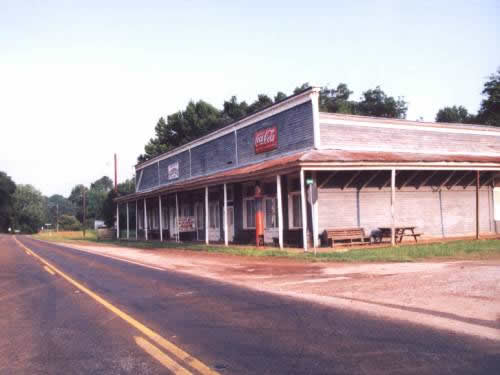 |
As
the sun drops behind the forests, the sounds of bluegrass and county
music fill the inside of a century-old building that once housed the
town’s mercantile store, bank, drugstore and post office. It is almost
the sole relic of what was once a small, but thriving, railroad community
in the early 1900s.
It may be ironic that the most popular tune each fourth Saturday is
“The Orange Blossom Special,” an old fiddlers ditty that mimics an
old steam locomotive.
In 1992, as Sacul’s
citizens were looking for ways to raise money to make community improvements,
someone suggested that the town develop a venue for musicians. From
that suggestion came the Sacul Bluegrass Opry, which attracts
hundreds of fans each month.
The performances are all done with acoustic instruments. No amplified
instruments are used in keeping with authentic bluegrass music. But
the shows aren’t restricted to bluegrass. Gospel, country and western
songs are welcome as well.
Most of the bands who show up at Sacul
have been playing around East Texas and Texas for years. Few of them
are professionals, but they come with a deep love of traditional music
and a lot of heart.
The number of bands at each fourth Saturday show may be as many as
a dozen, but all of them are given time to play, and all around the
Opry building, other bands warm up as they await their turn on the
stage inside.
Admission to the Opry is free, and none of the musicians are paid,
but what one spectator called “a free-will love offering” is taken
up at each performance to pay for the expenses of the Opry and to
build a nest egg for Sacul’s
community needs. The performers and the audiences carry with them
a lot of gray hair, but you’ll also find a smattering of young people
who have developed a kinship with traditional East
Texas music.
“The thing about bluegrass is that people dearly love it,” said an
observer. “It’s like when you were younger and picked and played on
people’s porches in East Texas. It’s real family fun.”
Sacul isn’t the only
venue of its type in East
Texas. Others can be found in churches, campgrounds and community
halls in dozens of small towns from the Red River to the Gulf
Coast.
Cowboy and Sara Barrett, who help run the Sacul Opry each month, host
bands at a bluegrass reunion at their Sandyland home twice a year,
and Sacul’s opry house is open on Fridays from noon to 5 p.m. for
those who want to drop by and a pick a while. |
All
Things HistoricalOctober
4, 2005 Column
Published with permission
Distributed by the East Texas Historical Association |
|
|
 HOME
HOME


