|
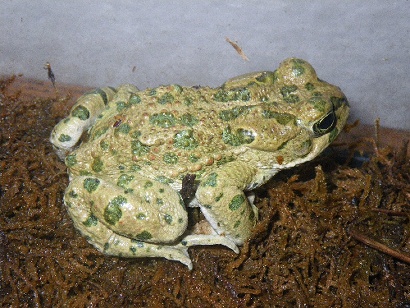
| This glistening
girl came to us with 74 other representatives of her species. They
were part of a seizure in Arlington,
TX of thousands of native and exotic animals bound for the pet
trade. Far from the overcrowded and inhumane conditions they endured
at U.S. Global Exotics, these amphibians now enjoy roomy moss-lined
terrariums, large soaking bowls, and a seemingly endless supply of
crickets, mealworms, and other invertebrate treats. |
Red-spotted Toad
Photo courtesy Dove Key Ranch Wildlife Rehabilitation |
Red-spotted
toads in Texas:
At 1 1/2-3 inches
long, these toads are named for the reddish spots that dart over their
olive green to tan, squat bodies. If you live in central Texas west,
you can track down serenading males luring females to any type of
permanent or ephemeral water source (including cattle troughs and
stock ponds) in arid to semi-arid terrain. Just listen for the high-pitched
trill to find your way to the mating frenzy between April and September,
especially after a heavy rain. The dusky-throated males grasp females
using nuptial pads (thickened skin on their thumbs and forearms),
chirping when they’ve been spurned by less than willing partners.
Eventually, they find an amenable mate and eggs are laid one at a
time: an unusual feat for North American toads, which generally deposit
eggs in long strings. The freshly fertilized globes drift to the bottom
of whatever water source serves as the natal ground, and the red spotted
toads’ progeny start a race against time. Although the eggs and future
tadpoles must survive attack by a barrage of waterbirds, omnivorous
mammals, amphibious larvae, and aquatic invertebrates, the biggest
danger that lies ahead is desiccation of their birth pool. Tadpoles
burst forth from the gelatinous blobs within a few hours to a few
days and complete their transformation into four-legged, tail-free
adults in 6-8 weeks.
Following metamorphosis, the largest impending challenge for these
amphibians is persevering through the frequent dry spells that characterize
their habitats. Even though these porous skinned creatures can survive
losses of up to 40% of their body water, they still need special adaptations
to endure in climes as far as one mile from any water source. The
toads sport a thin patch of skin that stretches between their abdomen
and their hind limbs that allows dehydrating individuals to replenish
their water stores from sodden ground and damp vegetation. Red-spotted
toads also seek shelter beneath rocks, within moist plant matter,
and inside subterranean burrows, bunking up with prairie dogs when
the Texas temperatures soar.
Adults of this species are voracious predators of the peskiest of
invertebrates. So, if you are lucky enough to have these hopping hunters
on your property, you have nature’s best pest control at your service
for free. Make the most of this opportunity and ensure your amphibian
neighbors prosper by retaining natural water sources, including vernal
pools and temporary puddles, and protecting toads and their aqueous
offspring from molestation by vehicles, pets, and children. In these
ways you can be sure to enjoy warm spring evenings filled with the
sounds of amorous red-spotted toads long into the future.
© Bonnie Wroblewski
http://www.dovekeywildlife.org
May 1, 2010
See Dove Key Ranch Wildlife Rehabilitation
- "Animal of the Week" Series |
|
|
 HOME
HOME