|
|
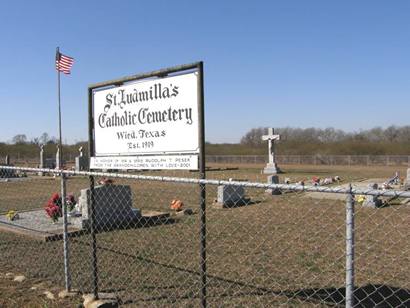
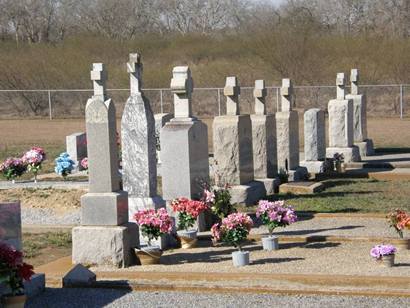
The 1919 St.
Ludmilla's Catholic Cemetery
Photo courtesy Barclay
Gibson, February 2009 |
History in
a Pecan Shell
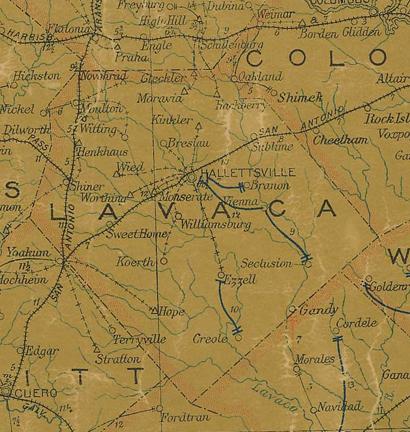
Earliest settlement
dates to 1832. Other people arrived after Texas Independence but like
many residents in this area, they were happy to sell their land to
arriving German settlers and move westward.
In the 1870s a true community formed on land belonging to the Wied
bothers. A post officed in the general store in the late 1880s and
remained open until 1906.
In the 1880s and 90s, Czech immigrants arrived and equaled out the
population between the two groups, although the town was still tiny
by today’s standards, reporting less than 50 people.
The first school was built in the mid 1890s and St. Ludmilla's Catholic
Church was constructed around 1919. The population reached its high-water
mark in the 1940 – at around 100 residents. The 1950 census showed
the population reduced by half. It remained around 50 for years even
after the community store and the cotton gin closed.
From the late 60s to the 2000 census, Wied has used the number 65
as their population count.
A Visit to Wied, Texas
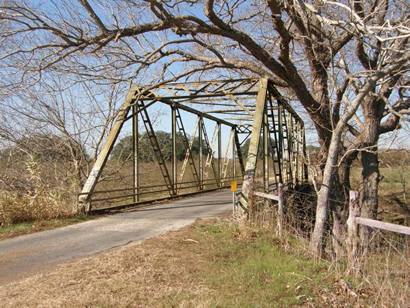
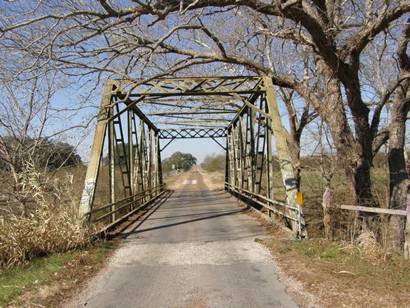
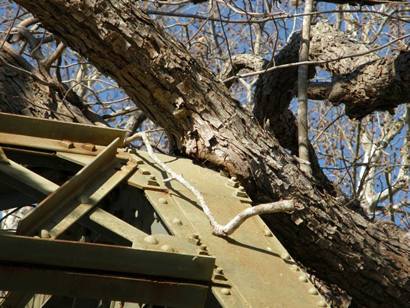
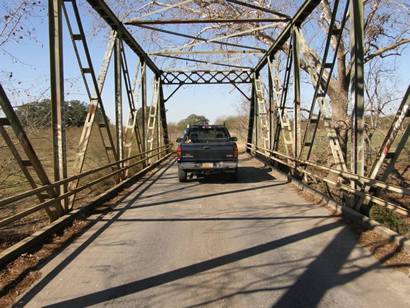
Smothers Creek Through Truss Bridge
Wied School Historical Marker |
 |
 |
 |
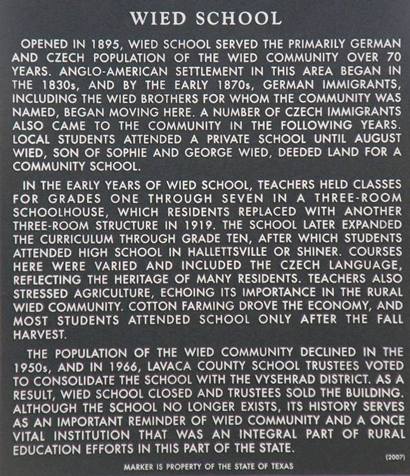 |
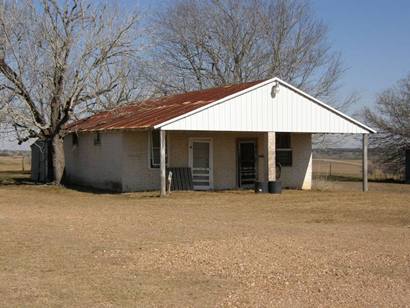
Wied School
Opened in 1895,
Wied School served the primarily German and Czech population of the
Wied community over 70 years. Anglo-American settlement in this area
began in the 1830s, and by the early 1870s, German immigrants, including
the Wied brothers for whom the community was named, began moving here.
A number of Czech immigrants also came to the community in the following
years. Local students attended a private school until August Wied,
son of Sophie and George Wied, deeded land for a community school.
In the early years of Wied School, teachers held classes for grades
one through seven in a three-room schoolhouse, which residents replaced
with another three-room structure in 1919. The school later expanded
the curriculum through grade ten, after which students attended high
school in Hallettsville
or Shiner.
Courses here were varied and included the Czech language, reflecting
the heritage of many residents. Teachers also stressed agriculture,
echoing its importance in the rural Wied community. Cotton
farming drove the economy, and most students attended school only
after the fall harvest.
The population of the Wied community declined in the 1950s, and in
1966, Lavaca County school trustees voted to consolidate the school
with the Vysehrad district. As a result, Wied School closed and trustees
sold the building. Although the school no longer exists, its history
serves as an important reminder of Wied community and a once vital
institution that was an integral part of rural education efforts in
this part of the state. |
Smothers Creek
Through Truss Bridge
Wied, Texas
The bridge is about
1.5 miles to the northest on CR 183 over the Smothers Creek. - Barclay
Gibson |
| Texas
Escapes, in its purpose to preserve historic, endangered and vanishing
Texas, asks that anyone wishing to share their local history, stories,
landmarks and recent or vintage photos, please contact
us. |
|
|
 HOME
HOME

 Texas
Gulf Coast
Texas
Gulf Coast East
Texas
East
Texas Central
Texas North
Central
Texas North Central
Texas South
Central
Texas South Texas
Panhandle
Texas
Panhandle South
Texas
South
Texas Texas
Hill Country
Texas
Hill Country West
Texas
West
Texas Texas
Ghost Towns
Texas
Ghost Towns Texas
Counties
Texas
Counties