|
|
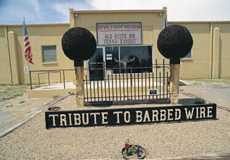
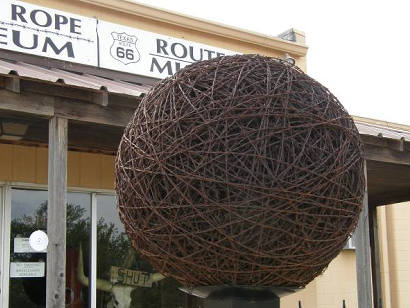
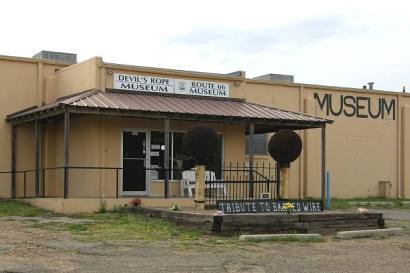
Imagine two huge solid barbed
wire balls weighing approximately 400 pounds each, sitting atop
limestone rock fenceposts and joined by antique wrought iron fencing.
This unique monument is the creation of Frank and Violet Smith of
Keller, Texas. The Smiths are charter members of the Devil's Rope
Museum of McLean,
Texas, and the museum, known as the largest barbed
wire museum in the world, features this "Tribute to Barbed
Wire" monument at the front entrance. It has been photographed
by more than 85,000 visitors since 1992. |
|
|
The
"TRIBUTE TO BARBED WIRE" The Only Monument in the World dedicated
to Barbed Wire
Photo courtesy TXDoT |
|
|
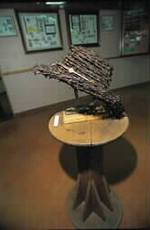
Devil's
Rope Museum Interior
Photo courtesy TXDoT |
The Smith's used
it as a yard ornament and nameplate for their home in Keller, Texas
for many years as they were avid collectors of barbed wire and other
memorabilia. They donated the monument to the museum in 1992 and it
was moved and erected permanently at the present site.
Historians state that, "Barbed
wire gave us control of the land, and windmills
made the land habitable." Barbed
wire was chosen as one of the most significant patents to come
out of the Industrial Revolution. Collectors say, "Get Hooked, on
collecting barbed
wire."
© Delbert Trew
"It's All Trew" March
24, 2004 column |
 |
 |
Recent Acquisitions:
Photos
serve as reminder of boundaries' importance
by Delbert Trew
In our modern times when eminent domain and development arrogance
often dominate the evening news, we received the story and photos
of John Prather, a rancher who lived in Otero County, N.M.
Prather garnered national attention in the 1950s by taking a heroic
stand against the U.S. government's attempt to condemn his ranch in
order to add it to the nearby McGregor Missile Range, a part of Fort
Bliss, near El Paso.
Although the Devil's Rope Museum in McLean
has a huge library about barbed wire, some 6,000 related artifacts
and a section dedicated to ranches and brands, we still welcome true
stories about the uses and history of these subjects.
The story of John Prather fit our requirements as it told of early-day
fence building, the importance of defining our boundaries and protecting
our right to own land until death, if need be.
The package contained photos and published documents plus eight livestock
brands used by the family, all registered with the New Mexico State
Brand Records dating from 1888 to modern times. A special display
has been constructed to house and show this information.... |
 |
Barbed Wire
Fences Related Articles:
Digging
post holes by hand was hard work by
Delbert Trew
Among the hundreds of jobs associated with farming and ranching,
digging postholes by hand is by far my least favorite. Today, most
postholes are dug by equipment powered by tractors, motors and hydraulics.
Iron tee posts driven into the ground have pretty well replaced
the need for digging post holes. But not so long ago all postholes
were dug by hand with a pair of diggers.
Of interest is the fact the Devil's Rope Museum in McLean has approximately
60 patented post hole diggers on display all showing different designs
and mechanisms to make the job easier. more
Barbed
Wires called Devil's Rope for a Reason by Delbert Trew
Barbed
Wire Telephones by Delbert Trew
Barbed
Wire Fences by C. F. Eckhardt
Phone
Fear by Mike Cox
|
|
|
 HOME
HOME