|
The
whys and wherefores of the near-extinction of the buffalo
will be debated from now on with no clear conclusions accepted by
all. Most writings of the time dwell on the waste and carnage and
many western films show the prairies covered with the carcasses of
slain animals.
There was waste and carnage beyond doubt but a close study shows not
all was wasted. Many a carnivore and hungry predator made a good living
following the hunters. Buffalo beef built railroads, mined gold and
silver, fed tribes, armies, explorers, wagon trains and early settlers.
Buffalo hides made robes and commercial belting to drive the machines
of manufacturing in the east. Buffalo horns and hooves produced glue,
and the hair of the beasts stuffed the furniture of the time.
Before, during and for a short time after the Big Hunt Period, everyone
living on or traveling the Great Plains burned buffalo chips for both
heat and cooking. Settler women and children dragged wash tubs across
the surrounding prairie gathering buffalo chips for this crude but
economical fuel.
As the buffalo
herds diminished and weather took its toll, the buffalo chip was replaced
by the longhorn chip as the Texas cattle herds began moving north.
About this time, the bleached bones of the buffalo, lying almost everywhere
on the prairie, began selling by the ton to be made into fertilizer
and livestock feed additives. In reality, it was a godsend.
Settler families, hard-pressed for cash, switched from gathering chips
to gathering bones. This chore not only provided much-needed income
it also cleared the grassland for plowing. The freighters distributing
supplies throughout the West began stopping at settler's homes, purchasing
the piles of buffalo bones and hauling them to the nearest rail-loading
facility for profit.
Kansas history records one freighter who hauled two wagon loads of
barbed wire to Quitaque
for Charles Goodnight
as saying, "I made more profit on the back-haul of gathered buffalo
bones than I did on hauling the original cargo of barbed wire." |
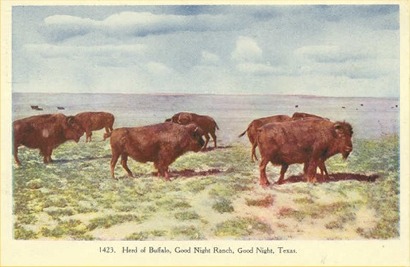 |
Good Night Ranch,
Goodnight, Texas
Postcard courtesy www.rootsweb.com/ %7Etxpstcrd/ |
The
bulk of buffalo bones were ground by machines, sacked and sold back
to the settlers for fertilizer. Later, ground bones were added to
livestock feeds to provide much needed calcium. It was believed bone
meal mixed with ground oyster shells made stronger egg shells for
poultry.
Major machinery companies sold large volume bone grinders while Sears
Roebuck and Montgomery Ward sold small bone chippers, nippers and
grinders for small farm processing.
There are many early day photographs of itinerant wanderers-of-the-prairie
pushing wheelbarrows gathering buffalo bones and piling them into
huge ricks. By writing their names on a buffalo skull, the ownership
of the rick was established. When the surrounding area was picked
clean, they contacted a freighter who hauled the bones to the nearest
railhead loading station for shipment to a fertilizer plant. It provided
a good living as long as it lasted.
Interestingly, the legal description for the original town plat for
McLean begins
with the sentence, "Starting at a pile of buffalo bones, thence south
..." I wonder how many legal descriptions throughout the West begin
in this manner.
© Delbert Trew
"It's All Trew" July
3, 2007 Column |
|
|
 HOME
HOME