|
| Photo
courtesy Tina Brazzeal, Feb. 2, 2020 |
Caracara, Vulture
of the Millennium!
It's
name is echoic, meaning the name imitates it's cry. Caracara is the
sound that is heard by Brazilian Indians. Why we have to have Brazilian
Indians name it is beyond us. |
The Caracara
or Mexican Eagle
Next
time you find yourself heading toward Gonzales
County, pay attention when you pass the roadside road-kill buffets.
The fastidious, over-dressed diners feasting with the common garden-variety
vultures on the carcass du jour are more than likely the beautiful
and regal Crested Caracara. These are members of the Falcon
family and they usually stand out like tuxedos in a soup kitchen serving
line. The bird, sometimes referred to as a Mexican eagle, has
manners equal to its regal appearance. They are monogamous, they build
(extremely sturdy) nests and are attentive parents who preen daily,
setting a good example for their offspring. Sharing a carcass with
inferior birds is done reluctantly. The Caracara is quite capable
of killing living prey and with its powerful legs, The birds have
been known to run down their prey – or even wade in shallow water.
For reasons known only to the Caracara, Gonzales
County has the highest concentration of these magnificent birds
in the entire U.S. Indeed, it is hard to spend a day in rural Gonzales
County without seeing at least one. Gonzales
County’s Palmetto
State Park is where the Audubon Society takes its yearly census.
|
 |
Caracara
TE photo, October 2014 |
| While
their range extends throughout Mexico
all the way to Argentina, they are only found in Texas,
New Mexico and Arizona in the U.S. - with a small colony located in
central Florida. |
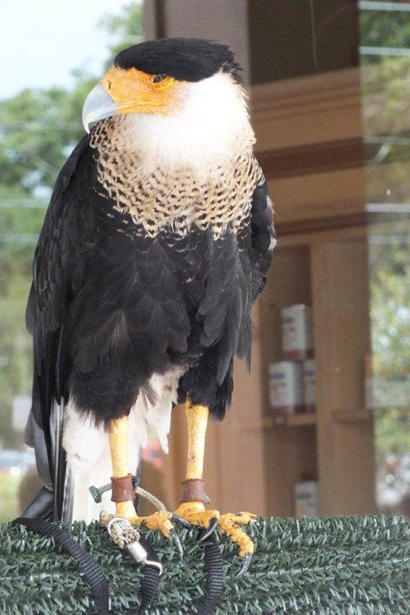
Caracara in Clearwater,
Florida
at a raptor rescue exhibit October 2014
TE photo |
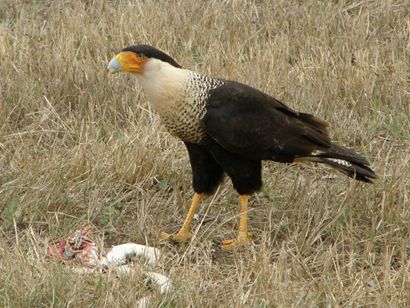
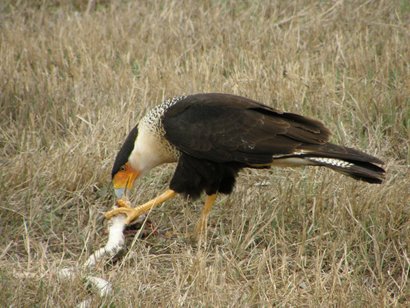
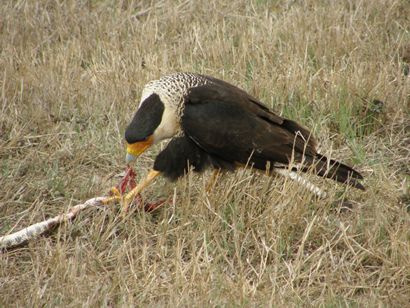
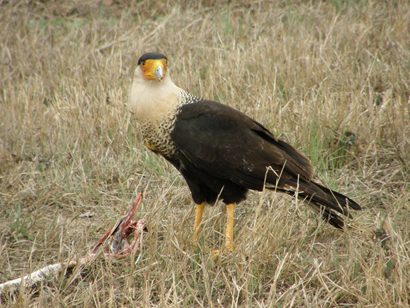
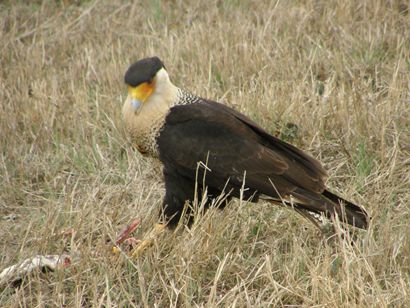
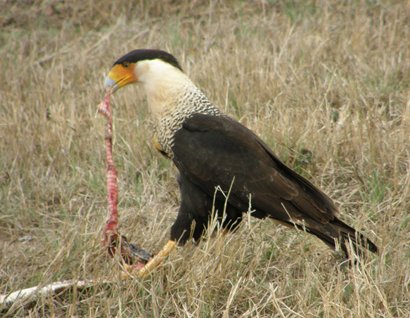
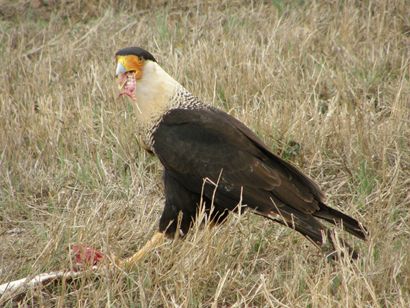
A Caracara
with its Prey
The
series of photos included here were taken along highway 71 near Bastrop,
Texas. (Bastrop
County shares a border with Gonzales
County). A grass fire in early March 2009, scorched some 50 acres
east of town, exposing wildlife and providing a feast for scavenging
birds. In this case, the meal was a four foot rattlesnake.
|
CaraCara
Means More Than FaceFace
By Maggie Van Ostrand
'It seems the Caracaras must have expensive lobbyists representing
them in Washington DC. The United States Migratory Bird Treaty Act
protects Crested Caracaras as an endangered species, even though these
big birds only visit Arizona, Florida, and Texas. This leaves the
remaining 47 states to the Yellow-Bellied Sapsucker, Red-Footed Booby
and Dark-Rumped Petrel. However, in Mexico, where Caracaras have the
exalted title of National Bird, humans sometimes eat them. Go figure."
Read
full article
Caracara By David Knape
|
| Photo
courtesy Tina Brazzeal, Feb. 2, 2020 |
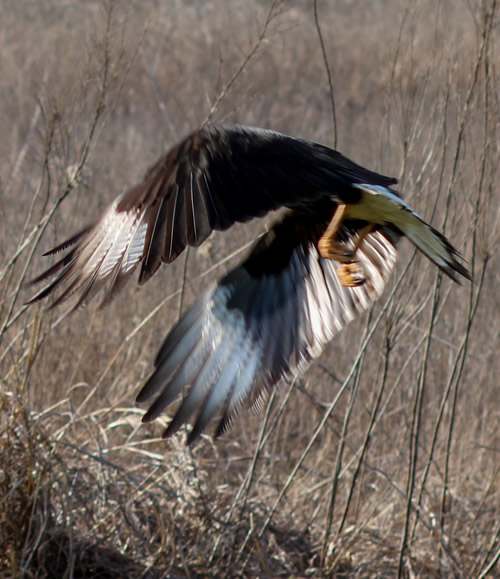
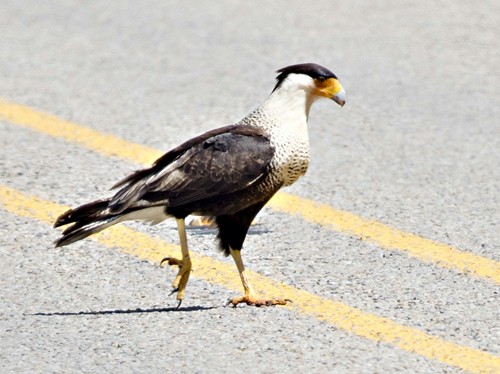
Subject:
Crested Caracara 2/2/20 Greenville, Texas
"Was trying to feed on a coyote on 380." - Tina Brazzeal,
February 2, 2020 |
| Photo
courtesy Tina Brazzeal, Feb. 2, 2020 |
| Photo
courtesy Tina Brazzeal, Feb. 2, 2020 |
| Photo
courtesy Tina Brazzeal, Feb. 2, 2020 |
Crested
Caracara in East Texas
Photo courtsey Joyce Cook, April 2018 |
Crested Caracara
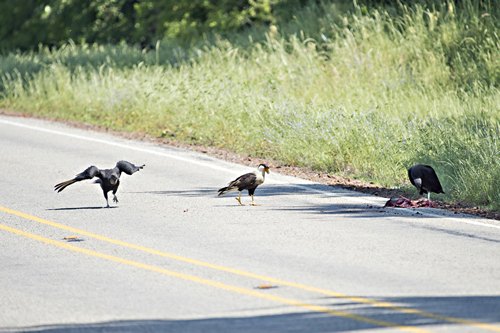
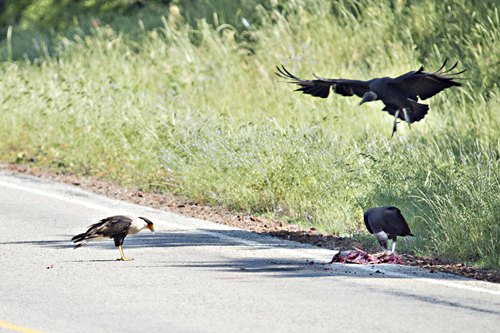
Thank you for sharing my photos! I live in Mt
Pleasant, in North East Texas. I noticed this bird on my way home,
luckily I had my camera and my 600 lens. I pulled off the road and
my grandchildrern and I watched this bird as it feasted with the Buzzards
on a dead animal on the roadside. I finally learned that it is called
a Crested Caracara, also known as a Mexican Eagle! They are not usually
seen in this part of Texas, but seen in Gonzales
County, Texas, approximately 6 hours from here. - Joyce Cook,
May 09, 2018 |
| Photo
courtsey Joyce Cook, April 2018 |
| Photo
courtsey Joyce Cook, April 2018 |
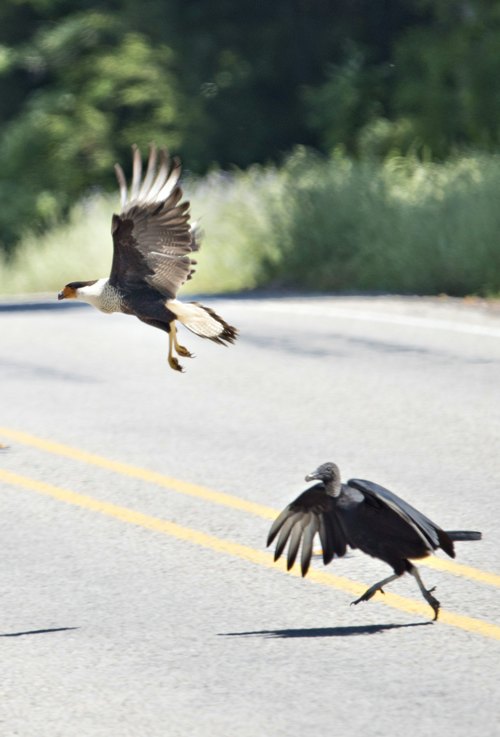
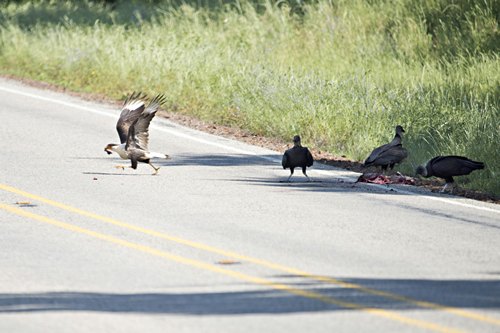
Buzzard
chasing Caracara
Photo courtsey Joyce Cook, April 2018 |
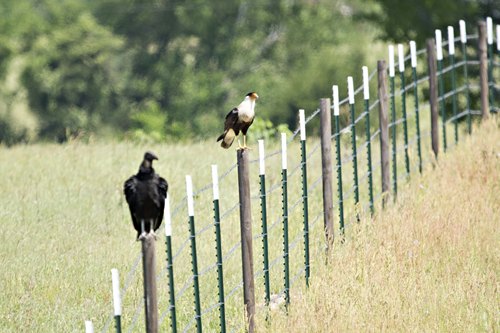
Buzzard
and Caracara at rest on fence poles
Photo courtsey Joyce Cook, April 2018 |
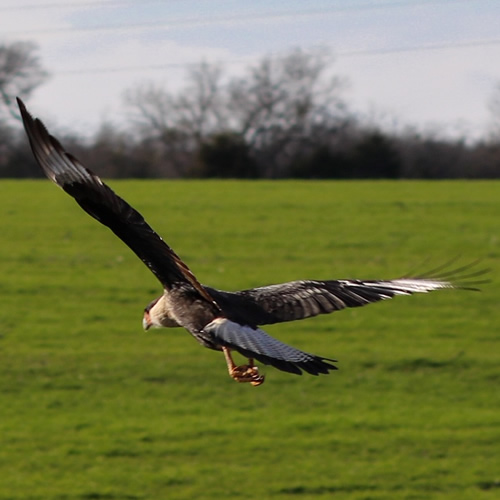
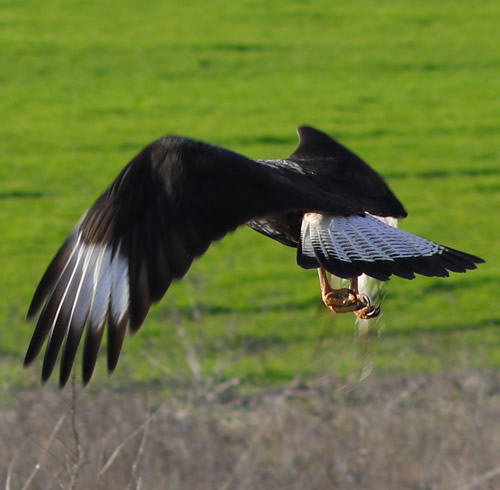
Crested
Caracara running off with food
Photo courtsey Joyce Cook, April 2018 |
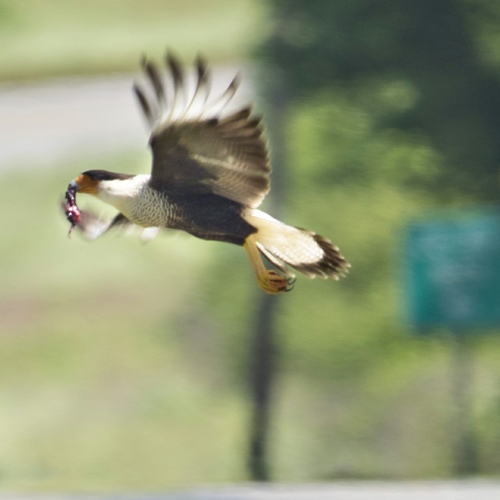
Crested
Caracara in flight
Photo courtsey Joyce Cook, April 2018 |
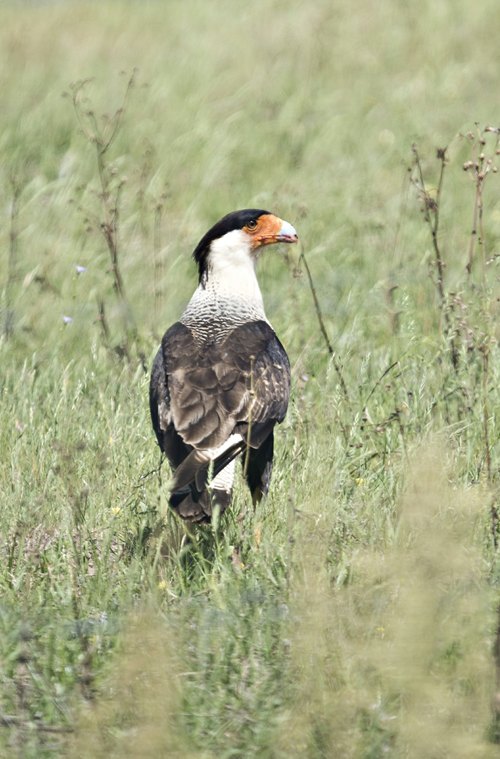
Crested
Caracara in East Texas
Photo courtsey Joyce Cook, April 2018 |
Sighting
of Caracara in Hunt County
I live in Hunt County
Texas on Lake Tawakoni. I saw this today in a field by my home....
I ... didn't think they came this far north. - Karen Castleberry,
April 24, 2016 |
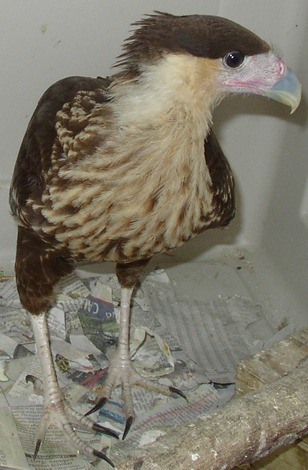
Juvenile Northern
Crested Caracara, under care at the Wildlife Rehab & Education Center
Photo courtesy Cyndi Bohannon |
|
|
 HOME
HOME