|
GREENVILLE,
TEXAS
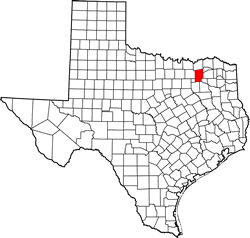
Hunt
County Seat, Central
Texas North
33°7'34"N 96°6'35"W (33.126004, -96.109703)
I-30
50 miles NE of Dallas
45 miles S of the Texas/Oklahoma border
On the eastern edge of the Dallas/Fort Worth Metroplex
ZIP codes 75401–75404
Area codes 903, 430
Population: 28,164 (2020)
25,557 (2010) 23,960 (2000) 23,071 (1990)
Book
Hotel Here › Greenville
Hotels |
 |
Greenville
by Milton Babb
The town of Greenville became the county seat when the first Texas
legislature created Hunt
County in 1846. Greenville was named for Republic of Texas Congressman
Thomas J. Green, a freedom fighter in the Lone Star's war for independence
from Mexico.
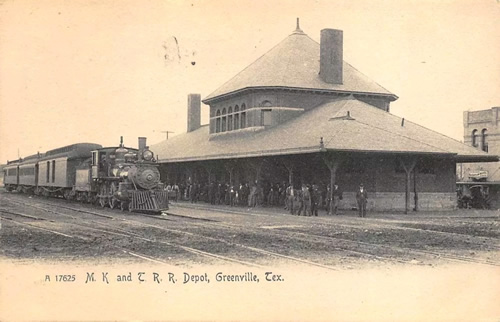
With the arrival of the railroads
in the 1880s, founders soon envisioned Greenville not as a settlement,
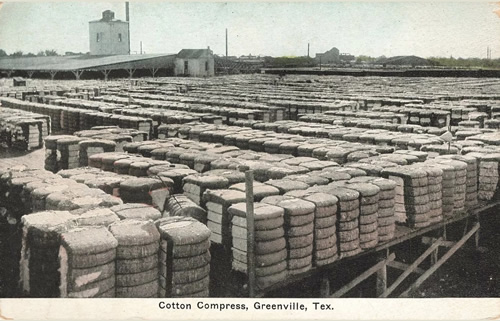
but as a city. Cotton flourished
in the blackland prairie, creating an economic engine that soon transformed
the town. The "cotton capital of the world" soon boasted the world's
largest inland cotton compress, a population of several thousand,
and six railway lines. First-class hotels, an electric streetcar line
and a thriving business community gave leaders a vision for the future.
Fortunately, much of the Victorian-era architecture remains to give
Greenville an identity quite apart from typical suburbia. |
 |
Greenville
Today
Today, downtown
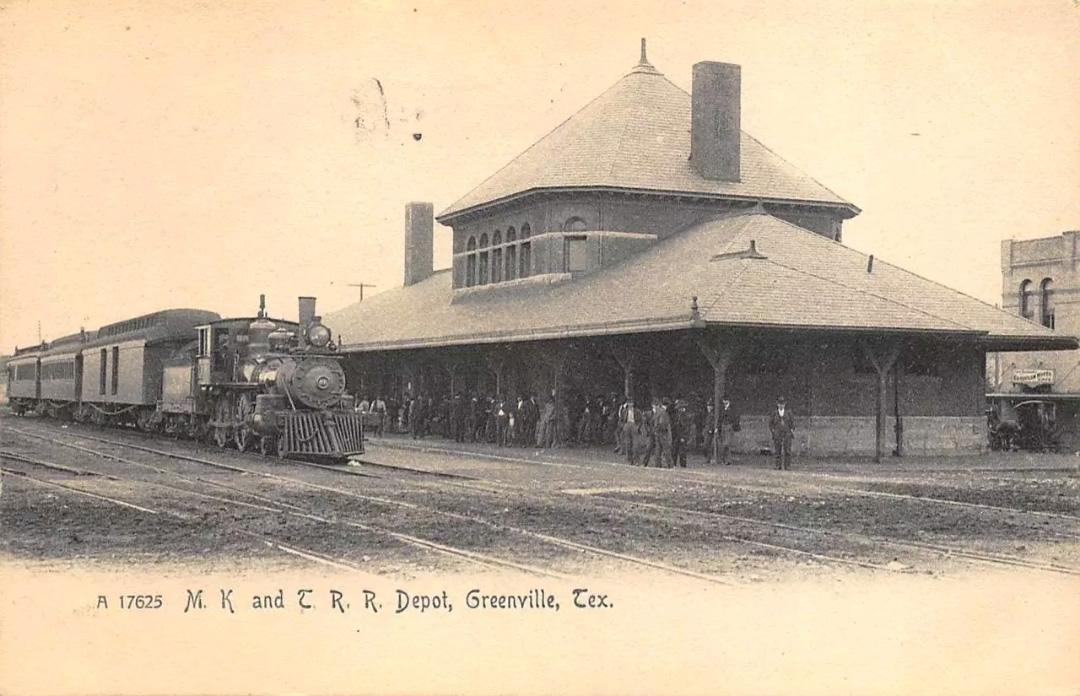
Greenville offers visitors a step back in time. The Greenville Railroad
Museum is housed in the 1895 Katy Depot. Antique emporiums and specialty
shops line Lee Street and Washington Street (the original northern
boundary of Mercer's Colony). The Hunt County Heritage Garden is a
delight to the senses and a learning experience of which plants do
well in native Texas soil.
Concerts in the 1938 Art Deco Municipal Auditorium range from the
Dallas Symphony Orchestra to Ray Wylie Hubbard. Elvis played there
in 1955.
A self-guided historical walking tour informs visitors how
the Greenville Majors beat the New York Yankees, why early civic leaders
shot a stream of water over the courthouse
and why acts from John Philip Sousa to the Marx Brothers to Houdini
came to Greenville in early days.
- Milton Babb, December 1006 |
|
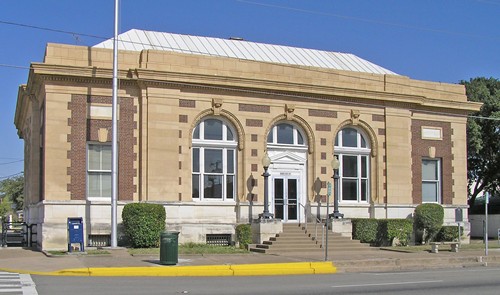
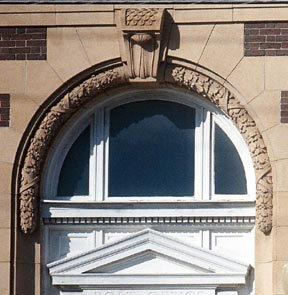
Greenville's
1909 Beaux Art style U.S. Post Office
Photos courtesy Milton Babb, December 2006
|
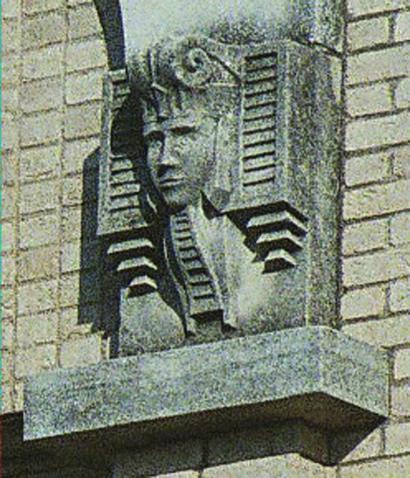
Greenville's
Beaux Art style U.S. Post Office architectural details
Photo courtesy Milton Babb, December 2006 |
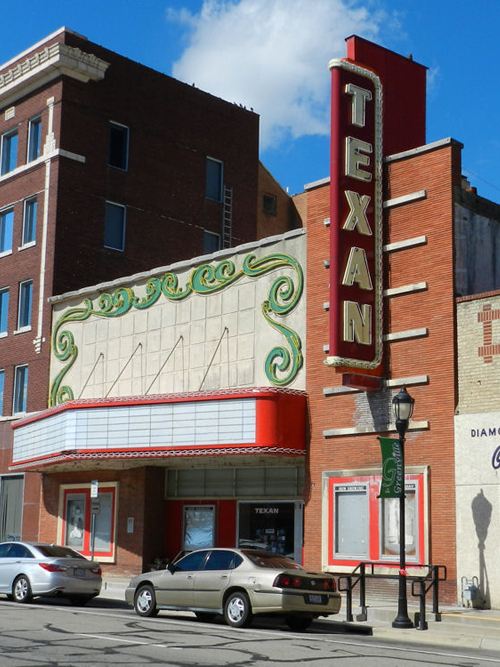
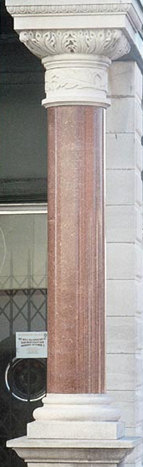
L - Detail of
the 1902 Beckham Hotel Annex.
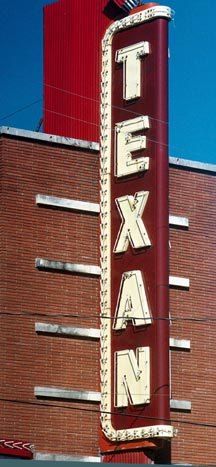
R - "The 1930s Texan Theater now houses a home decor and custom
quilt shop."
Photos courtesy Milton Babb, December 2006 |
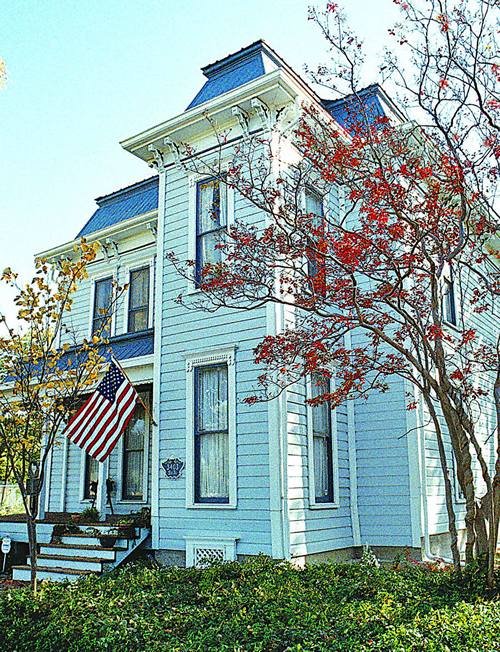
The 1886 Second
Empire style Germany-Babb House
on Lee Street just west of downtown.
Recorded Texas Historic Landmark.
Photo courtesy Milton Babb, December 2006 |
Greenville
Attractions / Landmarks
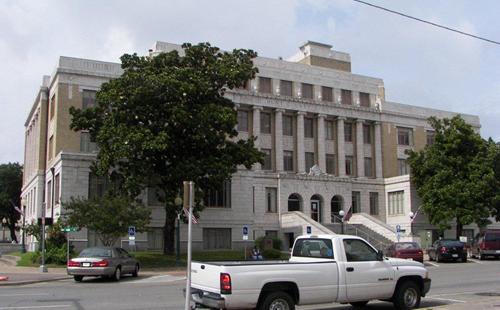
Hunt
County Courthouse
The Audie Murphy/American
Cotton Museum:
600 I-30 East 903-450-4502
Exhibits and artifacts from local history, including cotton growing
and processing equipment, and Audie Murphy memorabilia from WWII's
most decorated soldier. A bronze statue of Audie Murphy is the centerpiece
of the veterans memorial on the museum grounds.
The Genealogy
Room at W. Walworth Harrison Public Library houses an extensive
collection of records for family researchers. In Ja-Lu Park off
Stonewall Street. 903-457-2997
Victorian and
turn-of-the-century homes in the older residential area
Peace Garden
sculpture garden in Forest Park Cemetery, Bus. Hwy 69 S.
Nearby Destinations
Less than 30 miles away are Lake Lavon and Lake Ray Hubbard
to the east, and Lake Tawakoni to the south.
|
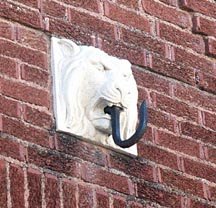
Gargoyle
Morgan and Gotcher Building on Stonewall Street
Photo courtesy Milton Babb, Dec. 2006 |
Gargoyle
1925 Stringer Mortuary Building on Stonewall Street
Photo courtesy Milton Babb, December 2006 |
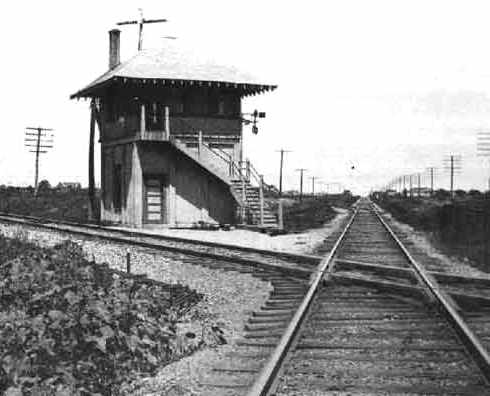
"The
original Tower 64 around 1930. The track straight ahead is looking
toward Commerce, Texas
on the St. Louis Southwestern (Cotton Belt). Track to the left
is the Missouri, Kansas and Texas toward Denison.
Structure that can be seen in the distance is the MKT Hunt Yard
office in Greenville, Texas."
- Photo courtesy Katy Railroad Historical Society
|
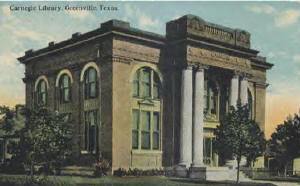
The 1903 Carnegie
Library in Greenville. Razed in 1953
Photo courtesy texasoldphotos.com |
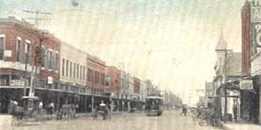
Greenville street
scene
Lee Street looking east
TE old postcard |
Greenville
Chronicles
Grin
and Bear It by Milton Babb
"There's nothing worse than a drunken bear in a department store..."
The
Power We Longed For
In the years just before and during World War II two unpaved roads
led south from Saltillo.
Those of us who lived on the road that started from the east side
of town used kerosene lamps and wood-burning heaters and cook stoves.
Those who lived on the road that ran from the west side had the
benefit of power supplied by an Rural Electric Administration co-operative
in Greenville...
|
Courtesy
Northeast Texas History and Genealogy Center
at the W. Walworth Harrison Public Library in Greenville, Texas |
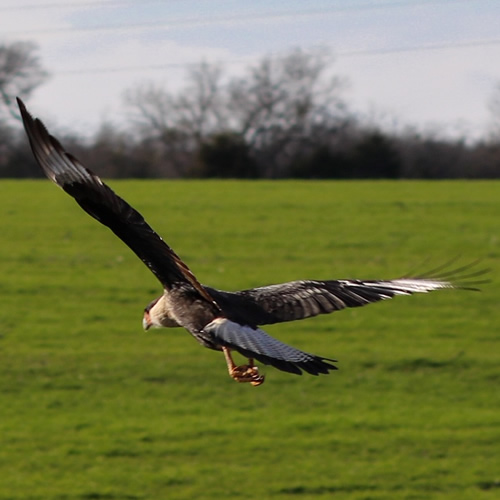
Sighting of
Caracara
trying to feed on a coyote on 380
Photo courtesy Tina Brazzeal, Feb. 2, 2020 |
Greenville
Tourist Information
Greenville Chamber
of Commerce: 903-455-1510
2713 Stonewall St.
Chamber website:www.greenville-chamber.org/
City website: www.ci.greenville.tx.us
Greenville
Hotels - Book Here
|
| Texas
Escapes, in its purpose to preserve historic, endangered and vanishing
Texas, asks that anyone wishing to share their local history, stories
and new or vintage/historic photos, please contact
us. |
|
|
 HOME
HOME