|
|
Faded Photographs
by Mike Cox
The people in these images could be your
ancestors. Or mine. One thing is sure: They are long dead, and so,
too, is anyone who could identify them. |
|
|
“Adopt
a Family” says the hand-lettered sign on the box in the antique
store. “Put ‘em on your mantle. $3 each.”
Inside the box lay a collection of old photographic portraits mounted
on cardboard, their once black-and-white images faded to sepia.
Babies had been shushed long enough to be posed in elaborate studio
settings, stern-looking women sat stiffly in dark dresses buttoned
to their neck, mustachioed men in suits and high-collars stood next
to their wives before a fake studio background.
Vintage photographs
seem to be an increasingly popular inventory item in antique stores
or malls. The going rate is only a few bucks per image, though like
most collectibles, prices vary from less than that to a lot more.
Collectors are
particularly interested in photographs mounted on ornately decorated
cardboard bearing the name of the photography studio. They also
like vintage clothing, interesting studio backgrounds, work by a
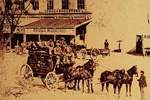
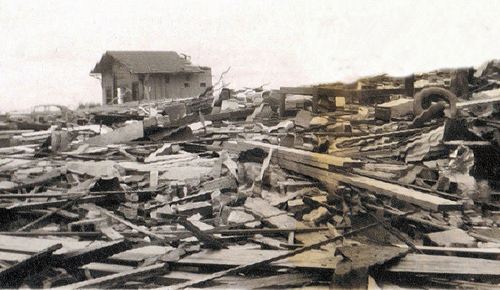
particular photographer, Civil War and Old West images, disaster
photographs, early town and city scenes and interesting shots of
interesting people doing interesting things.
|
 |
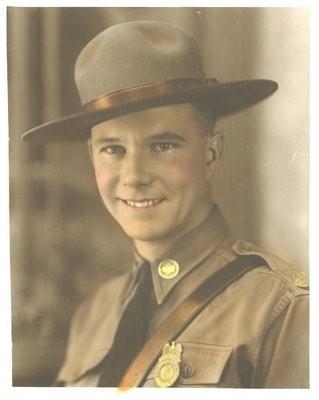 |
While
the people and subject matter vary, most of the faded images you see
in shops have something very sad in common: No one ever bothered to
write the name of the person or place on the back of the photograph.
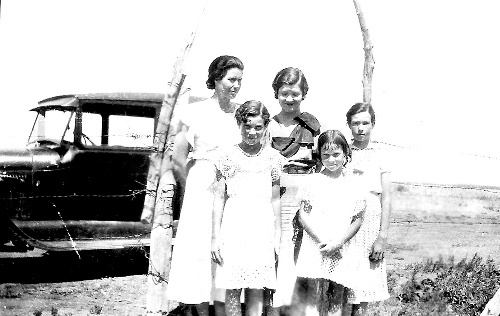
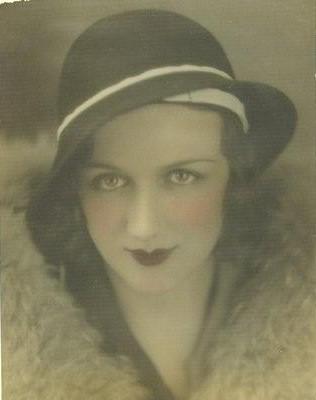
The people in these images could be your ancestors.
Or mine. One thing is sure: They are long dead, and so, too, is anyone
who could identify them.
Caches of photographs usually come from estate sales. Often they are
displayed in the same trunk or box they had been kept in by the last
survivor of their family. At least the last survivor who cared enough
to keep them.
Over the years, I’ve acquired dozens of unidentified photographs,
fascinated by the stories they hint at.
For example, there’s the older woman in the black dress with white
polka dots, standing in front of a car holding a photograph of a man
in uniform. The only clue is the date, “May 29, 1944.” Is he her son?
Grandson? Had the family just received news of his death? The questions
go on and on, the answers likely unattainable at this late date. |
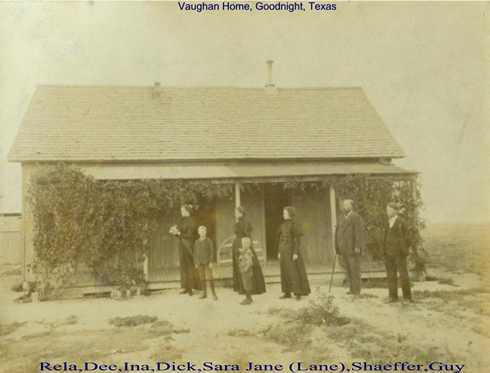 |
| Courtesy
Lance
Ingham Sloan, (decendent of the Vaughan's of Goodnight) and (GGGG-nephew
of Charles Goodnight) |
Just
as frustrating is finding a particularly interesting shot of an
early-day community or scene that would be far more useful, not
to say valuable, if a location had been given. Sometimes, happily,
an image will contain enough clues for an identification to be made,
but not always.
But it’s the unidentified photos of people that particularly haunt
me. I feel sorry for these folks and their families, but not because
they are no longer with us. That, obviously, awaits us all. In a way,
they are only partially dead, stuck in an in-between dimension. An
instant of their life captured on tintype, glass plate or early Kodak
negative still exists, but is no longer conntected to their name.
All that remains of them is that images, waiting for someone willing
to pay $3 for it. Of course, if that old photograph does bear some
form of identification its value can increase tremendously. Images
of identified Civil War soldiers or officers and long-gone structures
bring much higher prices. |
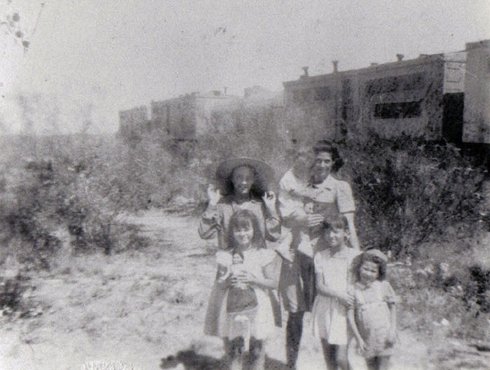 |
Hall
Family and Friends
Courtesy Lola Hall Norton and Laura Jean Hall |
|
Courtesy
Billie Mayhall Freeman
|
| Courtesy
Courtesy Rob McLain |
Most
of the old photographs
haunting the antique stores of Texas
will remain forever nameless, but we can protect ourselves, our family
and our friends from this photographic purgatory.
Make sure you label your film-era pictures. Go back and label the
ones you have while you can still remember who’s in them. If your
parents or grandparents have a drawer full of old pictures, spend
some time with them and get the names of your forebears on those pictures
while you still have a chance.
Admirably, many libraries and archives holding photographic collections
actively try to get unidentified images pegged. They publish interesting
photographs and hope someone will be able to come up with a name or
location. ( See Casasola
Collection) |
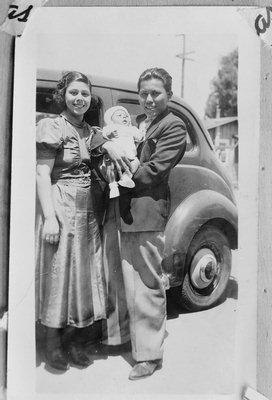 |
|
The internet
has raised the odds of being able to ID an old picture. A genealogical
magazine, My Family Tree, publishes scans of nameless photographs
and has had success in attaching names to faces.
Also thanks to the net, family historians can at least learn some
things about their unlabeled photos. Various Web sites chronicle
clothing and hair styles by era, types of photographs, and other
information which can at least pinpoint the approximate date of
an old photograph.
Digital technology also makes it possible to restore a photograph
and enhance features not readily apparent in the originals. Of course,
the same technology also makes it possible to trick up photographs,
but that’s another story.
© Mike Cox
"Texas Tales"
September
30, 2010 column
See Texas
Vintage Photos
|
|
Books by Mike Cox - Order Now |
|
|