|
|
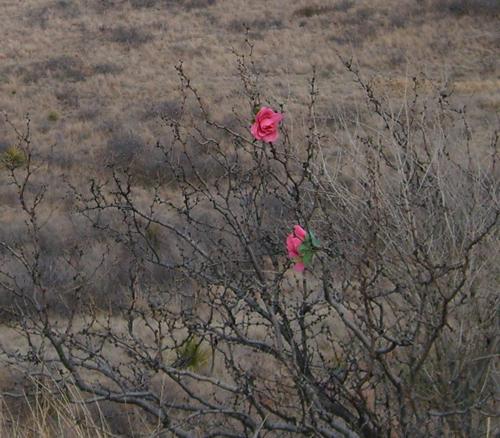
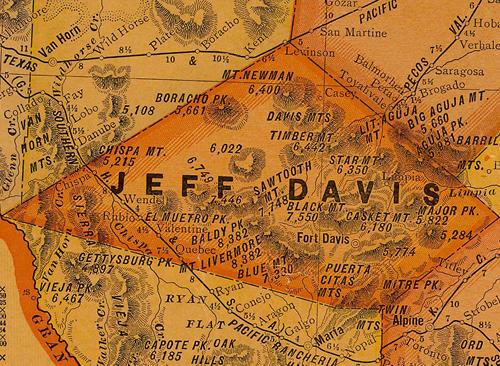
Wild Rose Pass
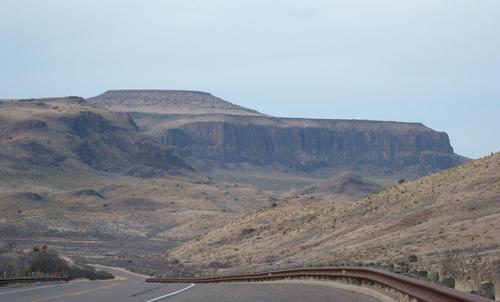
in Limpia Canyon
Photo courtesy Sarah
Reveley, 2007 |
History
in a Pecan Shell
Unnamed Peaks
The two mile-long pass ranges from 4,320 feet to 4,546 feet above
sea level. Ironically, the taller mountains east and west of the pass
are 700-900 feet higher, but remain unnamed.
Rangers, Engineers and a Desert Rose
In late summer of 1848 Col. John
Coffee Hays of the Texas Rangers was sent to find a practical
wagon road to El
Paso. After 107 days of great hardship and nearly dead of starvation,
they returned to San Antonio
with little more than the answer – “Yes, a road was possible.”
In December of 1848, Lt. William H. C. Whiting and Lt. William F.
Smith, both from the Army Corps of Engineers, were given orders to
explore the same route – through military eyes. They left San
Antonio in February of 1849, with Whiting commanding the small
detachment. Whiting is credited with naming the pass in 1849 after
the Demaree rose, native to the region.
Texas Legend (and former) Texas Ranger William
A. (Bigfoot) Wallace, who once carried mail by foot from San
Antonio to El
Paso later drove a stagecoach along the Skillman mail route
which included the pass. |
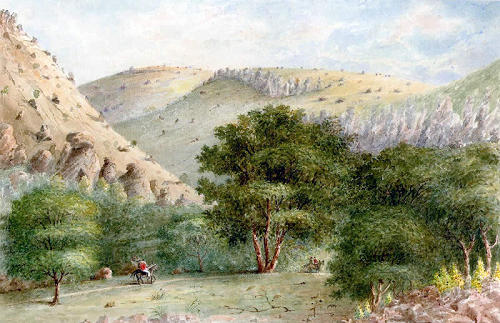 |
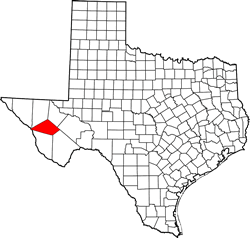
Wild Rose Pass
- A passageway through the Limpia mountains
(today known as Davis Mountain)
Wikimedia
Commons |
What’s black
and white and red all over?
According to the illustrious Handbook of Texas, in 1859 a mail stage
was attacked by Mescalero Apaches who killed the guard and stole the
mail. Their curiosity over the illustrated newspapers in the mail
(or perhaps the crossword puzzles) delayed their escape and pursuing
troops caught them, killing 14 of the group. Survivors told the story
back home and unwilling to admit being distracted, blamed the papers
– declaring them to be bad luck.
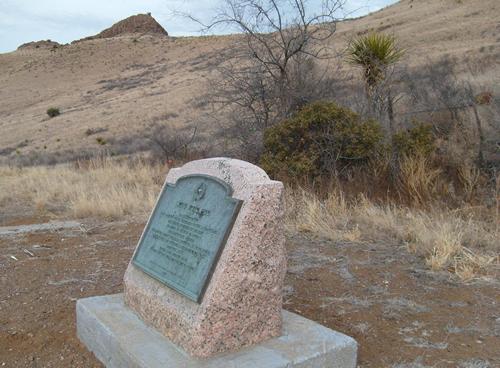
In 1936 the pass qualified for the Centennial Marker shown here: |
Wild
Rose Pass Centennial Marker close-up view
Photo courtesy Sarah
Reveley |
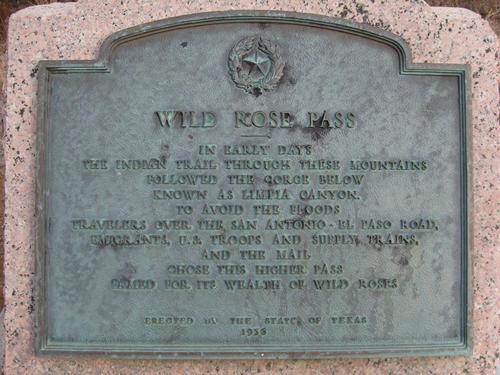
Marker Text:
WILD ROSE PASS
IN EARLY DAYS
THE INDIAN TRAIL THROUGH THESE MOUNTAINS
FOLLOWED THE GORGE BELOW
KNOWN AS LIMPIA CANYON.
TO AVOID THE FLOODS
TRAVELERS OVER THE SAN ANTONIO-EL PASO ROAD,
EMIGRANTS, U. S.TROOPS AND SUPPLY TRAINS,
AND THE MAIL
CHOSE THIS HIGHER PASS
FAMED FOR ITS WEALTH OF WILD ROSES |
Photographer's
Note:
These photos were taken in January (2007) when the wild rose bushes
were bare, but I noticed that travelers had attached artificial roses
as a tribute to the earlier pioneers. - Sarah
Reveley
More Texas Centennial
› |
|
|
 HOME
HOME