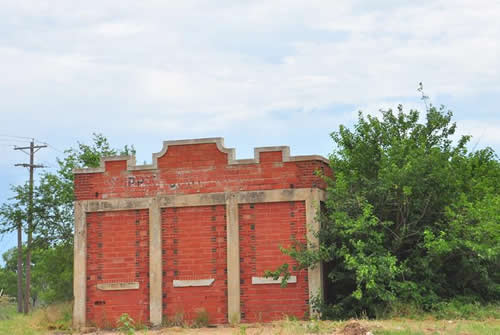
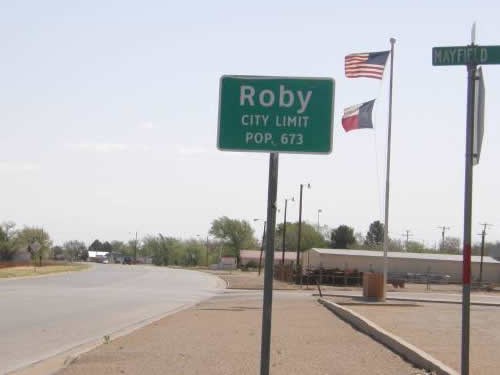
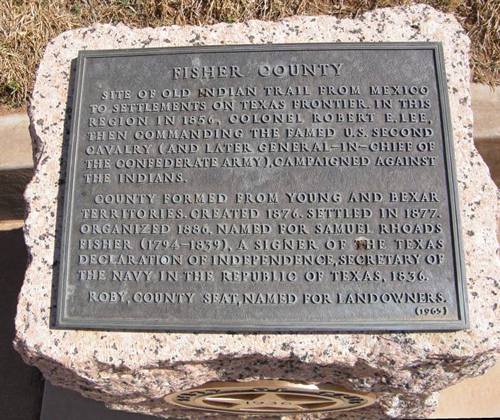
|
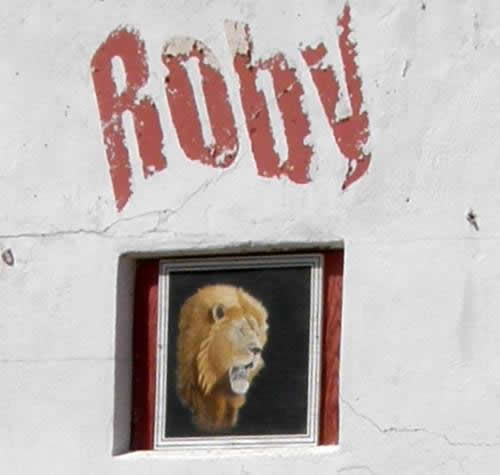 |
History in
a Pecan Shell
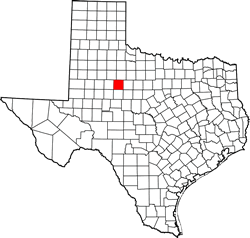
In 1885, shortly after Fisher
County was organized, a dispute arose between business partners
from Mississippi and a town called Fisher. Both wanted their land
to host the courthouse. One of the partners was a man named D.C. Roby,
and the town of Fisher is now called North Roby, so one can assume
the result.
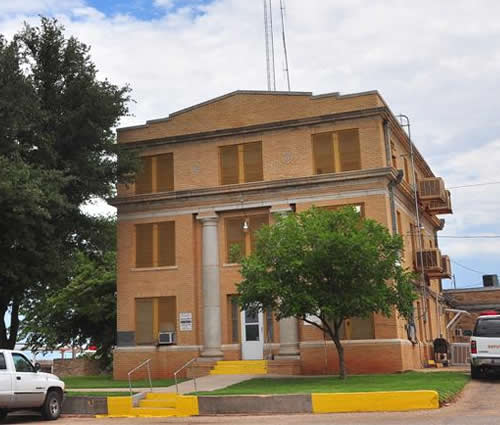
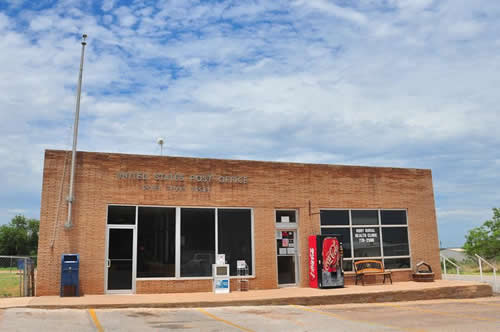
The following year the county’s first courthouse was built, and a
school and post office opened. In 1890 the population was estimated
to be 300 people and the town had a hotel, restaurant and a newspaper.
Being a peaceful place, Roby didn’t have the need of a jail until
1892 when they built one of stone. By 1900 the population had grown
to over 700 residents.
Roby received its first railroad in 1907 (The Texas Central) and in
1915 the Roby and Northern laid 4.4-miles of track to connect Roby
proper with North Roby. In 1930 the population was 801. It actually
increased during the Great Depression – reaching 904 for the 1940
Census. The Roby and Northern line was scrapped during WWII
and its rails went to the war effort.
The population peaked in 1950 with 1,040 people calling Roby and North
Roby home. The city was plagued by insufficient water throughout its
life and finally in 1953 during a long period of drought, water from
Oak Creek Lake was piped in. By 1970 the population was down to less
than 800 and over the years it has slowly declined to the present
643.
(2010) |
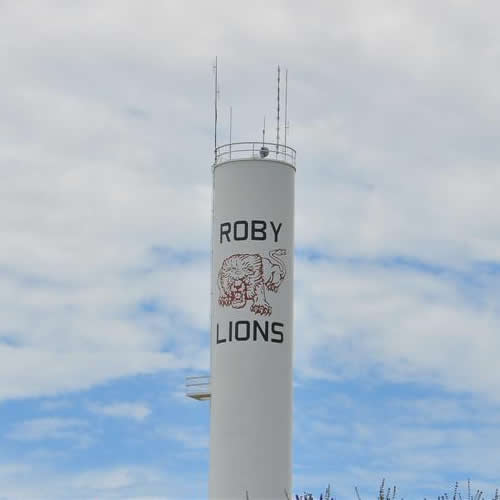 |
Historical Marker
- US 180 & Hwy 70 - across from the courthouse
ROBY
Located on land
originally included in a land grant to Texas War for Independence
veteran Thomas H. Cosby, the town of Roby was first platted in 1885.
The land was purchased by D. C. and M. L. Roby of Mississippi, relatives
of Cosby's second wife, Martha. The Robys hired Walton, Hill, and
Walton, a Travis County
law firm, to represent their interests, and instructed the attorneys
to organize a town to be named county seat of Fisher
County. On behalf of their clients, the attorneys donated land
for churches, schools, a park, and a cemetery. Town lots were also
given to settlers who would build homes within ninety days. In an
election held in April 1886, Roby was declared the county seat.
The first county court was held in a shed behind the V. H. Anderson
House, which served as the town's first post office. A frame courthouse
was built on the southwest corner of the town square and was replaced
over the years by a succession of other structures.
Schools, churches, and businesses were established as settlement in
the town increased. Retaining its small town atmosphere, Roby remains
a center of commerce for Fisher
County.
(1989) |
The 1926 Fisher
County jail on the courthouse square still in use today.
Photo Courtesy Gerald
Massey, June 2010 |
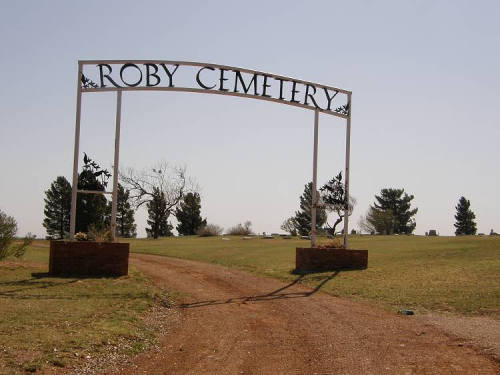 |
Historical Marker
- Hwy 70 and CR 203
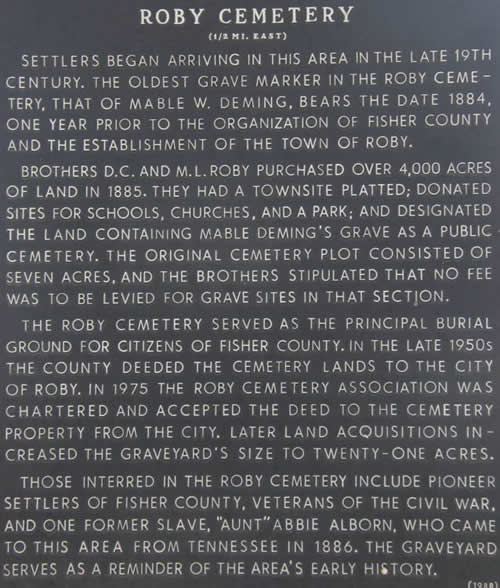
Roby Cemetery
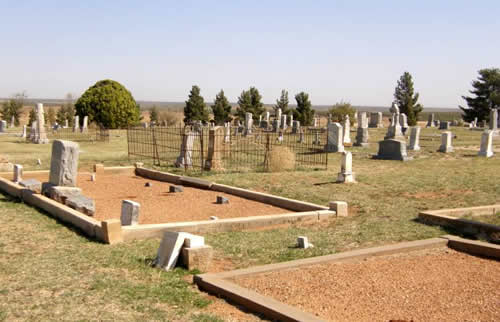
Settlers began
arriving in this area in the late 19th century. The oldest grave marker
in the Roby Cemetery, that of Mable W. Deming, bears the date 1884,
one year prior to the organization of Fisher
County and the establishment of the town of Roby.
Brothers D. C. and M. L. Roby purchased over 4,000 acres of land in
1885. They had a townsite platted; donated sites for schools, churches,
and a park; and designated the land containing Mable Deming's grave
as a public cemetery. The original cemetery plot consisted of seven
acres, and the brothers stipulated that no fee was to be levied for
grave sites in that section.
The Roby Cemetery served as the principal burial ground for citizens
of Fisher County.
In the late 1950s the county deeded the cemetery lands to the city
of Roby. In 1975 the Roby Cemetery Association was chartered and accepted
the deed to the cemetery property from the city. Later land acquisitions
increased the graveyard's size to twenty-one acres.
Those interred in the Roby Cemetery include pioneer settlers of Fisher
County, veterans of the Civil War, and one former slave, "Aunt"
Abbie Alborn, who came to this area from Tennessee in 1886. The graveyard
serves as a reminder of the area's early history.
(1988) |
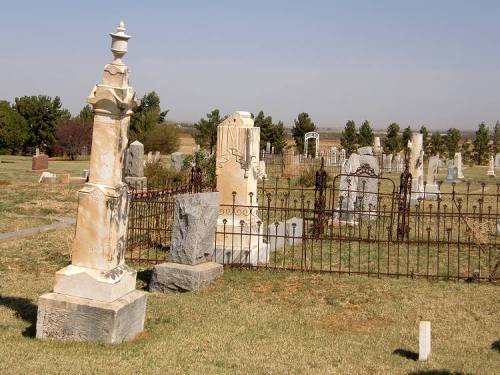 |
| Texas
Escapes, in its purpose to preserve historic, endangered and vanishing
Texas, asks that anyone wishing to share their local history, stories,
landmarks and recent or vintage photos, please contact
us. |
|
|
 HOME
HOME