|
 |
History in
a Pecan Shell
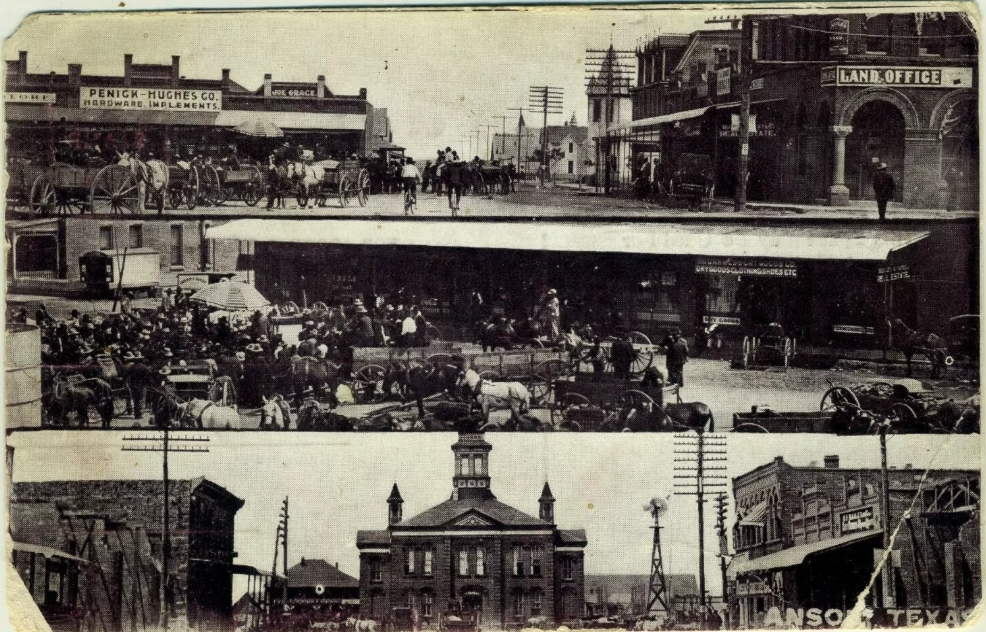
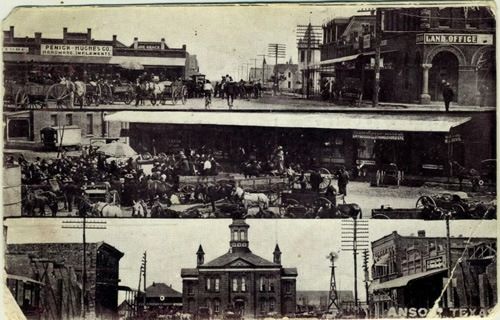
The town was built
in anticipation of the arrival of the Texas and Pacific Railroad.
Investments were made and stores and hotels opened. But the T & P
went further south - through Baird,
Abilene and Sweetwater.
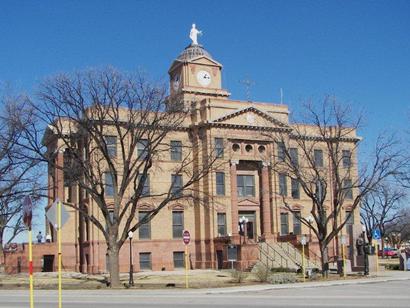
A town is a terrible thing to waste - so the people made the most
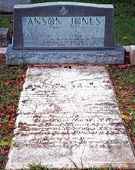
of it. It began life as Jones City, Texas.
Jones City was declared the county seat in 1881 but the name was changed
to Anson in 1882. There wasn't too much opposition to the change of
name since Anson
and
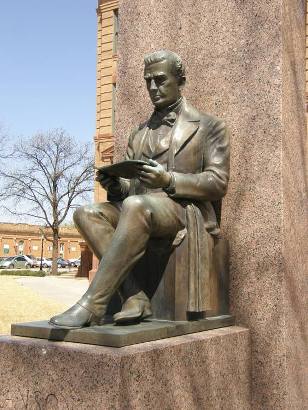
Jones were the same man. As a physician, San
Jacinto veteran, publisher and founding member of the first Masonic
Lodge in Texas, Jones was a busy man. He also managed to be President
of the Republic
of Texas and Texas' Ambassador to the United States. He is buried
in Houston's
Glenwood Cemetery and there is no record of him ever traveling
near the county that bears his name. |
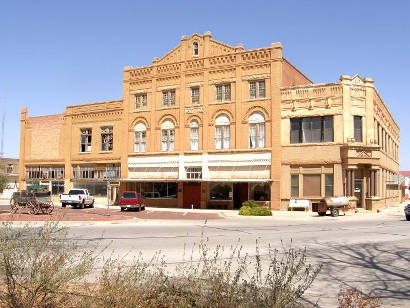
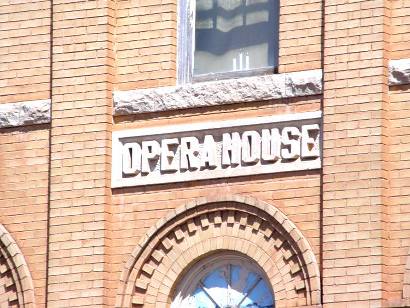
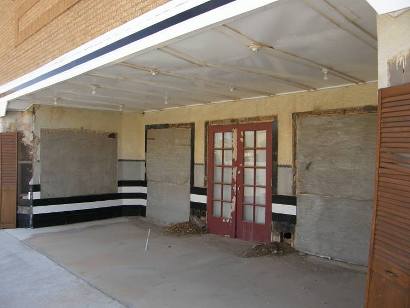
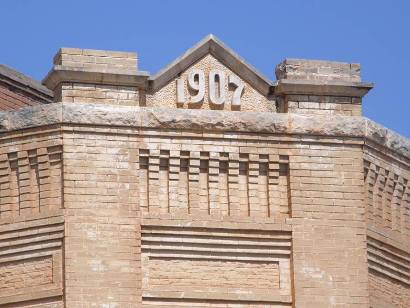
Anson's
1907 Opera House
1120 11th St.
Recorded Texas Historic Landmark
Photo courtesy Barclay
Gibson, April 2009 |
Historical Marker
Text
Anson Opera House
Built 1907 by A.W . Johnson and Dr. D. Williams, with Thomas Vetch,
contractor. House was site for diverse programs: stock company and
Chautaugua productions such as "East Lynn" and "The Klansman" (for
which Sheriff Tom Hudson's horse was borrowed and led on stage); "Perils
of Pauline" and other silent moving pictures; a state championship
wrestling match in era of local pugilist Boomer Moore; and Anson High
School's first (1909) graduation.
Recorded Texas Historic Landmark, 1963 |
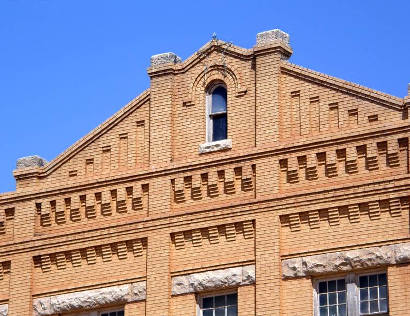
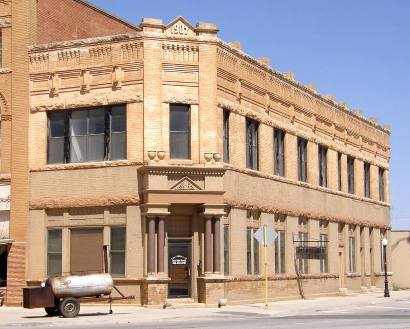
Opera
House architectural detail
Photo courtesy Barclay
Gibson, April 2009 |
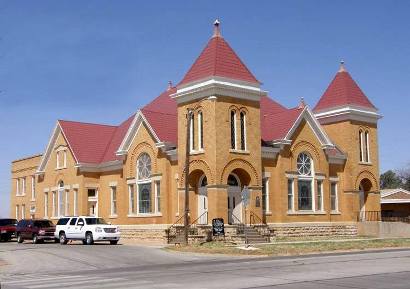
Methodist Church
832 Commercial St.
Recorded Texas Historic Landmark
Photo
courtesy Barclay
Gibson, April 2009 |
Historical Marker
Text
First United Methodist Church of Anson
This congregation was organized in 1882 by the Rev. J. C. Strickland,
a pioneer Methodist circuit rider. In 1908, during the pastorate of
the Rev. W. H. Terry, local builder Thomas Veitch constructed this
Romanesque Revival building for the church. The original bell tower
was eventually lowered to avoid possible wind damage. Later additions
to the sanctuary reflect the growth of the church, a leader in Anson's
development for over a century.
Recorded Texas Historic Landmark -1982 |
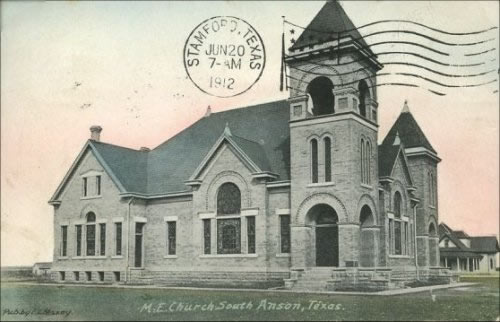
M. E. Church,
1912
Postcard
courtesy www.rootsweb.com/ %7Etxpstcrd/
More Texas Churches |
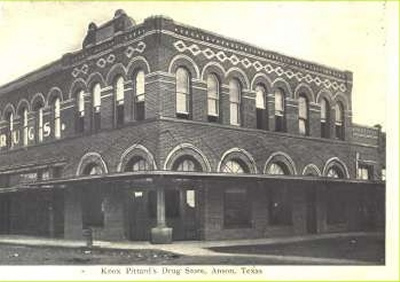
Knox Pittards
Drug Store
Postcard
courtesy www.rootsweb.com/ %7Etxpstcrd/
More Texas Drug
Stores |
Anson, Texas
Chronicles
The
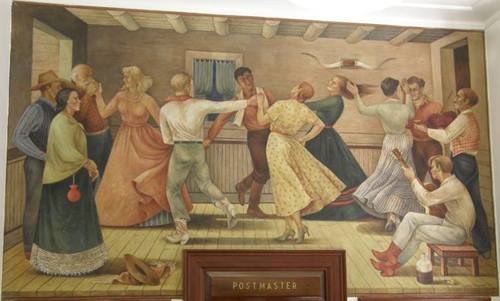
Cowboys' Christmas Ball by Michael Barr
"On a snowy December evening in 1885, cowboys in plaid shirts,
red bandanas, and shiny boots rode into Anson,
Texas, a town of about two dozen, nestled among the mesquites
in Jones County.
Musicians arrived by stage from Abilene.
Ranch families in their Sunday best bounced in by buckboard from
Hamlin, Roby,
Stamford, Albany,
and Rotan. They came
to dance in the dining room of the old Star Hotel....Read
full article"
No
Dancing in Anson Cartoon by Roger T. Moore
Harper
Valley PTA Cartoon by Roger T. Moore
|
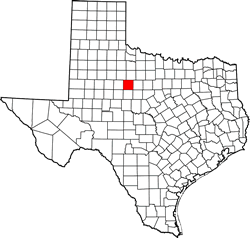
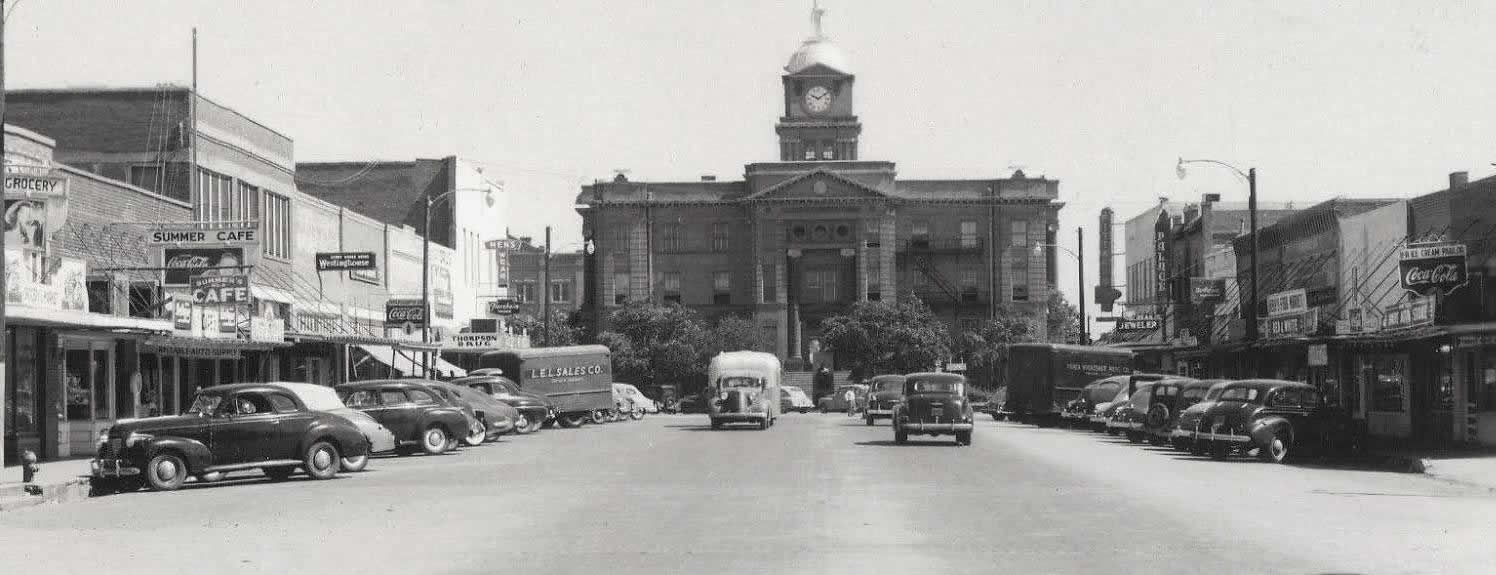
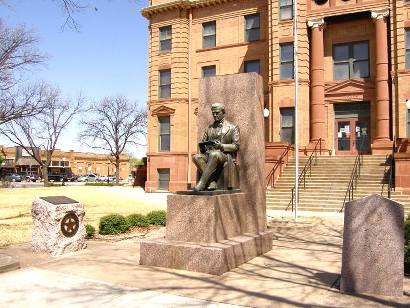
1936 Centennial
- Highway Marker on courthouse grounds
Jones
County
Site of emigrant trail, the frontier military road,
and Fort Phantom
Hill, founded in 1851 to guard the military road. County created
1858 from Bexar and Bosque counties. Named for Anson
Jones (1798-1858), a veteran of San
Jacinto, minister to the U.S., Secretary of State and last President
of the Texas Republic. Phantom
Hill, in 1858-1861 a Butterfield Overland Mail Station, was in
1861-1865 a Civil War patrol point, trying to curb frontier raids
by Indians. The county was recreated in 1876, organized 1881. Anson
(at first called Jones City) is county seat.
(1965) |
| Texas
Escapes, in its purpose to preserve historic, endangered and vanishing
Texas, asks that anyone wishing to share their local history, stories,
landmarks and recent or vintage photos, please contact
us. |
|
|
 HOME
HOME