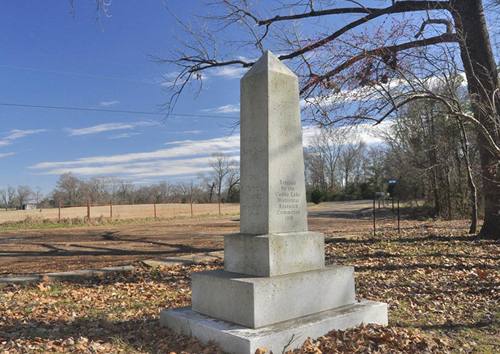
|
Potter migrated
to Texas in 1835 and joined Texas revolutionaries. He served as
a delegate from Nacogdoches
to the Consultations in 1835 and 1836 and signed the Texas Declaration
of Independence. Potter fought at San
Jacinto and afterwards won appointment as secretary of the Texas
Navy. Later, he was a member of the Texas Congress.
Harriet Moore of New Orleans married Solomon Page and they moved
to Texas, where Page deserted her to enlist in the revolutionary
army. She managed to survive, even during the Runaway
Scrape, with assistance from Potter. Harriet turned down Page's
offer of reconciliation and decided to return to New Orleans, then
move in with relatives in Kentucky. Potter offered his help, but
instead took her to property he owned in presentday Harrison
County. Potter convinced Harriet that her marriage to Page was
invalid in Texas because they had not been married by a priest,
and so they were betrothed by bond in September 1836, lived together
at Potter's
Point on Caddo Lake,
and produced two children.
Potter served in the Texas Congress, which meant that he spent much
time in Austin. After
he was assassinated during the Regulator-Moderator
War, Harriet discovered while probating his will that he had
left their homestead to Sophia Mayfield of Austin.
He left other property to Harriet, whom he identified as "Mrs. Page."
Harriet continued to live on the homestead and remarried in 1842
to Charles Ames. Mayfield never tried to take possession of the
homestead, but following her death in 1852 and acquisition of the
property by others, the Ames filed suit to have Potter's will set
aside so Harriet could have unquestioned ownership of their homestead.
But Justice O.M. Roberts ruled the marriage of Robert Potter and
"Harriet Page" by bond invalid, so Harriet Ames was dispossessed
and returned to New Orleans, sadder but wiser, having learned there
was precious little good in men who went to Texas.
|
 HOME
HOME