|
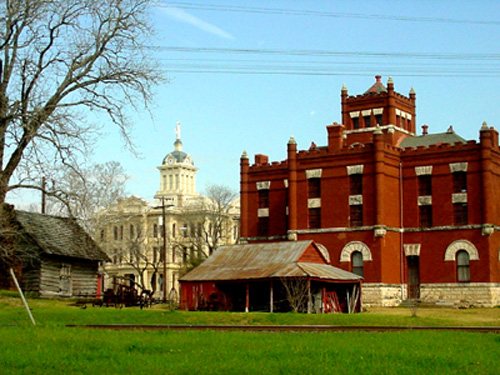
Pioneer cabin,
left, Milam County Jail and Courthouse
TE Photo |
History in
a Pecan Shell
Nashville,
Texas on the banks of the Brazos, had served as the seat of Milam
County since the time Texas
was declared a Republic. In April of 1846 the Texas Legislature
authorized a commission to find a more permanent site for the county
seat. These men bought sixty acres on the Little River that year and
named the new town in honor of Ewen Cameron, surveyor.
Cameron's first courthouse was finished that same year and county
records were transferred from Nashville.
Alone on the prairie and fifty miles from the nearest railroad depot,
early residents had an opportunity to become well acquainted with
one another.
Attempts were made to navigate the Little River in the late 1840s
and early 1850s. In 1850 one of these attempts proved successful when
Capt. Basil M. Hatfield managed to bring his steamboat up the Little
River to about 2½ east of town. Cameronians rejoiced and a two-day
celebration was held. Sadly, it was learned that only after heavy
rains could a boat get through. Regular service was out of the question.
Cameron had other problems in the 1870s. When the International-Great
Northern Railroad came to Rockdale,
people started suggesting Rockdale
as perhaps the best location for a county seat. Elections were held
in 1874 and 1880, and Cameron scraped by on both occasions.
Finally in 1881 the Gulf, Colorado and Santa Fe Railway arrived and
Cameron felt secure. Ten years later the San Antonio and Aransas Pass
came through. In 19th Century Texas there were two blessings. One
would be having a hometown boy become Governor - and the other was
to get a second railroad.
Before the railroads,
Cameron only had 500 citizens. After the railroads
arrived it was suddenly up to 800 and by 1892 the population had reached
2,000. |
20th Century
Cameron
Although cotton
was the town's 19th Century economic engine, the 20th Century brought
more diversified industries. Williamson
County had discovered oil in 1915 so Milam
County began their own exploration. It paid off in 1921 with "the
Minerva-Rockdale field."
The building of the Alcoa aluminum plant in the 1950s revitalized
the local economy, but recent environmental concerns have dampened
enthusiasm.
Cameron lost its rail connection to Giddings
in 1959 when the Texas and New Orleans railroad pulled out of Milam
County and the Southern Pacific (in 1977) abandoned the rails
connecting Cameron with Rosebud.
|
Cameron, Texas
Landmarks/Attractions
|
Milam
County Courthouse
The 1890 courthouse has been restored in recent years and the entire
top (which had been removed as a hazard) has been replaced with
an accurate (but lightweight) replacement.
National Register of Historic Places.
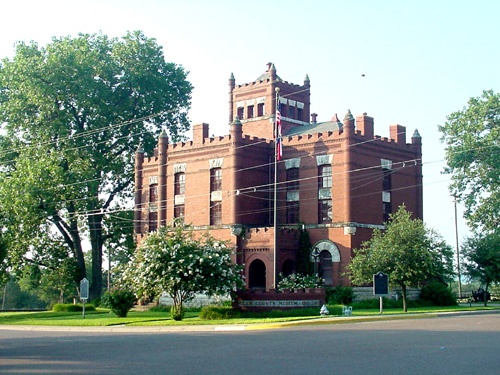
Milam
County Jail
The former jail is now in use as the Milam County Historical Museum.
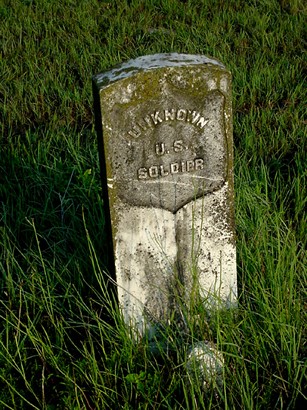
Cameron
Pioneer Cemetery
Just east of town across the Little River is the Pioneer Cemetery
- where earlier residents are interred. The city cemetery is now
close to downtown, a stone's throw from the courthouse and jail.
Milam
County Steamboat Landing
|
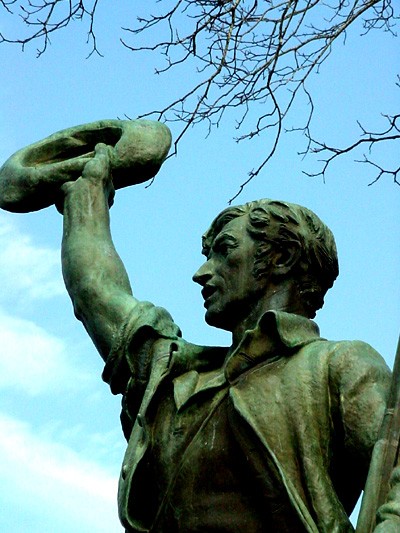
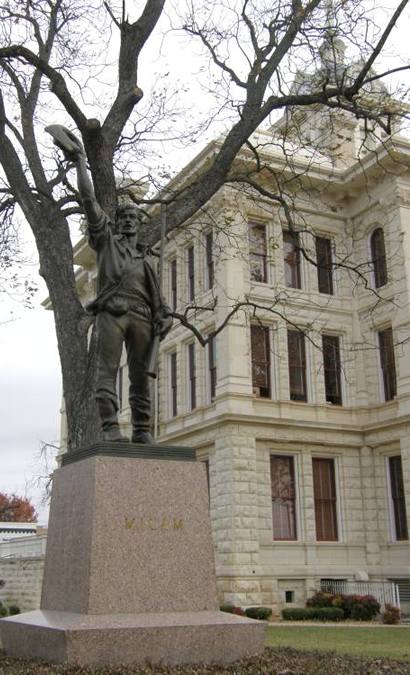
| "Ben
Milam, for whom the county was named, is one of Texas' legendary
heroes, losing his life in San Antonio early in Texas' battle for
independence." - Lou Ann Herda |
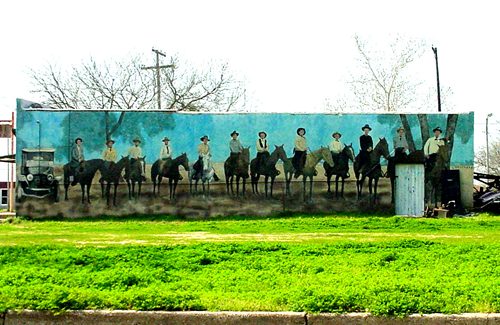
| Besides a collection
of murals on downtown walls, there are also a few advertising artifacts.
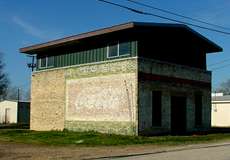
These Coca-Cola signs were painted
over a five-county area by "Eddie and Monk" - when Cameron had its
own Coca-Cola bottling works. |
Ghost sign just
east of the square
TE Photo, 2004
More Ghost Signs |
Grain bins east
of town
TE Photo, 2003 |
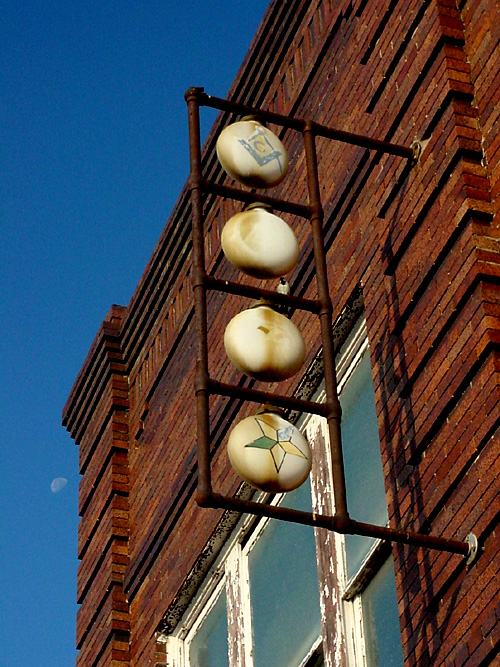
Masonic globes
downtown
TE Photo |
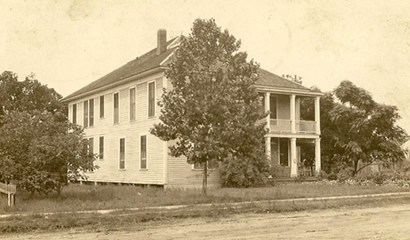
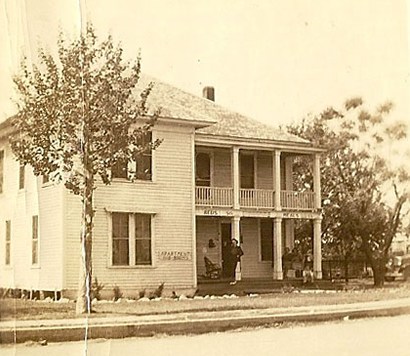
Hearne Hotel
circa 1870
Photo courtesy Tee Frank |
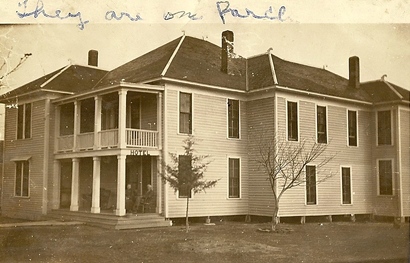
| "Attached
are photos of the Hearne Hotel owned by Martin Hearne around 1870.
He would be my great great grandfather on my mothers side. If you
have any more information on this structure, the family or could direct
me to additional websites, it would be appreciated. Thank You."
- Tee Frank, November 24, 2013 |
Hearne Hotel
Photo courtesy Tee Frank |
Hearne Hotel
Photo courtesy Tee Frank |
Nearby Milam
County Bridges
|
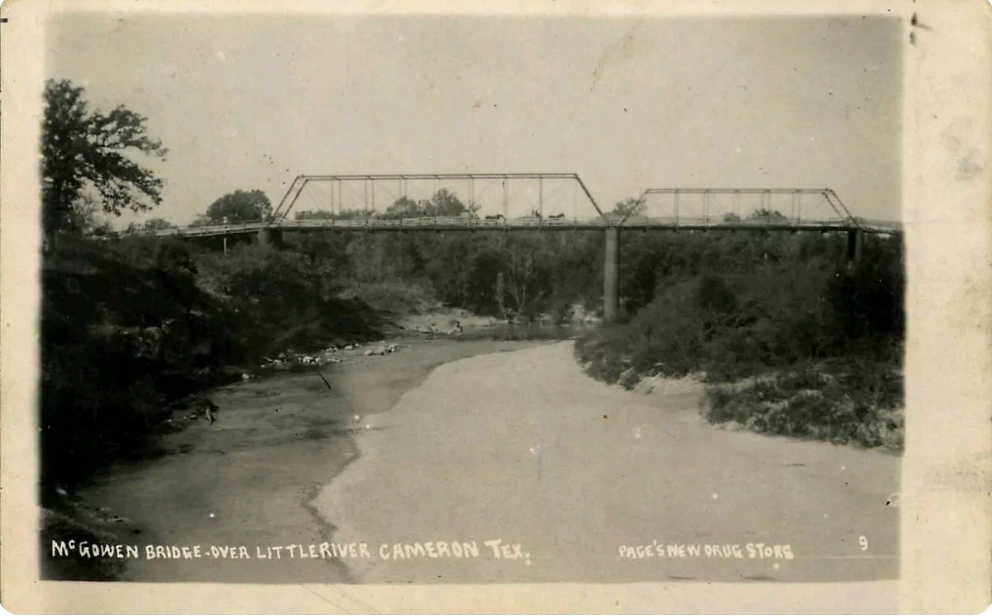
McGowan Bridge
Over Little River, Cameron Texas
Click on image to enlarge
Vintage photo courtesy Dan
Whatley Collection |
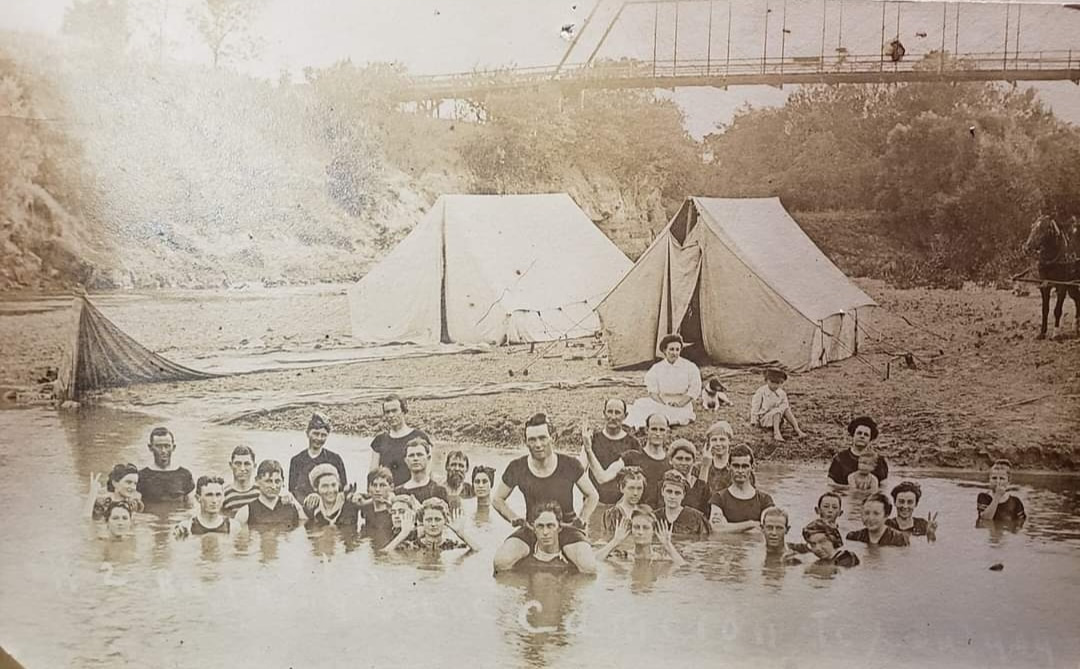
McGowan Bridge
Over Little River, a Family Gathering
Click on image to enlarge
Vintage photo courtesy Dan
Whatley Collection |
| Photos
courtesy Joe Williams |
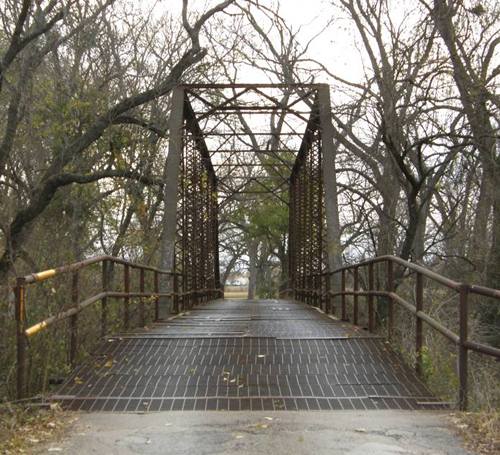
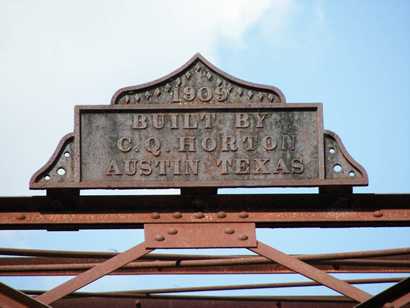
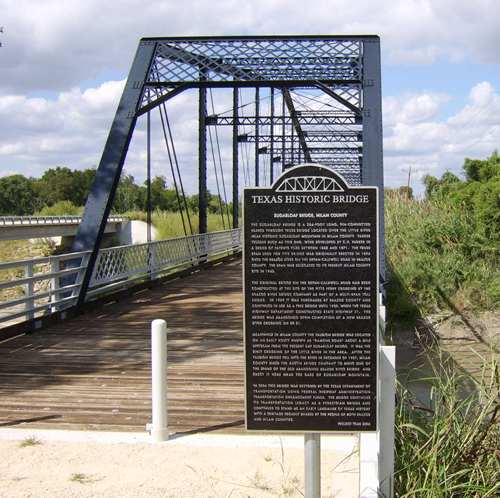
Sugarloaf
Bridge of Milam County
... I discovered another metal truss bridge, or at least what I suspected
was a metal truss bridge, that crossed the Little River in Milam County,
approximately 40 miles from the Bryant Station location... The exact
location is about ½ mile north of Gause
on Farm to Market Road 2095, then north on County Road 264 approximately
two miles. The road then crosses the Little River... more
|
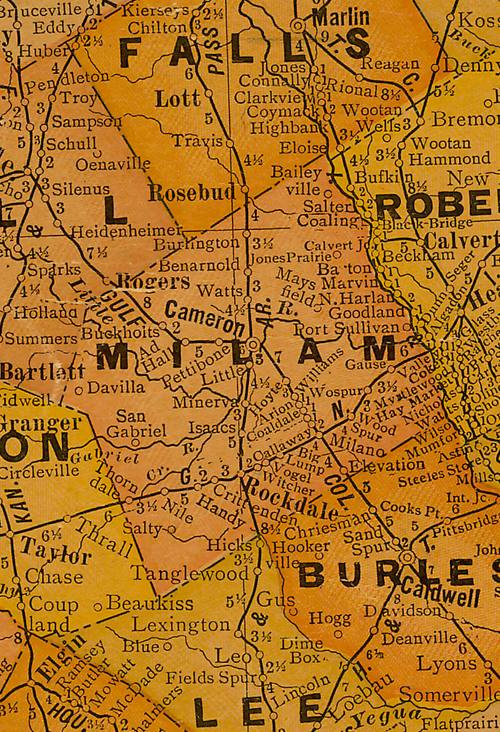
1920s Milam
County map
From Texas state map #10749
Courtesy
Texas General Land Office |
| Texas
Escapes, in its purpose to preserve historic, endangered and vanishing
Texas, asks that anyone wishing to share their local history, stories,
landmarks and recent or vintage photos, please contact
us. |
|
|
 HOME
HOME