|
East
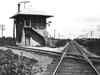
Texas' Rabbit Railroad, which opened the pineywoods to lumber
shipments in the 1880s, made history again last month.
Union Pacific Corporation of Omaha, Nebraska, which purchased the
Rabbit line from Southern Pacific in 1997, ran a special heritage-class
passenger train from Chicago to Houston and, in the process, rolled
down the East Texas
line from Shreveport to Houston.
Not since the 1950s has the line seen such a collection of vintage
cars. The UP special included three engines, four sleeper cars, a
dining car, a lounge car, a business car, and other units -- 12 in
all. Railroad buffs showed up track-side by the hundreds just to see
the train pass.
The train carried a group of national newspaper and magazine writers
and other guests to familiarize them with UP's transportation and
technology innovations.
On the Rabbit's rails, the passengers learned how Paul Bremond, a
Houston entrepreneur, and his fellow investors chartered the Houston,
East and West Texas Railroad in 1885 and completed the line to Shreveport
in 1886.
The HE&WT got its nickname for its hopping, rabbit-like disposition.
It was also called the "Hell Either Way Taken."
Bremond, who died in 1885 before his railroad was finished, was a
professed spiritualist who claimed the line's inspiration came from
a visit by the spirit of Moseley Baker, a soldier who fought in Battle
of San Jacinto in 1836. Just how Moseley got the idea for a railroad
is a little fuzzy.
During its construction, the HE&WT helped found dozens of towns between
Houston and Shreveport,
many of whom were named for railroad officials or friends. The new
towns included Lufkin,
Cleveland,
Shepherd,
Corrigan,
Burke, Appleby,
Garrison,
Timpson, Teneha,
and Joaquin.
(See East Texas Towns)
Four HE&WT stops in Shelby County were immportalized by cowboy singer
Tex Ritter in his song, "Tenaha,
Timpson, Bobo and Blair."
Union Pacific is a fitting owner for East Texas' best known railroad.
The Omaha-based company helped build the first transcontinental railroad
in the days following the Civil War and has a deep sense of its corporate
heritage.
Just as the Rabbit pioneered long-range railroading in East
Texas, the transcontinental line went where nobody had gone before,
linking America's east and west coasts and leading to the growth of
the west.
Historian Stephen Ambrose, who chronicled the transcontinental line
in his best-seller, "Nothing Like it in the World, "autographed copies
of the book for Union Pacific's guests on the Chicago-to-Houston trip.
Union Pacific Chairman Dick Davidson, a 44-year railroader who began
his career as a brakeman, describes the transcontinental route as
an early-day internet because of its ability to link Americans together
as a nation.
Davidson's "reporters' special" exposed the national business media
to East Texas' scenery and heritage, as well as the enormous improvements
being made by Union Pacific on the old Rabbit line, including a tracking
system manned by former air controllers to keep up with the movement
of UP trains on tens of thousands miles of tracks in the U.S.
Paul Bremond, and Moseley Baker, would have been proud to see what
their railroad has become.
All Things Historical
October
15-23, 2000
A syndicated column in over 40 East Texas newspapers
Published by permission. |
|
|
 HOME
HOME