|
|
 |
History
in a Pecan Shell
The town was laid out by A. L. Odin in 1871 and became
the county seat that year under the name Frio City. The site
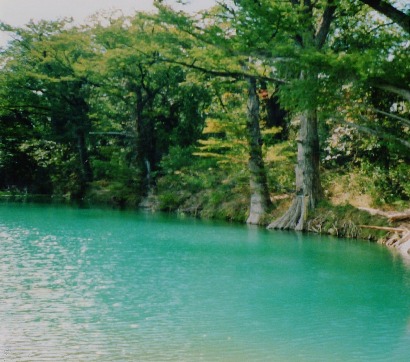
was chosen for its convenient low water crossing of the Frio River
- said to have been used by Juan Ugalde (Uvalde's
namesake), Santa Anna during the Texas Revolution and General Woll
when he briefly occupied San
Antonio in 1842.
The courthouse was finished in 1872 and the town had a stone jail
as well. The original jail is still standing. The post office was
established in that same year and a Masonic lodge was established
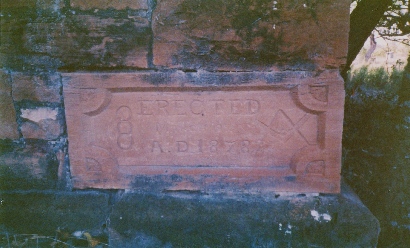
sometime during the 1870s. The courthouse burned in 1877, and a new
stone courthouse was constructed with assistance of local rancher
W. J. Slaughter.
Frio City was an outpost of civilization - and the town would occasionally
fill with people seeking safe haven from Comanche raids. Rangers were
called in to solve the Indian mischief and the last incident occurred
in 1877. In the early 1880s the estimated population was close to
1,500.
Frio City lost its prestige and population when it was bypassed by
the International-Great Northern Railroad in 1881. Pearsall
was on the line, however, and people and businesses moved the 16 miles
to be connected to the rest of the world.
Pearsall became
the county seat in 1883 and the decline in population made Frio City
officially Frio Town in 1886. The courthouse was purchased
in 1884 by an individual and became a general store/ post office for
the shrunken community.
By 1890 there were only 100 people left in Frio Town and in 1916 the
two-teacher Frio Academy was teaching 16 students in the former courthouse.
Nevertheless, Frio Town was wired to the outside world by telephone
in 1914.
By 1953 Mrs. A. C. Roberts owned most of the townsite, including the
former courthouse and jail. Mrs. Roberts had an interest in history
and contributed what she knew in a 1936 article in Frontier Times
called: "Frio County Has a Colorful History," which remains part of
the bibliography for the Handbook of Texas' entry for Frio Town.
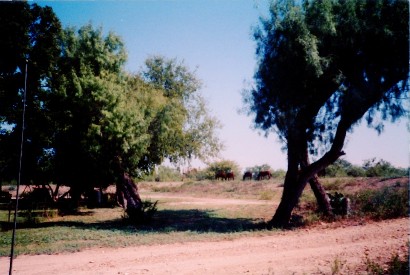
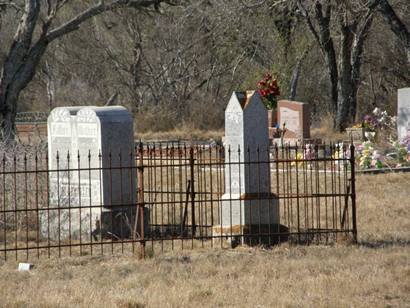
Today the former courthouse, jail, cemetery and of course, the river
crossing are all that is left of the once prosperous Frio City. The
ruins are on private property, although the cemetery (on FM 140) is
accessible. |
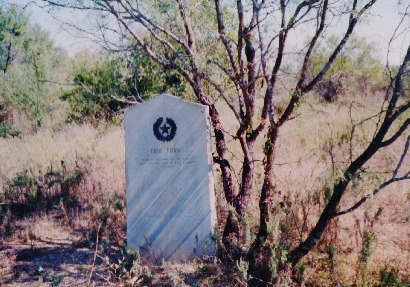 |
Centennial
Marker Text
FRIO
TOWN
Known 1871-1886 as Frio City
First county seat of Frio County
1871-1883
Presented by the State of Texas
1936 |
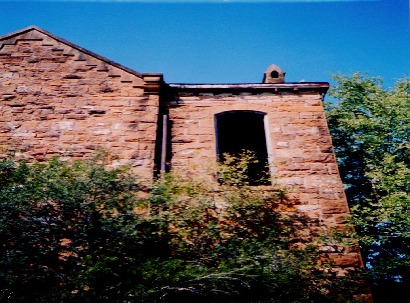
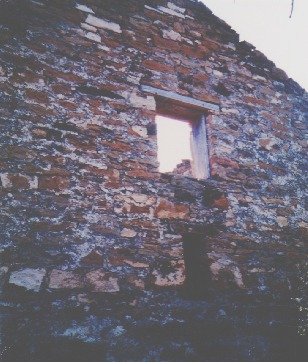
The 1878 Old
Frio County Courthouse
Material - Locally
quarried sandstone
On private property today |
|
|
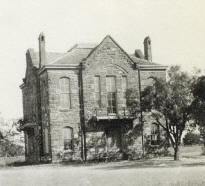
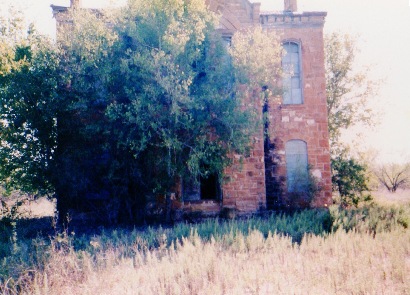
The
former Frio County Courthouse in Frio Town
Photo courtesy texasoldphotos.com |
From "Ghost
Town Honeymoon" by Josa Combs
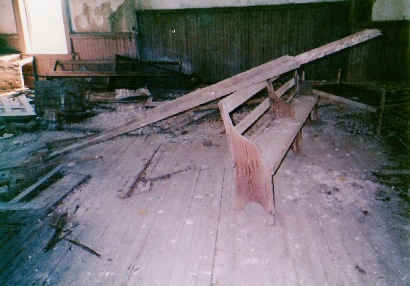
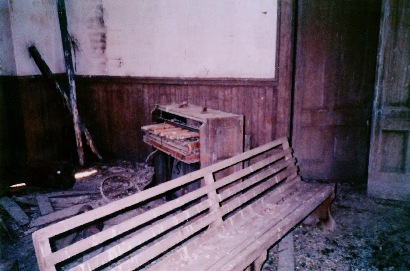
"Then we found the massive courthouse. When I crawled up the
steps of the courthouse, there were still old papers laying around. Downstairs
too, but the downstairs was in worse condition than the upstairs was.
There was an old telephone table with all the wires, old benches and
what looked like a Judges desk. It was almost as if the people had
just walked away. The huge beautifully-painted safe was something
to see." more |
Old courthouse
courtroom
1980s Photo courtesy Josa
Combs |
Old courthouse
courtroom
1980s Photo courtesy Josa
Combs |
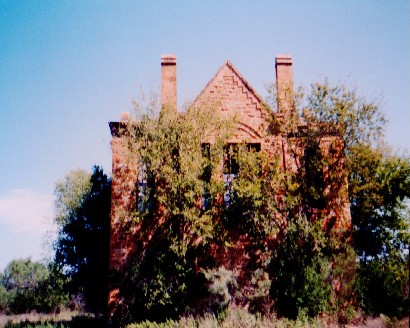
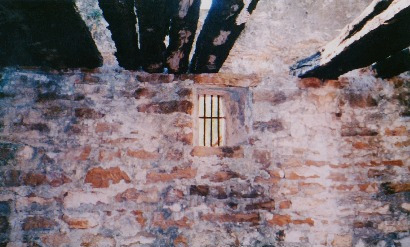
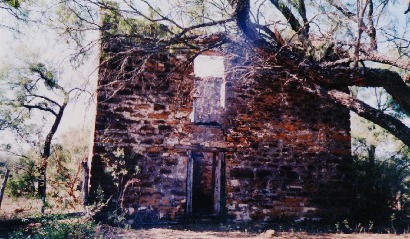
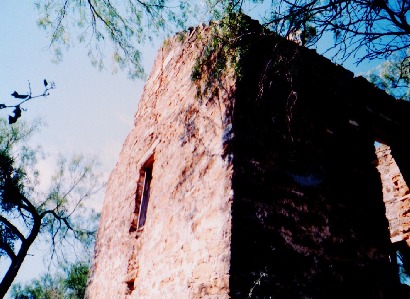
The 1872 Frio
County Old Jail
Material - Locally
quarried sandstone
On private property |
From "Ghost
Town Honeymoon" by Josa Combs
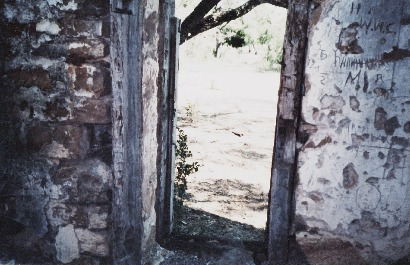
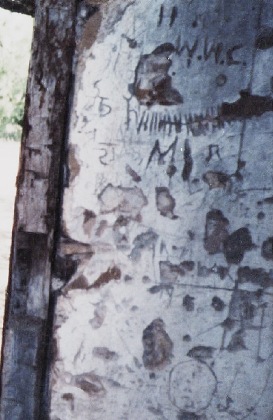
"The old jail was in bad condition, but one could still see the
marks where former prisoners had carved off the plaster to keep track
of their days." more |
| "Old jail
taken from outside to inside. The rafters represent where the upstairs
was. I was told by the property owner that the Sheriff lived upstairs."
-
Josa
Combs |
 |
 |
 |
 |
 |
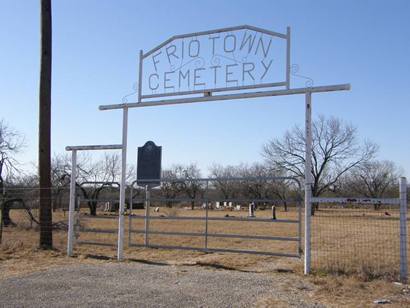 |
Historical
Marker Text
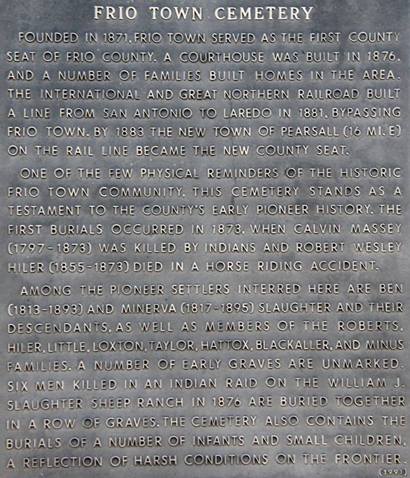
Frio Town Cemetery
Founded
in 1871, Frio Town served as the first county seat of Frio
County. A courthouse was built in 1876, and a number of families
built homes in the area. The International and Great Northern Railroad
built a line from San Antonio
to Laredo
in 1881, bypassing Frio Town. By 1883 the new town of Pearsall
(16 mi. E) on the rail line became the new county seat.
One of the few physical reminders of the historic Frio Town community,
this cemetery stands as a testament to the county's early pioneer
history. The first burials occurred in 1873, when Calvin Massey (1797-1873)
was killed by Indians, and Robert Wesley Hiler (1855-1873) died in
a horse riding accident.
Among the pioneer settlers interred here are Ben (1813-1893) and Minerva
(1817-1895) Slaughter and their descendants, as well as members of
the Roberts, Hiler, Little, Loxton, Taylor, Hattox, Blackaller, and
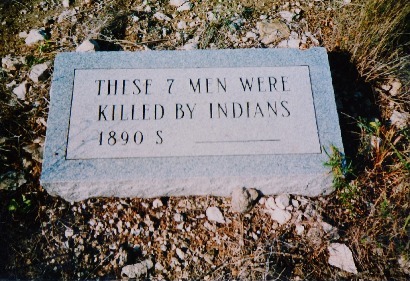
Minus families. A number of early graves are unmarked. Six men killed
in an Indian raid on the William J. Slaughter sheep ranch in 1876
are buried together in a row of graves. The cemetery also contains
the burials of a number of infants and small children, a reflection
of harsh conditions on the frontier.
(1991) |
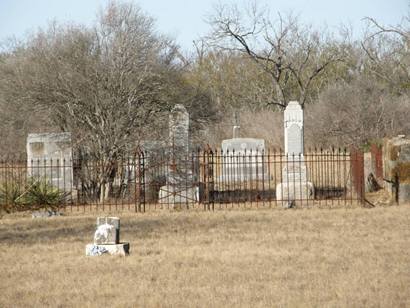 |
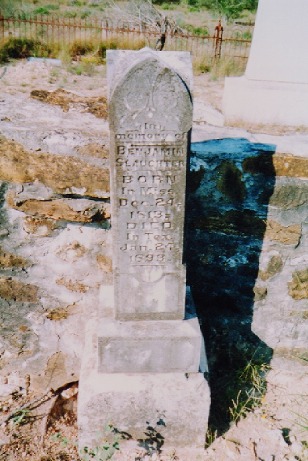
Slaughter Tombstone
1980s Photo courtesy Josa
Combs |
| Texas
Escapes, in its purpose to preserve historic, endangered and vanishing
Texas, asks that anyone wishing to share their local history
and vintage/historic photos, please contact
us. |
|
|
 HOME
HOME

 Texas
Gulf Coast
Texas
Gulf Coast East
Texas
East
Texas Central
Texas North
Central
Texas North Central
Texas South
Central
Texas South Texas
Panhandle
Texas
Panhandle South
Texas
South
Texas Texas
Hill Country
Texas
Hill Country West
Texas
West
Texas Texas
Ghost Towns
Texas
Ghost Towns Texas
Counties
Texas
Counties