|
|
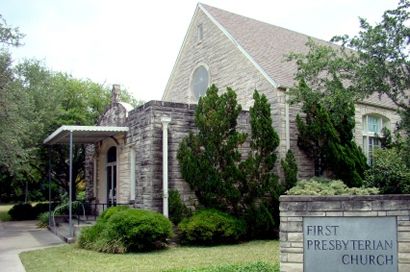
First Presbyterian
Church
Photo courtesy Ken
Rudine, May 2007 |
History in
a Pecan Shell
The
town became a flag stop on the railroad shortly after the tracks
were laid in the mid 1880s. The land had originally been part of
the vast holdings of the Coleman-Fulton Pasture Company.
A windmill
owned by the company stood nearby and supplied water for the railroad
and the people who had gathered around the company stock pens. The
town became known as Mesquital. The name was changed in 1900 when
plans were made to turn Mesquital into a proper town.
Joseph F. Green, manager of the C-F Pasure Company named the new
town Taft in 1904 - the year the post office opened. The naming
was not after President Howard Taft, but his half-brother Chas.
P. Taft.
In 1909, the company had over 2,500 acres planted in cotton and
when failed land booms provided a surplus of buildings in Portland,
Aransas Pass, and Rockport,
several were moved overland to create the new town. The Coleman-Fulton
Pasture Company also subdivided partions of their holdings to sell
to farmers.
A dependable sourse of fresh water was discovered in 1909 which
allowed the company to expand operations to include a packing-house,
electric generating plant and an ice factory. Farmers who bought
land were guaranteed a market for their livestock and produce.
President Taft himself came to the town to give a speech at the
newly-constructed school in 1909. Nine years later the Board of
Directors divested the entire operation and sold the entire ranch
and it's infrastructure to the private sector. In the spring of
1921 ads for the upcoming auction were placed in major newspapers
and 5,000 people attended the sale. The independent city of Taft
was born.
|
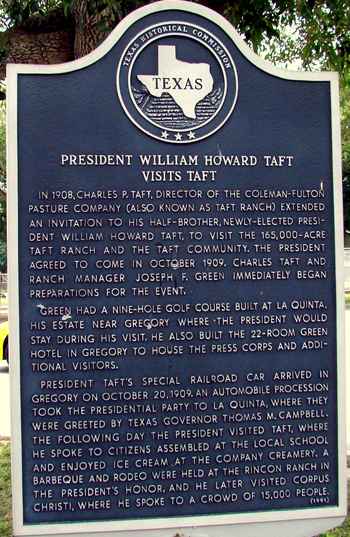 |
President William
Howard Taft Visited Taft
Photo courtesy Ken
Rudine, May 2007 |
Oil was discovered
north of town in 1935 which helped the town weather the Depression.
Those not involved in the oil industry simply continued growing vegetables
and shipped them out of the packing sheds that were built alongside
the tracks. The last shed was torn down in the 1950s when the town
was experiencing a post-war boom. A population decline set in in the
60s but with expansion of the port in nearby Corpus
Christi, other residents moved in to form permanent households.
Taft Churches & Historical
Markers
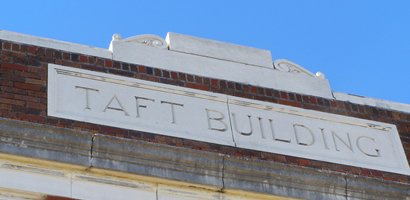
Taft Blackland Museum
Former offices of the Coleman-Fulton Pasture Company have been converted
into the present-day Taft Blackland Museum. |
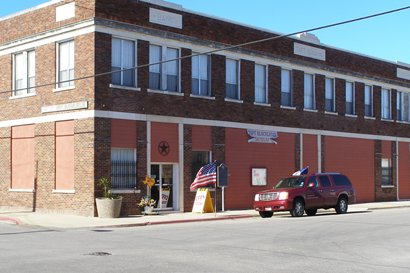 |
Photographer's
Note:
Blackland Museum of Taft Texas
There are many items & displays that relate to the Taft and San Patricio
County area. You can find here Early pictures of the area, Arrowhead
collections, early Barb-Wire, Rocks & Gems, Seashells, a Blacksmith
shop, a Boy & Girl Scout room, a military room, early doctor & dentist
displays, & much, much, more. My daughter wants me to go with her
to see the international Barbe Doll collection when we visit. Like
I say there's a little bit of a lot! It's not often you can find a
museum of this size in such a small town - William
Beauchamp, February 01, 2009 |
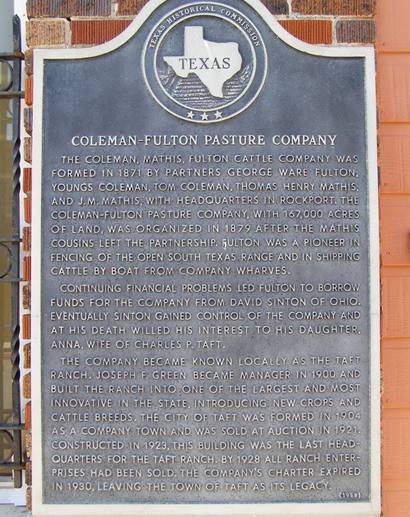
Coleman-Fulton
Pasture Company Historical Marker
Photo courtesy William
Beauchamp, November 2008 |
Taft Churches
& Historical Markers
|
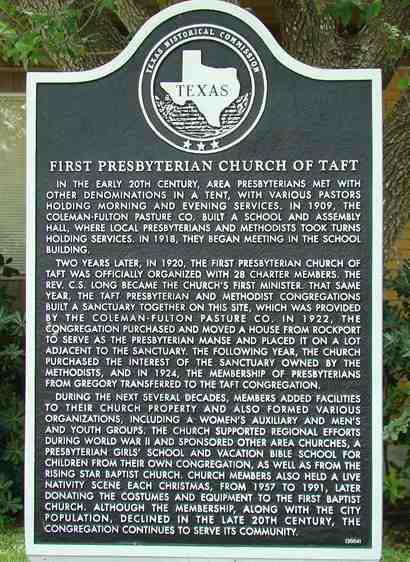
First Presbyterian
Church of Taft Historical Marker
Photo courtesy Ken
Rudine, May 2007 |
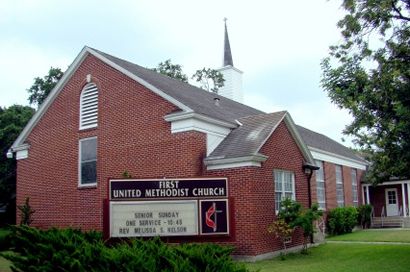
First United
Methodist Church
Photo courtesy Ken
Rudine, May 2007 |
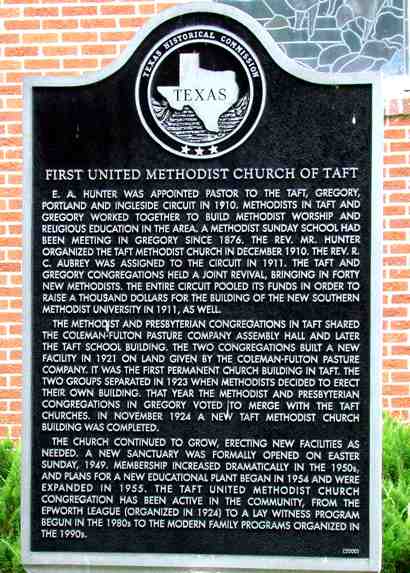
First United
Methodist Church of Taft Historical Marker
Photo courtesy Ken
Rudine, May 2007 |
| Texas
Escapes, in its purpose to preserve historic, endangered and vanishing
Texas, asks that anyone wishing to share their local history, stories,
landmarks and recent or vintage photos, please contact
us. |
|
|
 HOME
HOME

 Texas
Gulf Coast
Texas
Gulf Coast East
Texas
East
Texas Central
Texas North
Central
Texas North Central
Texas South
Central
Texas South Texas
Panhandle
Texas
Panhandle South
Texas
South
Texas Texas
Hill Country
Texas
Hill Country West
Texas
West
Texas Texas
Ghost Towns
Texas
Ghost Towns Texas
Counties
Texas
Counties