|
|
|
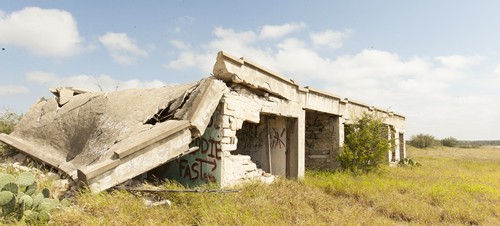
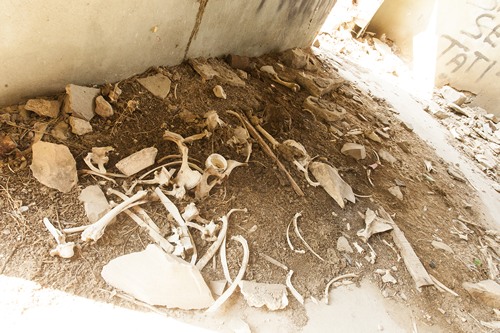
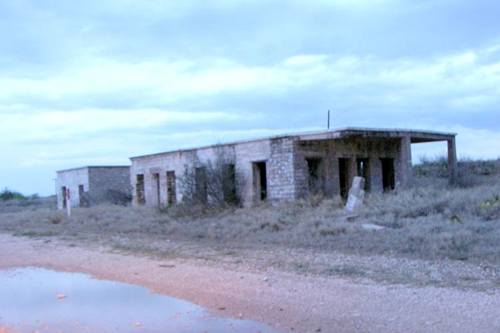
Come
back to Shumla, Tracy Henderson. All is forgiven.
Photo courtesy Barclay
Gibson, March 2008
|
|
History on
a Pinhead
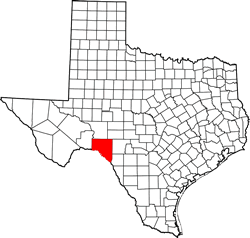
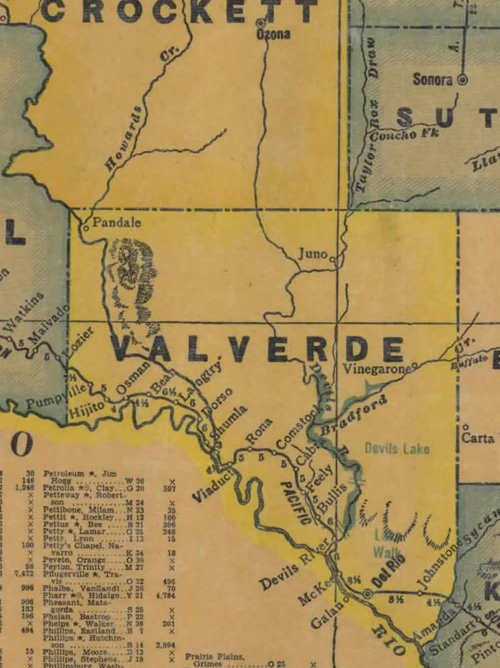
The region was inhabited some 6,000 years before Shumla first appeared
as a section station on the Galveston, Harrisburg and San Antonio
Railroad in 1882. The unusual name supposedly comes from a Turkish
fort that that was situated in terrain not unlike this portion of
Val Verde County.
In early 1883,
just east of town, a ceremony was held to commemorate the completion
of the southernmost transcontinental railroad route. In 1892 it
was discovered that the roadbed of vibration-sensitive limestone
was an accident waiting to happen. Although it was just a 25-mile
stretch, the railroad decided to reroute their tracks. After the
alignment, Shumla found itself without a railroad. But it didn’t
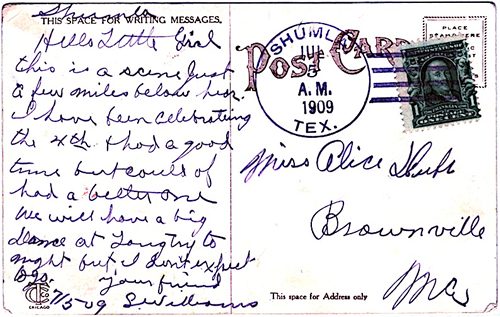
stop the town from receiving a post office in 1906. It took them
three years to discover the town was dying and in 1909 the post
office shut it doors.
For years the
town consisted of a freight station and little else. The highway
was resurfaced and both the Devil’s
River and Pecos
River received new bridges – but progress ignored Shumla as
it had ignored most towns along Highway 90. Population figures are
not available, but by 1973 Shumla became a mere flag-stop. Shortly
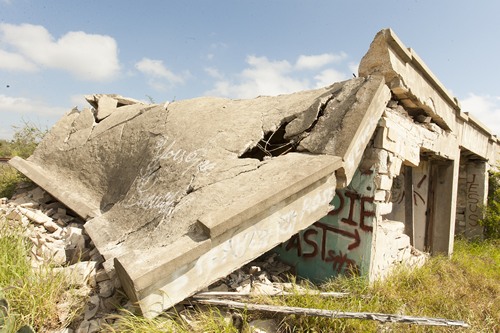
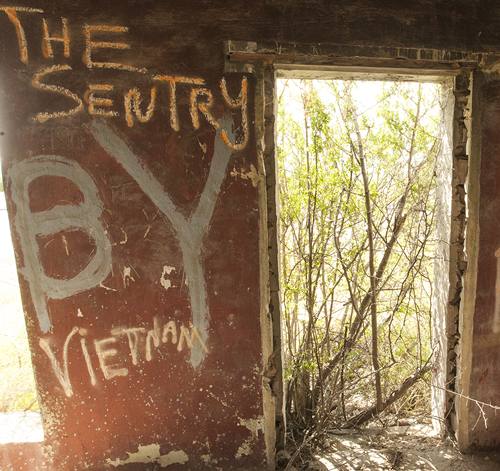
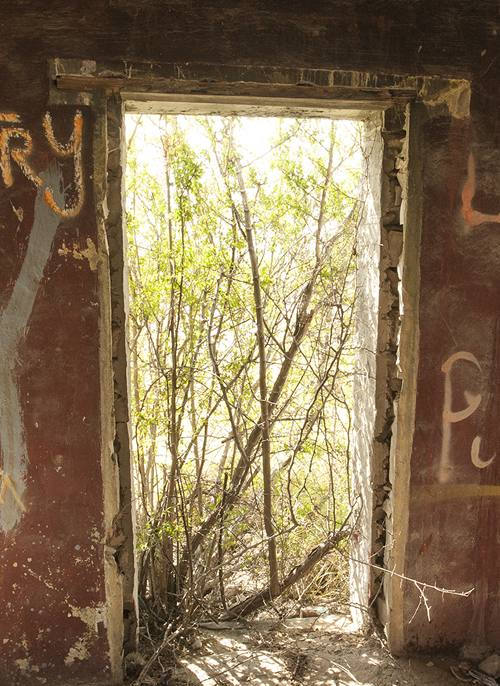
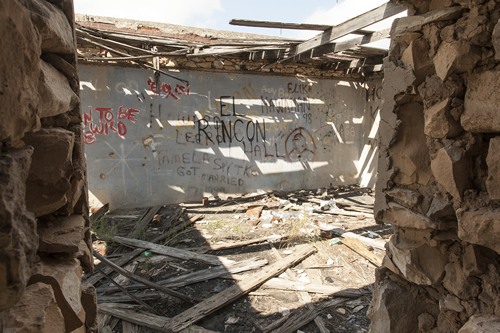
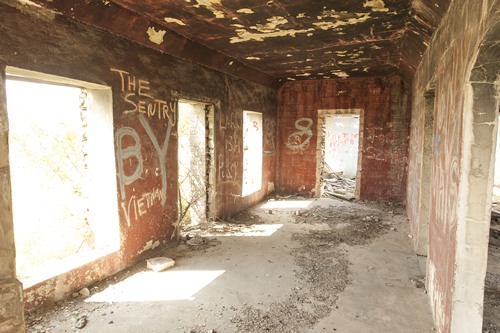
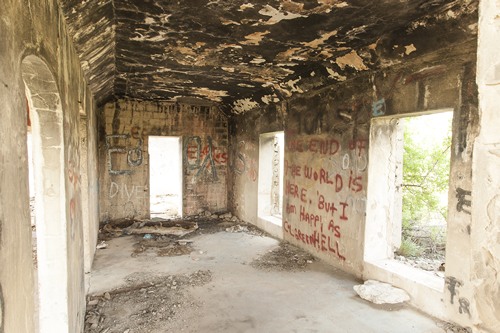
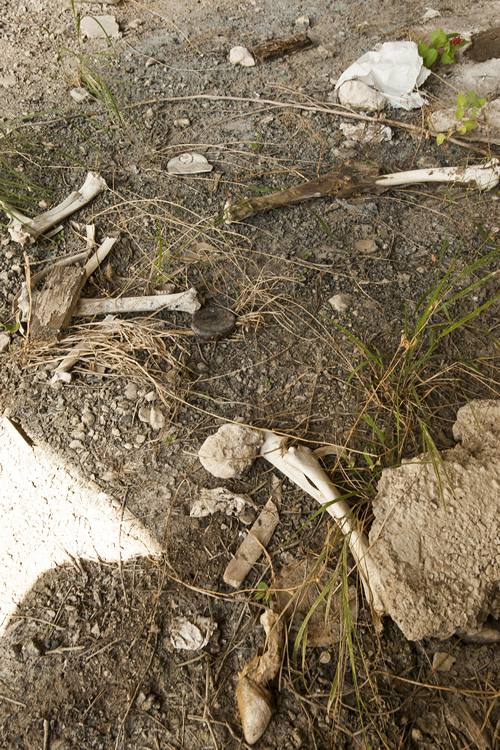
thereafter the former town decayed into the ruins that you see here.
|
 |
|
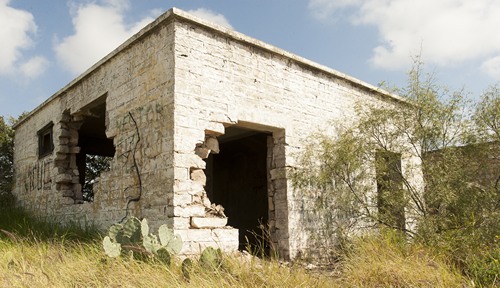
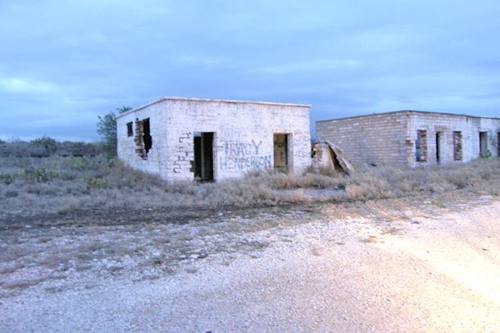
Shumla's
"Westside" Neighborhood
Photo courtesy Barclay
Gibson, March 2008
|
|
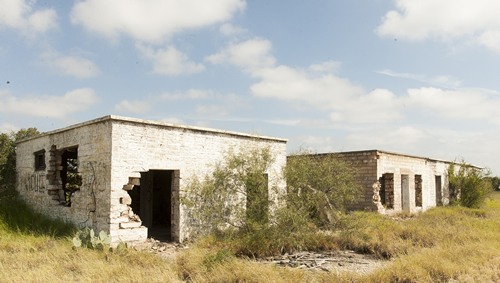
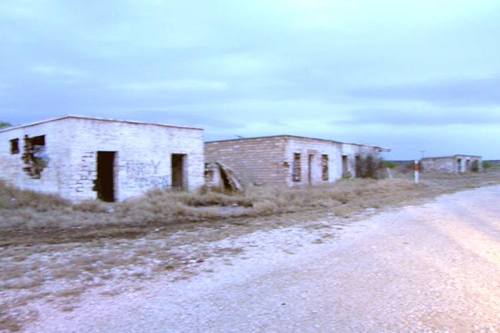
The
"Westside" seen from the East
Photo courtesy Barclay
Gibson, March 2008
|
Shumla
by Mike Cox
It’s been a long time since a train stopped at Shumla, a West Texas
ghost town as ethereal as steam escaping from a coal-fired locomotive.
Shumla had its beginning in 1881 as construction crews raced to connect
the eastern and western halves of America’s second and southern-most
transcontinental rail line. Once a tent city stretching more than
a mile long, it teemed with hundreds of Chinese and European-immigrant
graders and track layers as well as crew bosses, engineers, and a
variety of camp followers including peddlers, whiskey sellers, gamblers
and working women you wouldn’t feel comfortable introducing to mom.
One of the railroad engineers had been to Eastern Europe and thought
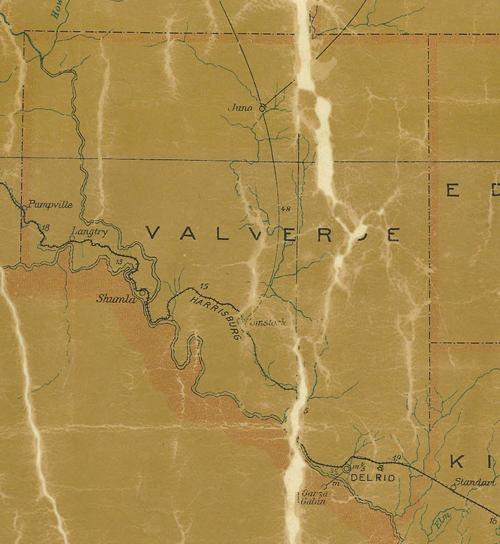
the area 15 miles west of Comstock
in present Val Verde County looked like the countryside around the
Ottoman fortress of Shumla in the Balkans. Accordingly, the Southern
Pacific put the spot on its system map as Shumla, Texas.
Though Shumla’s original reason for existence ended with the completion
of the tracks, steam-powered trains needed to take on water and coal
about every 30 miles. Once regular east-west traffic began, Shumla
became a section point with a depot, water tank and foreman’s house.
Despite its depot, Shumla did not have enough population to support
a post office until 1906. But Shumla never saw better days than when
the construction workers camped there.
Shumla was only one of many construction camps along the SP right
of way, though not all of them survived as towns. The most common
indications of camp sites are occasional sets of stone walls about
two-and-a-half feet tall once used as canvas tent bases.
Professional archeologists and relic hunters over the years have found
woks, opium bottles, fragments of tea cups and Chinese coins around
these camp sites in addition to other trash associated with construction
and temporary human occupation.
At Shumla, a 1995 archeological survey noted the remnants of a rectangular
dry-laid stone structure about 20 feet wide and 70 feet long, a collapsed
dome oven used for bread baking, a piled stone forge for blacksmith
work and rock piles suggesting tent sites.
Just west of Shumla, the archeologists found a toppled limestone grave
marker with an inscription in crude Danish. Translated to English,
it read: |
Here Under Rests
That Dear Child
B.K. Kristiansen
Born 181. 1882
Died 71. Same Year. |
|
Given the date,
the headstone – which has since disappeared – indicates the grave
of a European construction worker’s child. If that’s correct, it
demonstrates that some of the rail workers had their families with
them as they moved east at a rate up to two miles a day.
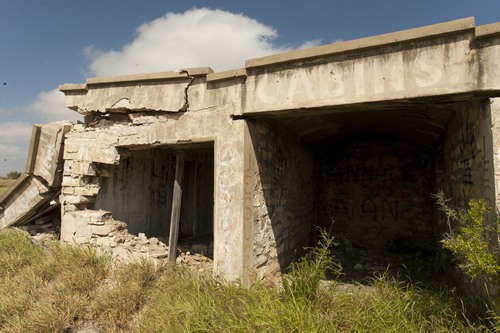
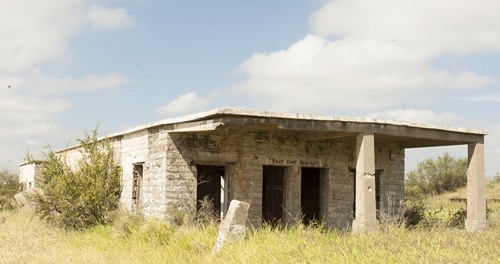
All that’s left of Shumla today is an old concrete motel on U.S.
90 dating from the early automotive era, the word “Cabins” still
faintly visible in white paint, the shell of an old grocery store
and the walls of one house.
The motel closed in the late 1940s or early 1950s and the grade
has gone downhill for Shumla ever since.
On the old Ross Ranch about a mile west of its original location
is the 1882 depot, a frame structure moved across the highway when
the SP discontinued the Shumla station as more efficient diesel
engines replaced the old coal-burners. A bit farther west of the
ramshackle depot is the original section foreman’s house, with some
later add-ons.
A few years back, retired consulting archeologist Elton Prewitt
of Austin bought 270 acres in the Shumla area. That real estate
transaction coincided with something of resurgence for Shumla.
On a ranch not far from the original town has risen a new Shumla,
a collection of modern buildings that nationally recognized prehistoric
rock art expert Dr. Carolyn Boyd operates both as a base for ongoing
research and as the setting for a unique school. With Shumla as
an acronym, the school’s mission statement is "Studying Human Use
of Materials, Land and Art."
Situated in one of the richest archeological areas in the world
(with more than 2,000 recorded sites and more than 300 known pictograph
sites), the non-profit Shumla School is a one-of-a-kind facility.
Boyd, her staff and volunteers are using the study of ancient rock
art and archeology as a way to engage not-so-easily-engaged children
and to transform them into eager learners and problem solvers.
Additionally, the Shumla school is a rock art research center gaining
international attention. Three top scientists in the field of rock
art who have lectured at the school – Dr. James Keyser, retired
U.S. Forest Service archeologist; Dr. David Whitley of the Arizona
State University and Dr. Jean Clottes of the French Ministry of
Culture all have declared that the area around Shumla deserves inclusion
in the United Nation's World Heritage List of 851 unique world-wide
cultural or natural sites.
As for the surviving structures of the railroad era, Prewitt – president
of the Shumla school’s board – hopes some individual or organization
interested in railroad
history can acquire the old Shumla depot before it is completely
gone and restore it.
“We’d sure like to have it at the Shumla School,” he said.
© Mike Cox - "Texas
Tales"
January 18, 2008 column
Related Stories:
Texas | Online
Magazine | Texas Towns | Ghost
Towns | West Texas
|
|
|
|