|
COOPER, TEXAS
Delta
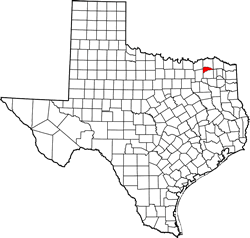
County Seat, North
Central Texas
33° 22' 22"N, 95° 41' 21"W (33.372778, -95.689167)
Highways 24 and 154
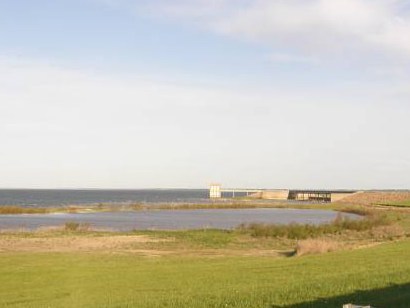
A few miles N of Cooper Lake
24 miles SW of Paris
76 miles NE of Dallas
94 miles W of Texarkana
ZIP code 75432
Area codes 903, 430
Population: 1,911 (2020)
1,969 (2010) 2,150 (2000) 2,153 (1990) |
 |
History in
a Pecan Shell
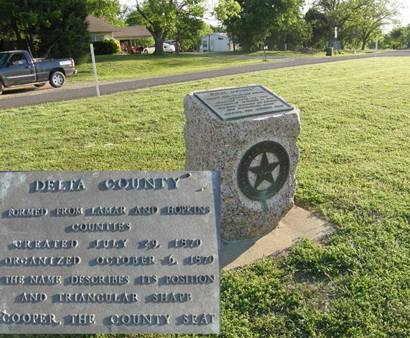
In 1870 the Texas legislature voted on a bill for the creation of
Delta County. One
of the sponsors for this bill was L. W. Cooper of Houston
and it was Cooper the county seat was named after. The town was granted
a post office the following year and Cooper incorporated in 1881.
The population in 1885 was 300.
Further growth was enhanced by the construction of the Texas Midland
Railroad. By 1896 Cooper had an estimated population of 1,000 with
two churches and all the essential businesses a growing town needed
including two feed mills, two cotton gins, two blacksmiths and two
weekly newspapers. The town also supported an unheard of (even for
a county seat) seven general stores. Since the rest of Delta
County was made up of smaller towns, Cooper's growth continued
for years. Its high-water mark was reached in 1925 when 2,563 people
called the town home.
The population predictably declined during the 1930s, grew somewhat
after WWII and
underwent another decline in the 1980s. It reached 2,349 in the early
50s and went nearly unchanged for the next 20 years (2,258 in 1970).
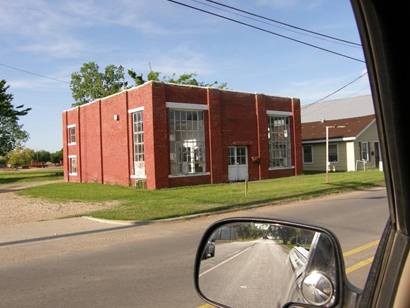
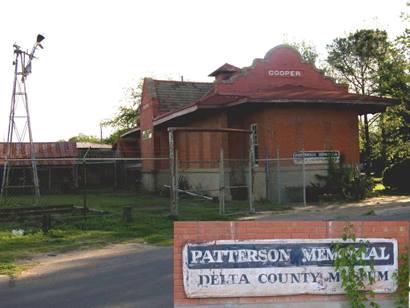
The former railroad depot is now in use as the Delta County museum.
Cooper, Texas Landmarks / Attractions
›
Cooper Chronicles › |
Cooper, Texas
Landmarks/Attractions
Three Photographers'
Visits |
 |
 |
Historical Marker:
700 W. Dallas Street
Cooper Rail
Depot
Built in 1913,
this Spanish Revival style brick depot for the Texas Midland Railroad
serviced the town of Cooper and Delta
County. While the railroad dealt mainly in freight, the depot
focused on facilitating passenger service, functioning as a stop along
the 130-mile route of the line between Paris
and Ennis. It remains a rare example
of surviving Texas Midland Railroad structures, being one of only
two remaining depots from that line still standing.
Commonly seen in smaller rural communities throughout the United States
during the late 19th century, the arrival of the railroad in 1895
brought a dramatic increase in population and commerce to the isolated
town of approximately 300 residents. The following year saw Cooper's
population grow to more than 1,000 and for the next three decades
the population steadily increased until it peaked with 2,563 residents
in 1925.
The Great Depression and cessation of Texas Midland operations in
1934 thwarted the growth of Cooper. The population remains relatively
steady to this day. The depot remained vacant from the closing of
the Texas Midland rail line until World
War II. Following the United States' entry into the conflict,
local resident Harry Patterson established a cannery operation within
the building. Workers canned chicken here that was sent overseas as
part of troop rations. Cans originating from the Cooper depot cannery
carried the stamp '4P' for identification purposes. Following the
end of the war, Depoyster Lumber Company briefly set up operations
on the property until relocating in 1967. That year, Harry Patterson
purchased the depot and dedicated it as a local history museum to
showcase the heritage of Cooper and Delta
County.
Recorded Texas Historic Landmark - 2014 |
 |
Historical Marker:
Main & B-24
First National
Bank
Oldest bank in
Delta County. Founded
1889 as private firm operating in a grocery store. Chartered as a
national bank 1891. Erected this building 1909. Guaranty State Bank
merged with First National 1925. This bank has had continued growth.
The founder, Wm. J. McDonald (1844 - 1926), at his death left a great
fortune to establish an astronomical observatory of the first order
- the McDonald
Observatory, in West Texas.
Recorded Texas Historic Landmark - 1966 |
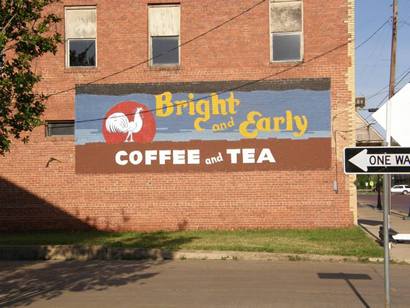
Bright and Early
Coffee and Tea
Photo courtesy Barclay
Gibson, April 2009 |
Historical Marker:
FM 1529 South, Cooper
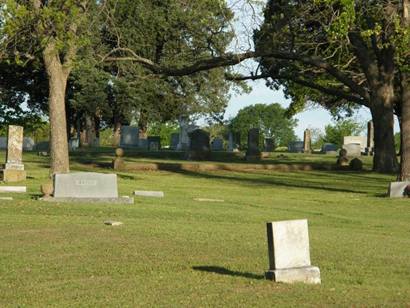
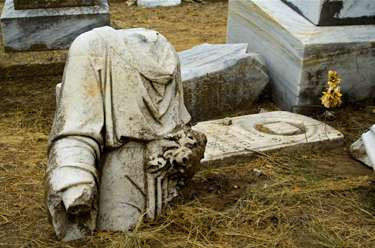
Oaklawn Cemetery
THE FIRST BURIALS
IN THE CITY OF COOPER WERE MADE ON A HILL WEST OF DR. J.A. BLACKWELL’S
OLD HOME. THE FIRST BURIAL WAS BELIEVED TO HAVE BEEN THE YOUNG DAUGHTER
OF DR. R.C. ANDREWS. THE SITE SOON BECAME UNDESIRABLE AND LAND WAS
SOUGHT ELSEWHERE. IN 1891, MR. ASA WHITE DONATED FIVE ACRES FOR A
CEMETERY. MOST OF THE PEOPLE BURIED IN THE OLD COOPER CEMETERY WERE
MOVED TO THIS LOCATION. THE OLDEST EXISTING MONUMENT IS THAT OF MARY
CUMMING (1791-1881). THE INDEPENDENT ORDER OF ODDFELLOWS ORGANIZATION
CARED FOR THE CEMETERY AND PURCHASED ADDITIONAL LAND UNTIL THE OAKLAWN
CEMETERY, INC. WAS CHARTERED ON NOV. 17, 1959. THEY CONTINUE TO CARE
FOR THIS HISTORIC COMMUNITY BURIAL GROUND.
HISTORIC TEXAS CEMETERY – 2009 |
 |
Historical Marker:
on CR 1010
Yates and
Methodist Protestant Cemeteries
George Yates (1807-1886),
his wife Mary Polly Wallace Yates (1809-1886), and their family migrated
to Texas in 1846. They settled in an area of the newly-formed Hopkins
County that would later become part of Delta
County. George Yates raised livestock on the 976 acres of land
he owned. Mary Yates, the 15-year-old daughter of George and Polly
Yates, died in 1855. She was buried here on a hill near their log
house. Her grave marks the origin of the family and community graveyard
called The Yates Cemetery. Over the years, thirteen burials took place;
the last was that of William Henry Chesnut, who died in 1923.
In 1887, G. L. Harper and his wife Emily Frances Yates Harper deeded
one-half acre of land to the Methodist Protestant church for a graveyard.
The donation included the Yates Cemetery measuring one-fourth acre,
which was given back to the family in 1901. Dr. D. T. Robinson and
his wife, Eliza Robinson are buried west of here; theirs are the only
makred graves at this site. Although two other graves are known to
exist, it is believed there are several more unmarked graves. Both
cemeteries are maintained by descendants of those buried here.
(1996) |
Historical Marker:
FM 1528 and 2068, about 8 miles SW of Cooper
Old
Union Cemetery
(0.75 mi. S)
This graveyard served the farm and ranch communities of Gough, Yowell,
and Antioch. The earliest recorded burial is that of W. H. Henderson
in 1859. The cemetery contains more than 90 marked graves mostly arranged
in family plots. Buried here are many of the area's earliest settlers
and their descendants and at least three veterans of the Civil War:
T. J. Hollon, Hiram G. Wynn, and T. J. Craig. The last recorded burial
was that of Georgia Missouri Hollon in 1946. A cemetery association
was established in 1947 to maintain and improve the grounds.
1994 |
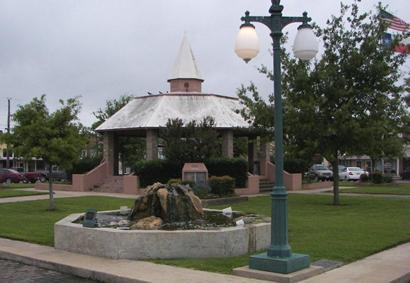
"The roads
around the old courthouse square in Cooper are paved with red brick.
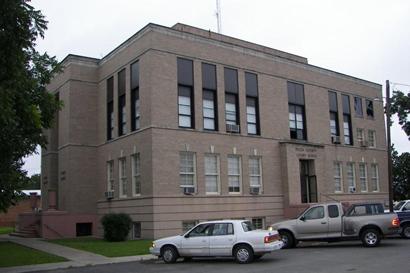
The current courthouse
is actually one block west of the square. This gazebo sits on the
foundation of the 1900
courthouse."
- Terry
Jeanson, June 2007 |
Cooper, Texas
Chronicles:
The
Smith Brothers
by Bob Bowman ("All Things Historical")
Four brothers from Delta County lived with an ordinary name in the
mid-1800s, but they were far from ordinary... In 1968, the Texas
Historical Commission erected a state historical marker to the Smiths'
legacy on a site three and a half miles west of Cooper beside Texas
Highway 64.
Delta
County Courthouses
|
Historical Marker:
600 SE First St.
Original Site
of East Texas Normal College
Founded 1889 by W. L. Mayo (1861 - 1917), a teacher educated in Kentucky,
Virginia and Indiana, who came to Pecan
Gap, Texas in 1886. He was a native of Kentucky. He attracted
a strong faculty to college on this site. A young teacher he soon
married was a capable business manager. A high board fence enclosed
campus here. The one building (T-shaped, 2-story, typical of its era,
with porches upstairs and down), housed a dynamic school until razed
by fire in 1894. Mayo was given aid to rebuild in Commerce;
school survives as East Texas State University.
Recorded Texas Historic Landmark - 1967 |
| Texas
Escapes, in its purpose to preserve historic, endangered and vanishing
Texas, asks that anyone wishing to share Cooper history, stories,
landmarks and recent or vintage photos, please contact
us. |
|
|
 HOME
HOME