|
 |
History in
a Pecan Shell
Oak Hill is one
of many Texas communities that were sacrificed for the war effort
in the early 1940s. In this case it was Camp
Swift, the largest Army training post in Texas and a German Prisoner
of War Camp. Foundations of homes (or barracks) can be seen on the
west side of FM 2336. The population of Oak Hill was displaced and
the homes and businesses were sold for materials. The buildings that
weren't sold ended up being used for target practice. After the war
when Camp
Swift was downsized - it's barracks and buildings were sold as
scrap - for $5 a truckload. Part of the Camp became a Federal Prison
and part became a Cancer Research Facility. Some of the land was returned
to previous owners, but the town per se was never rebuilt. |
|
|
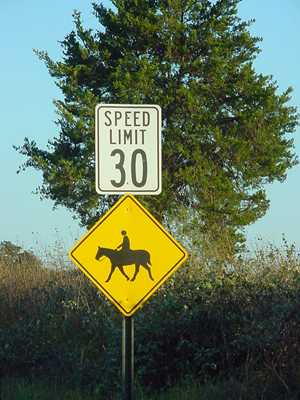
The road to
the Oak Hill Cemetery
TE Photo,
2006
|
Oak
Hill had its beginning in the late 1840s when Martin Walker started
selling off part of his land grant. In 1879 a church was built that
served three denominations and in 1882 four churches shared the single
building. The town's economy was based on corn
and cotton production and subsistence
vegetable farming and livestock production. No population figures
are available but the one-teacher school listed 39 students in 1905.
Oak Hill School served as the lead school of its district in 1907.
The town has long disappeared from county maps but a sign on FM 2336
will direct you down an unpaved road where you will see the cemetery
on the east side. |
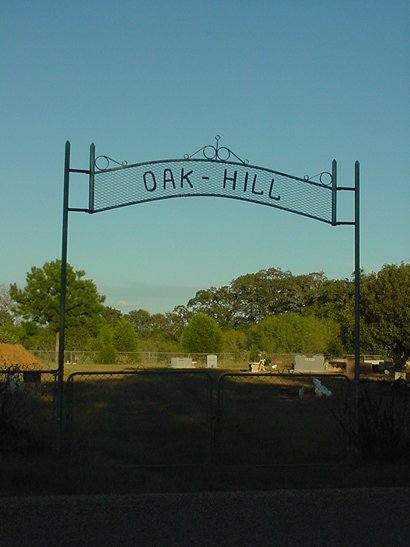
Oak Hill Cemetery
29.9832773 , -97.1649877
TE photo, 2006 |
|
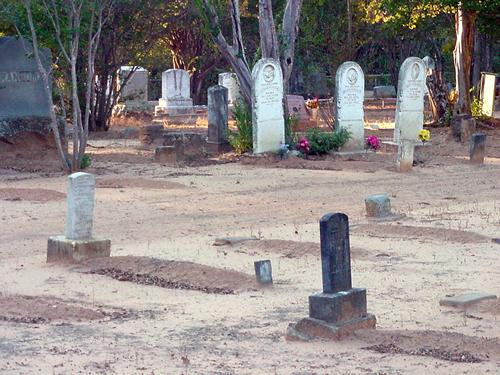
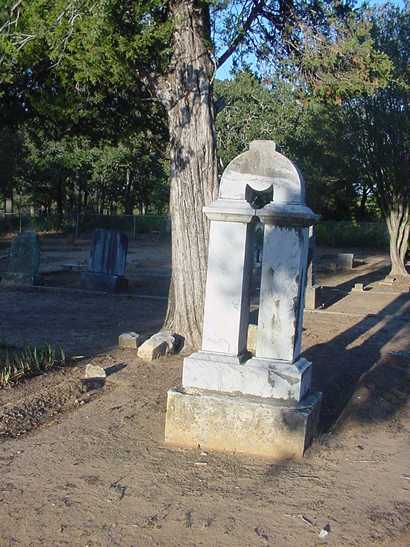
All that remains
today of Oak Hill is a scraped earth cemetery maintained by an active
association made up of former residents. Some unmarked graves are
said to predate the "official" earliest burial from 1868.
|
Oak Hill - a
"scraped earth" cemetery.
TE photo,
2006 |
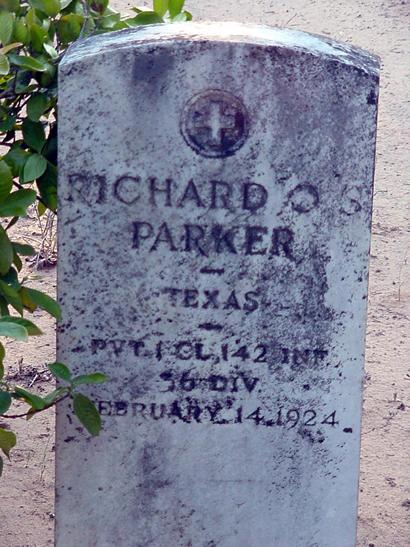
A WWI
Marker
TE photo,
2006 |
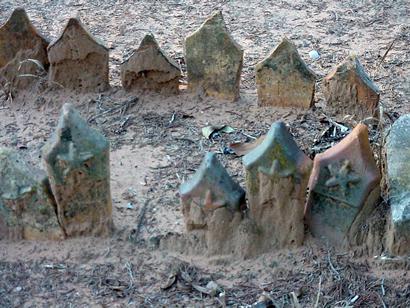
Peculiar markers
outline a grave
TE
photo, 2006 |
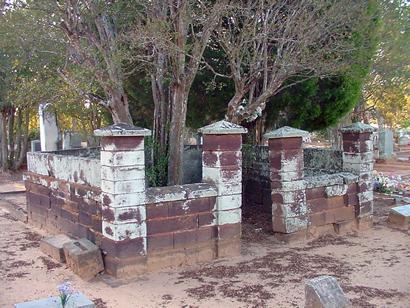
The most notable
enclosure at Oak Hill Cemetery
TE
photo, 2006 |
| Texas
Escapes, in its purpose to preserve historic, endangered and vanishing
Texas, asks that anyone wishing to share their local history, stories,
landmarks and recent or vintage photos, please contact
us. |
|
|
 HOME
HOME