|
|
 |
History in
a Pecan Shell
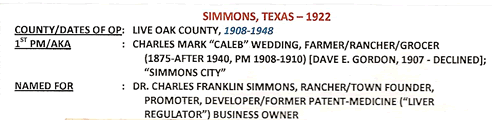
Dr. Charles F. Simmons of St. Louis is the town's namesake. Dr. Simmons,
who had made a fortune in the patent medicine business, originally
had a huge ranch here. In 1906 Simmons decided on splitting up his
60,000 spread and selling it off to farmers.
First known as Simmons City, the future looked bright. All
plots were sold in just over six months. The 1907 population was just
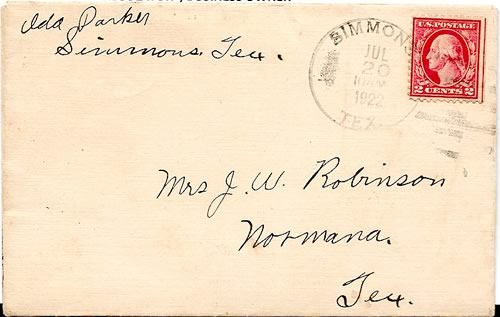
75 and a post office was granted that same year with a school and
church built the year after. An one-story brick school was constructed
in the late 1930s, only to close in 1946. Local students were sent
to Three Rivers.
By 1940 the population had shrunk to a mere 35 and all of the town's
businesses had closed their doors by the end of that decade, including
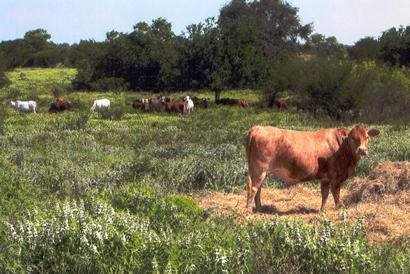
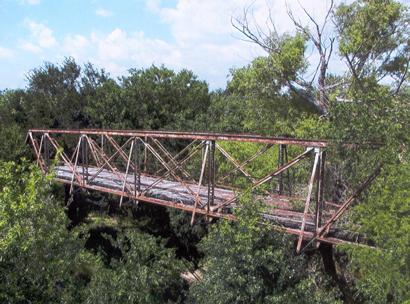
the post office. About all that is left of Simmons is what is shown
here from Terry
Jeanson's visit in May of 2007.
See Simmons, Texas Historical
Marker
Simmons Schoolhouse
"I was in
third grade in the Simmons school in 1945-1946. It closed that year.
The school was brick but it was one story, not two. The previous school
was of wood and had two stories. It burned and, after that, the new
school was built. My mother attended the old school. As a teen I helped
tear down the brick school building. We salvaged the bricks. My dad
and I expanded our farm house with some of these bricks. The Methodist
parsonage in George West, Texas
was built from some of these bricks. - Philip Hudson, September 24,
2009 |
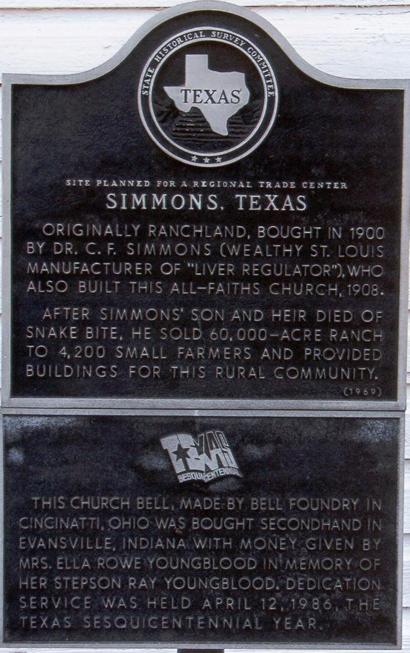 |
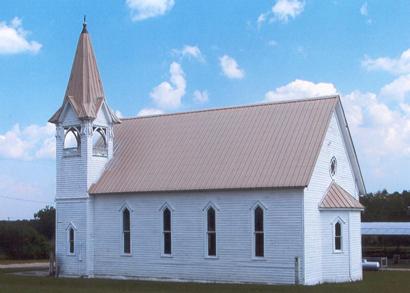
Simmons, Texas
historical marker
in front of the Community Church.
Photos courtesy Terry
Jeanson, 2007 |
Historical Marker:
Simmons, Texas
Originally ranch
land, bought in 1900 by Dr. C.F. Simmons (Wealthy St. Louis manufacturer
of "Liver Regulator"), who also built this all-faiths church, 1908.
After Simmon's son and heir died of snake bite, he sold 60,000--acre
ranch to 4,200 small farmers and provided buildings for this rural
community. |
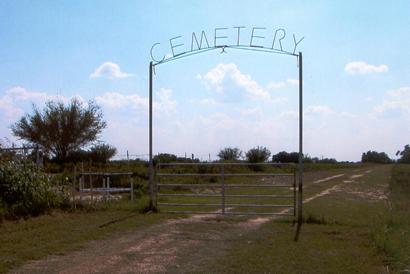
Entrance to Simmons
cemetery from the road.
Photo courtesy Terry
Jeanson, 2007 |
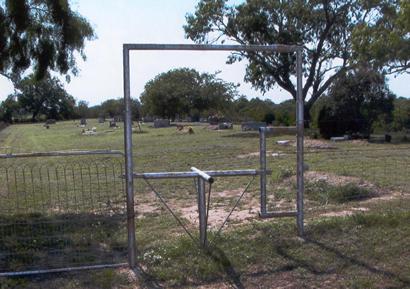
Cemetery in Simmons.
The turnstile keeps the wandering cows from entering the cemetery
and eating the grass (or anything else.)
Photo
courtesy Terry
Jeanson, 2007.
More Texas Cemeteries |
| Texas
Escapes, in its purpose to preserve historic, endangered and vanishing
Texas, asks that anyone wishing to share their local history, stories,
landmarks and recent or vintage photos, please contact
us. |
|
|
 HOME
HOME

 Texas
Gulf Coast
Texas
Gulf Coast East
Texas
East
Texas Central
Texas North
Central
Texas North Central
Texas South
Central
Texas South Texas
Panhandle
Texas
Panhandle South
Texas
South
Texas Texas
Hill Country
Texas
Hill Country West
Texas
West
Texas Texas
Ghost Towns
Texas
Ghost Towns Texas
Counties
Texas
Counties