|
 |
History
in a Pecan Shell
Columbus' history is so rich, it's difficult to mention even the highlights
in the space available. We suggest that the reader consult one of
the histories available at the K. Nesbitt Memorial Library (529
Washington Street). We will attempt to include some of the more interesting
facts, although each could be (and many have been) written about in
length.
The Early Years:
Columbus (as Beason's Ferry) played an important part in the
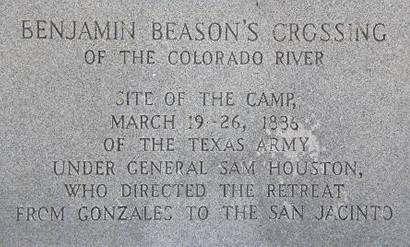
Texas Revolution and the few houses that comprised the town were burned
by Houston
in his scorched-earth tactics during the Runaway
Scrape. He spent six days on the east side of the river drilling
his troops before continuing on to San
Jacinto. The last Indian raid in Columbus took place in 1838 when
two citizens were killed.
Stagelines connected Columbus to San
Antonio (a 48 hour adventure) and steamships appeared as early
as 1838. The river was navigable from just above Matagorda
and in later years (1871) a steamboat once went as far as Dripping
Springs.
Just prior to the Civil War, the Buffalo Bayou, Brazos and Colorado
Railroad came just short of Columbus to Alleyton.
This made Alleyton
the most important town on the Confederacy's "Cotton Road" to Matamoros,
Mexico. The railroad's post-war plan was to bypass Columbus and
Columbians raised money to build a three-mile "tap line" to Alleyton.
The four Stafford Brothers came from Georgia just before the
Civil War.
R.E. "Bob" Stafford drove cattle to Kansas in 1867 and started
making his sizable fortune. He opened his bank in 1882 and he also
owned the Columbus Meat and Ice Company on the river.
Columbus shares its name with 22 other municipalities (of varying
size) around the country. They get together every two years and compare
notes on what burdens and blessings the name brings. They also vote
for a "Miss Columbus, U.S.A." The year 2000 winner was from Texas'
Columbus. |
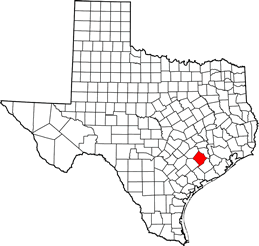
Columbus, Texas
Landmarks / Attractions
|
| Columbus has
the distinction of being "the oldest surveyed and platted Anglo-American
town in Texas." |
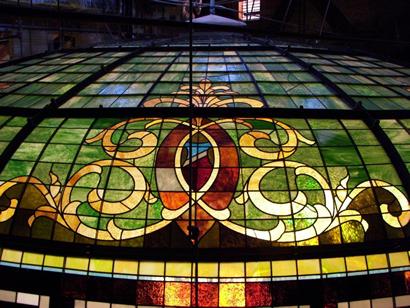
View of the courtroom
skylight from the attic
Photo courtesy Terry
Jeanson, May 2014 |
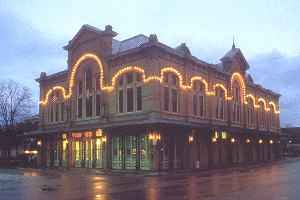
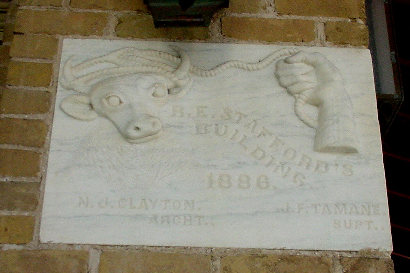
The Stafford
Opera House was built in 1886 and his future looked pretty darn
good. John and Bob Stafford were shot dead in 1890 by Columbus Deputies
who confronted them in front of a saloon.
This opened the lid on a whole bunch of smoldering feuds which,
when fully in flame, continued well into the 20th Century. They
even resulted in Columbus being unincorporated from 1907 to 1927.
|
1886 Stafford
Bank Building/Opera House
Photo Courtesy Colorado County Visitors Bureau |
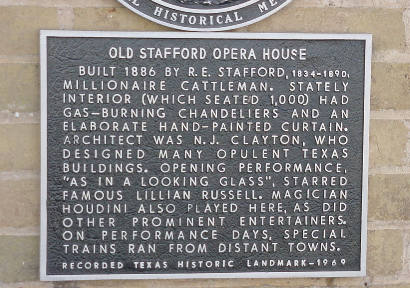
Old Stafford
Opera House Historical Marker
TE Photo, 2002 |
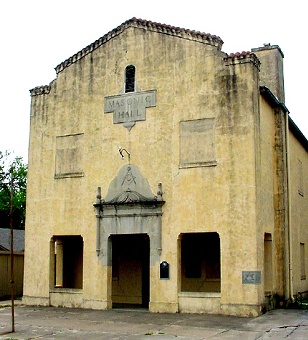
Columbus 1927
Masonic Hall
TE Photo, 2004 |
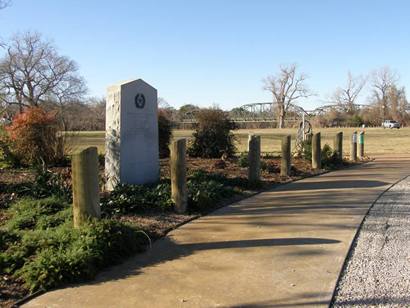
Beason's
Crossing Park in Columbus
Photo courtesy Barclay
Gibson, February 2009 |
Grave of
Gunfighter Dallas Stroudenmire
3 miles East in Alleyton
- Easy to find - it's the only newly fenced grave in the cemetery's
large open field.
Book Hotel Here › Columbus
Hotels
|
Columbus, Texas
Vintage Photos
|
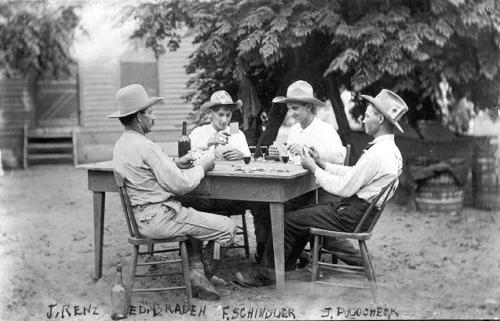
| Courtesy
Nesbitt Memorial Library Archives |
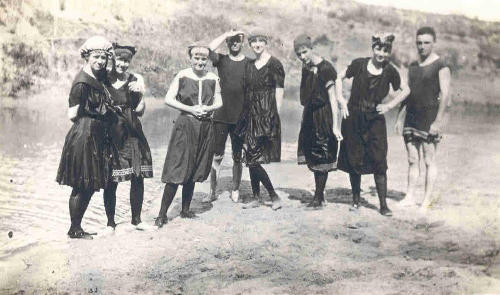
| Courtesy
Nesbitt Memorial Library Archives |
|
|
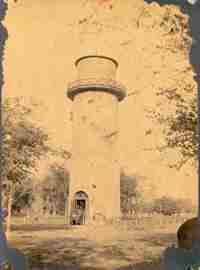
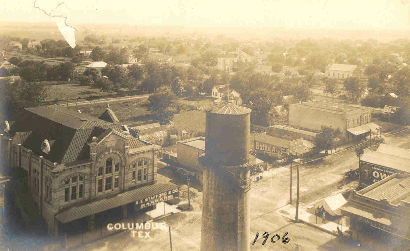
Columbus
Tower
400,000 nicely arranged bricks make up the 32-inch walls of this beautiful
tower (c. 1883)
The tower stored water piped from the Colorado River.
The photo left is the earliest photograph of the tower.
Courtesy Nesbitt Memorial Library |
|
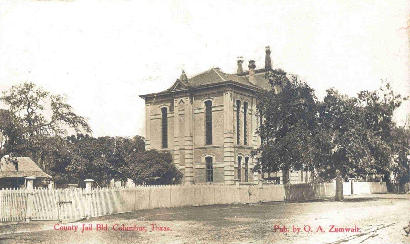
County Jail
Building
Courtesy
Nesbitt Memorial Library, Columbus, Texas
More Texas Jails
|
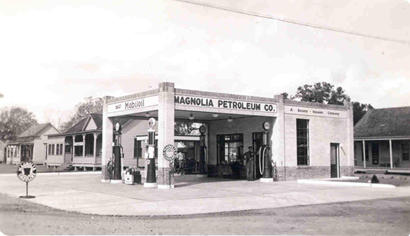
Magnolia Gas
Station
Courtesy
Nesbitt Memorial Library, Columbus, Texas
More Texas
Gas Stations |
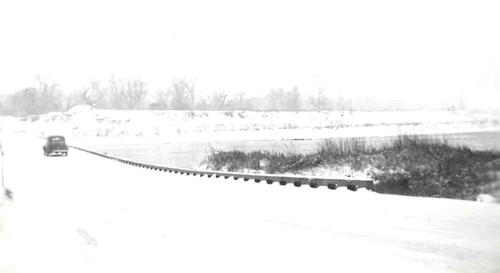
Snow covered
low water bridge, 1947
Courtesy Nesbitt Memorial Library, Columbus, Texas |
Columbus Nearby
Destinations
& Scenic Drives
|
|
|
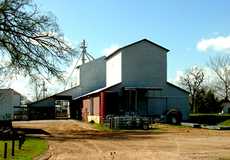
Grain elevators
in Columbus
TE Photo, 2-2003 |
|
|
SOLUTION
Tails of Two
Cities by Brewster Hudspeth
or The Great Columbus, Colorado County / Canada Cat Compromises
|
Columbus,
Texas Forum
I don't know where Columbus City Cemetery is.....never
cared. But this great piece on Live
Oaks and Dead Folks is fantastic! I will be planning a trip next
year just for this fun time. I love the writing style and the information
makes it come alive (so to speak). Please keep up the good work! I
have found you and plan to read and read and read...then maybe mosey
on down the road a piece. - Sandy Knebel, Garland.... by way of
Waxahachie, December 17, 2005
Columbus Convention and Visitor's Bureau:
On the Square in the Stafford Opera House
979-732-8385
Website: www.columbustexas.org |
| Texas
Escapes, in its purpose to preserve historic, endangered and vanishing
Texas, asks that anyone wishing to share their local history, stories,
landmarks and recent or vintage photos, please contact
us. |
|
|
 HOME
HOME