|
RICHMOND, TEXAS
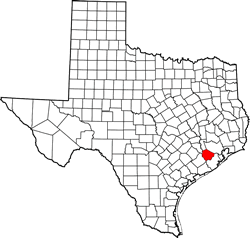
Fort Bend County
Seat, Texas Gulf Coast
29° 34' 51" N, 95° 45' 47" W (29.580833, -95.763056)
Hwy 59 and U.S. Highway 90A
30 miles SW of downtown Houston
NE of Rosenberg
8 miles W of Sugar Land
19 miles E of East Bernard
ZIP codes 77406, 77407, 77469
Area code 281/346/713/832
Population: 11,627 (2020)
11,679 (2010) 2000 11,081 (2000) 9,801 (1990)
Book Hotel Here > Richmond
/ Rosenberg Hotels |
History in
a Pecan Shell
Deaf
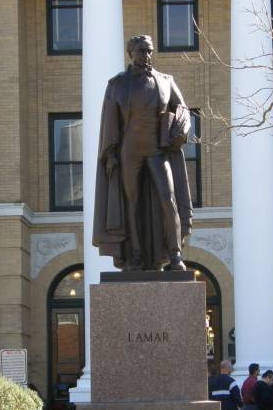
Smith, Mirabeau
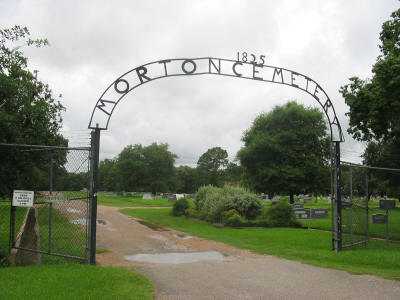
B. Lamar and Jane Long were once Richmond residents. Jane Long
is buried in the cemetery
and there is a statue of Lamar directly in front of the courthouse. |
A timeline
of Richmond history:
1822: First settlers arrived, closely followed by members of Austin's
"Old 300" The settlement was named after a log fortification on a
bend of the Brazos River - the location was an important ford on the
river.
1836: Evacuated during "The
Runaway Scrape"
1837: The town is platted, promoted and named after Richmond, England.
Incorporated in May of 1837 and becoming county seat when Fort Bend
County was organized later in the year.
1839: First newspaper - the Richmond Telescope and Texas Literary
Register, was published
1842: First courthouse built
1853: Yellow Fever epidemic hits Richmond
1855: The Buffalo Bayou, Brazos and Colorado Railroad arrives
1866: Freedman's Bureau opens when enamcipated slaves leave plantations
and move to the city
1867: Union occupation troops stationed at Richmond
1871: New Courthouse
1878: The Gulf, Colorado and Santa Fe RR bypasses Richmond by 3 miles
- giving birth to Rosenburg, Texas
1888: First bridge across the Brazos is built
1893: First steel bridge is built
1899: Brazos floods
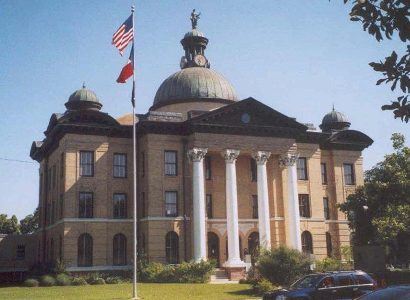
1908: Fourth
County Courthouse
1920s: Population is 1,273. Oil discoveries add to the economy - rice,
sugar and cotton are main crops
After WWII,
the more mobile population moved to Houston
for better jobs. The population was stagnant until people started
commuting from Houston
in the 1970s.
Book Hotel Here > Richmond/Rosenberg
Hotels |
Richmond, Texas
Landmarks / Attractions
|
|
John Moore
Home, c. 1883
Long-Smith
Cottage
Confederate
Museum
Fort Bend
Historical Museum: 500 Houston Street
|
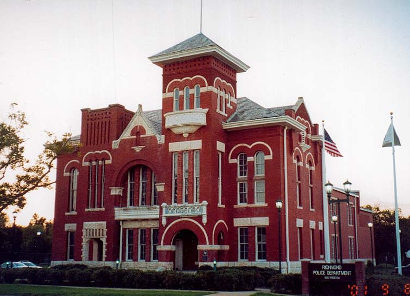
Former Ft. Bend
County Jail c. 1896
Just SW of downtown Richmond - across the tracks.
TE photo, 2001 |
Fort Bend County
Jail
Completed in 1897,
this structure was the third jail building in Fort
Bend County. Built to communicate strength and justice to the
area's lawless elements, the imposing Romanesque revival style structure
features terra cotta decoration and massive arches. The interior included
living quarters for the sheriff and a third floor gallows. It served
as the Fort Bend County Jail until 1955.
Recorded Texas Historic Landmark - 1985 |
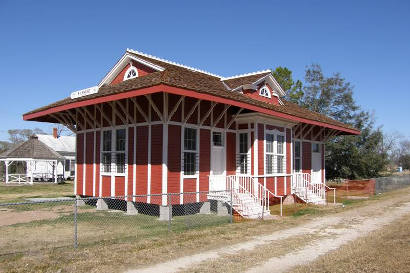
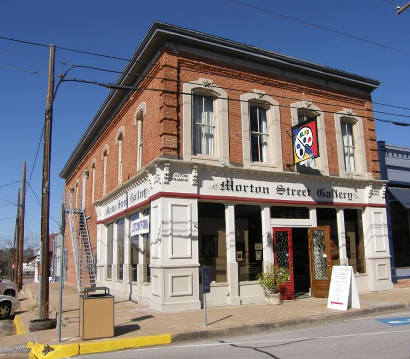
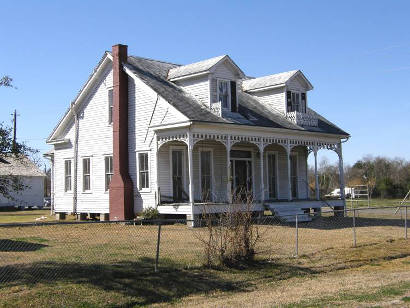
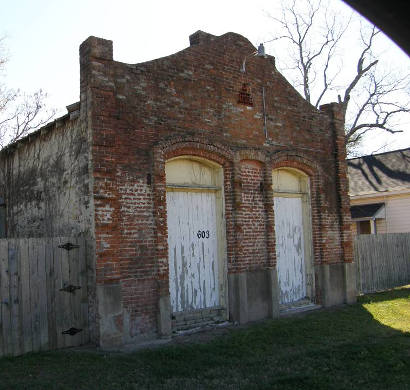
Richmond historic
building
Photo
courtesy Barclay
Gibson, February 2009 |
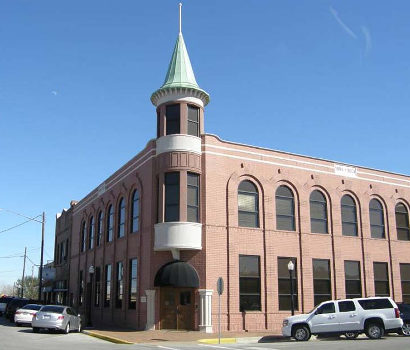
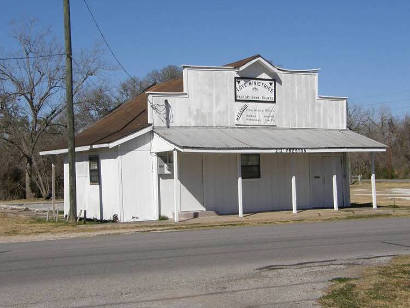
Richmond classic
building
Photo
courtesy Barclay
Gibson, February 2009 |
Historic Home
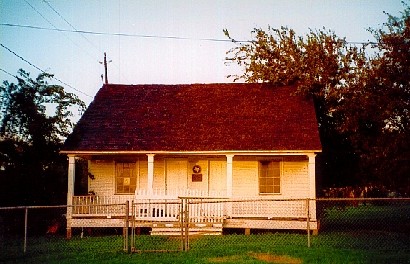
- McNabb House
TE photo |
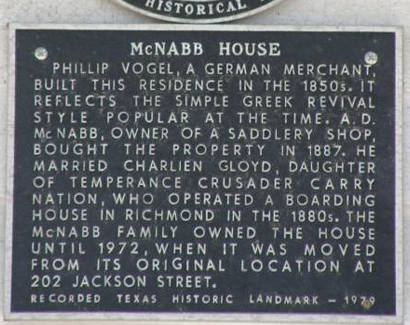
McNabb House
Historical Marker
Photo courtesy Barclay
Gibson, February 2009 |
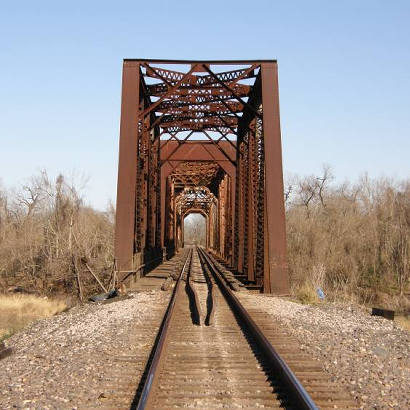
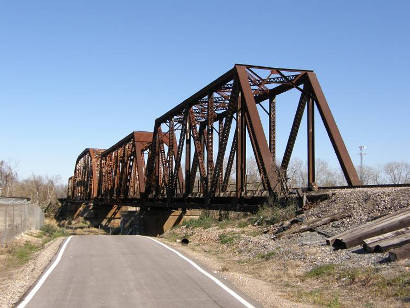
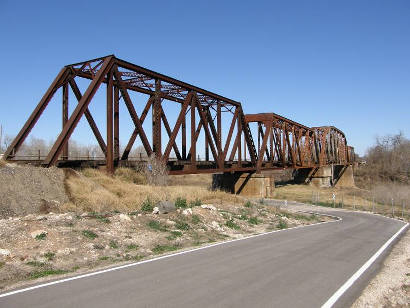
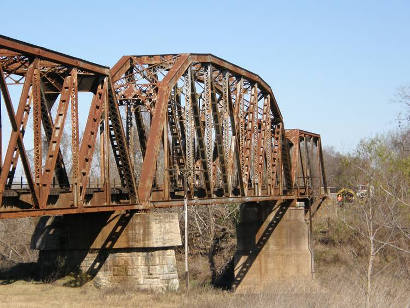
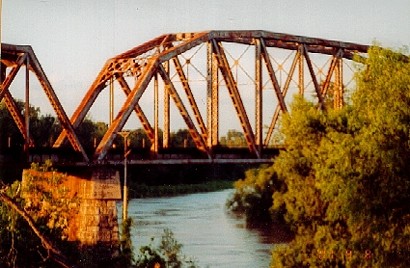
Four-spanned
Railroad Thru Truss Bridge
over Brazos River
|
|
Railroad Thru
Truss Bridge
Photo courtesy Barclay
Gibson, February 2009
|
The Four-spanned
Railroad Thru Truss Bridge
Photo courtesy Barclay
Gibson, February 2009 |
Railroad bridge
over the Brazos
TE photo, 2001 |
Richmond, Texas
Chronicles
Jaybird-Woodpecker
War by Archie P. McDonald
("All Things Historical" Column)
"In Fort Bend County, a silhouette of the jaybird symbolized
the Redeemer portion of the Democratic Party and the woodpecker
represented those who had flourished during Radical Republican reconstruction,
who also had begun to call themselves Democrats by the 1880s."
more
|
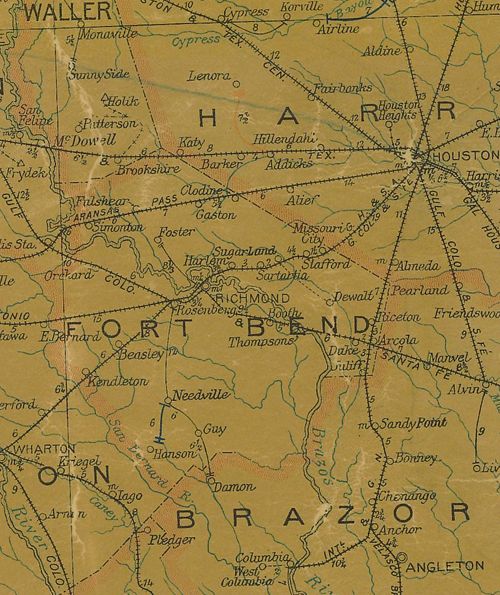
1907 postal
map showing Richmond, Rosenberg,
and
the Brazos River running through Fort
Bend County
(From Texas state map #2090)
Courtesy
Texas General Land Office |
| Texas
Escapes, in its purpose to preserve historic, endangered and vanishing
Texas, asks that anyone wishing to share their local history, stories,
landmarks and recent or vintage photos, please contact
us. |
|
|
 HOME
HOME