|
|
 |
History in
a Pecan Shell
Built in the 1850s
as one of the second line of forts
to protect the pioneers, it was also designed to protect gold-seekers
who were passing through Comanche land on their way to California.
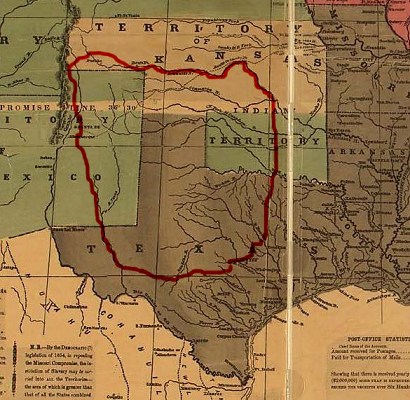
In 1849 Capt. Randolph B. Marcy had been sent to find the best route
through a region that was referred to as “Comanchería.” (See map)
The foundations of Fort Phantom Hill were built on Marcy's recommendation.
Five companies of the Fifth Infantry (Lt. Col. John J. Abercrombie,
commanding) arrived on the Clear Fork of the Brazos in the Fall of
1851 to begin construction. A second fort on Pecan Bayou (now in Coleman
County) was planned, but was changed to the Clear Fork where it
joined Elm Creek.
The change brought about immediate hardship, mainly due to a shortage
of water and timber. When a source of building stone was located two
miles south along Elm Creek a quarry was established.
Timber was hauled in from 40 miles away. Quarters for the enlisted
ranks and outbuildings were of primitive jacal construction, although
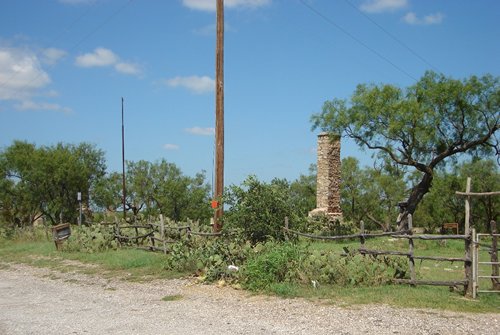
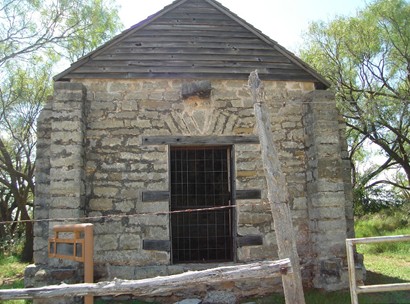
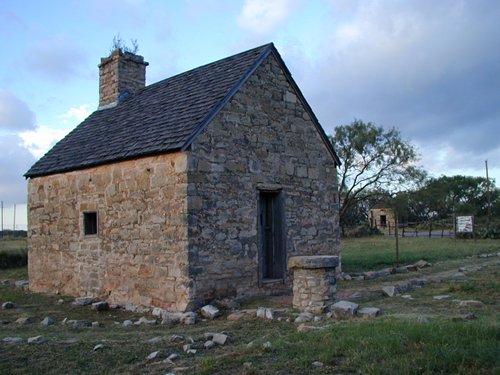
all buildings had stone chimneys. The only completely stone buildings
were the powder magazine, storehouse and jail.
Officially,
the army had the base listed as "Post on the Clear Fork of the Brazos."
The odd name is said come from an optical illusion. The fort seems
to jut up from the plains when seen from a distance, but close up,
the land levels out and the elevation disappears – phantom-like.
The barely flowing waters of Elm Creek and the brackish waters of
the Clear Fork made duty here miserable. An 80 foot well was dug,
but even this source was unreliable. Wagons hauled in water from
a four-mile distant spring.
Having no Cavalry
to confront the mounted Comanche, the garrison kept to itself, content
to occupy the site. They did “meet” other tribes passing through,
including the peaceful Wichitas, Lipans, Kickapoos, and Kiowas.
Delaware Indians served the post as guides and scouts.
Four of the original five companies who had built the fort were
withdrawn by 1853 and the remaining troops were bolstered by a company
of the Second Dragoons. The post was abandoned in early April 1854
– after a brief span of less than four years.
|
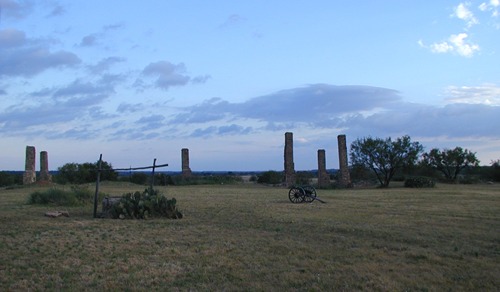 |
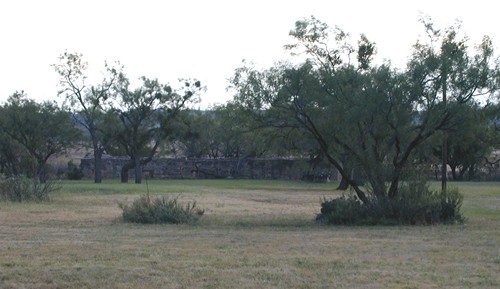
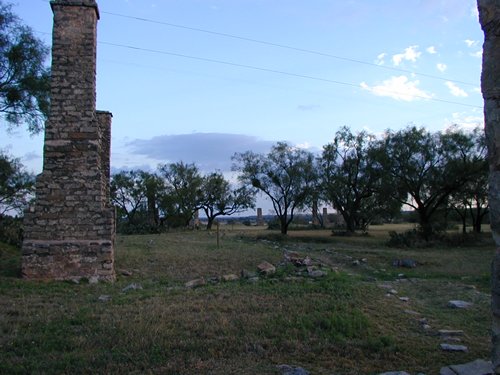
Fort Phantom
Hill ruins
Photo courtesy Mike
Price, 2007 |
Shortly after
abandonment, the fort burned to the ground. There was no shortage
of speculation as to who burned it but historians have been unable
to conclusively assign the blame.
A few remaining buildings were restored in 1858 to be a stage stop
for the Butterfield Stage Company.
During the Civil War, the fort site was visited by roaming Ranger
companies and some units of the Frontier Battalion used it as a base
of operations. It became a sub-post of Fort
Griffin in the early 1870s and elements of Mackenzie's raiders
launched attacks against Indian foes in early 1872.
When the Indian threat was extinguished, a small town came into being
in the mid 1870s that catered to buffalo
hunters. With a 1880 population of over 500 people, the town was made
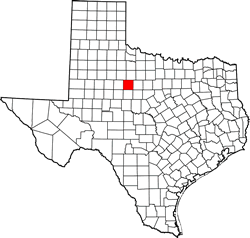
the county seat of Jones
County in the spring of 1881 but lost the title (to Anson)
that November. |
 |
The
Texas and Pacific Railroad bypassed Fort Phantom in 1882, choosing
the southern route through Abilene
instead. Fort Phantom became a ghost of its former self – with only
a hotel, blacksmith and saloon to retain its status as a town.
Now on private property, the fort remains on the historic Forts Trail
due to the generosity of the land owners.
Ironically, the water shortages that plagued the fort’s builders and
early residents no longer exist. Today a huge manmade reservoir just
south of the fort (and named after it) supplies water for 100,000
people in both Jones
and Taylor Counties.
|
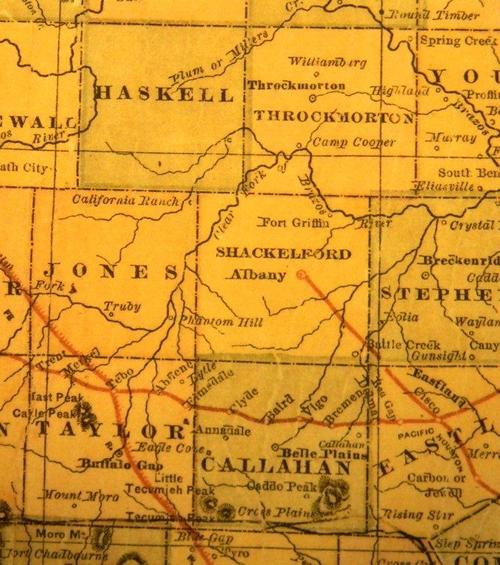
1882 map showing
Jones County with
Truby & "Phantom Hill"
Courtesy Texas General Land Office |
Map
showing approximately the area, known as Comancheria
Wikimedia Commons |
| Texas
Escapes, in its purpose to preserve historic, endangered and vanishing
Texas, asks that anyone wishing to share their local history, stories,
landmarks and recent or vintage photos, please contact
us. |
|
|
 HOME
HOME

 Texas
Gulf Coast
Texas
Gulf Coast East
Texas
East
Texas Central
Texas North
Central
Texas North Central
Texas South
Central
Texas South Texas
Panhandle
Texas
Panhandle South
Texas
South
Texas Texas
Hill Country
Texas
Hill Country West
Texas
West
Texas Texas
Ghost Towns
Texas
Ghost Towns Texas
Counties
Texas
Counties