|
PRESIDIO, TEXAS
Presidio
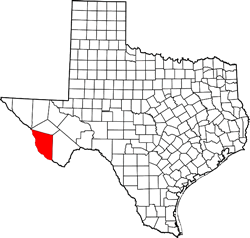
County, West Texas
29° 33' 41" N, 104° 21' 59" W (29.561389, -104.366389)
On the Rio Grande, Highway 67 and FM 170
18 Miles S of Shafter
60 Miles S of Marfa county
seat
85 miles SW of Alpine
240 miles SW of Odessa
250 miles SE of El Paso
ZIP codes 79845-79846
Area code 432
Population: 3,894 est.(2019)
4,426 (2010) 4,167 (2000) 3,072 (1990)
Book Area Hotel › Alpine
Hotels |
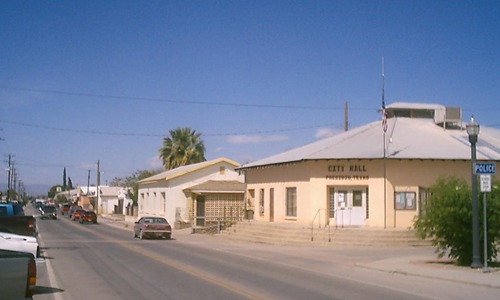
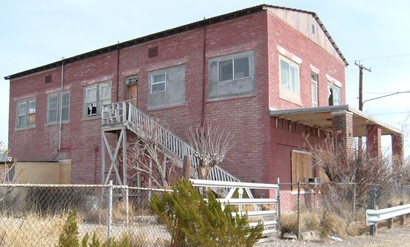
Presidio City
Hall Texas
Photo courtesy Patrick Cantrell, June 2006 |
History in
a Pecan Shell
1500 B.C. to
1760 A.D.
The area around present-day Presidio
is thought to be the oldest continuously cultivated area in the United
States. Evidence shows that the land has been farmed since 1500
B.C. The first Spaniard to visit the area was Cabeza de Vaca in 1553
when it became a stop on the shipwrecked sailor's famous tour. He
named it La Junta de las Cruces and it wasn't until late 1582 when
the second Spanish visitor arrived. Antonio de Espejo and company
renamed the site San Juan Evangelista. In 1681 the area was known
as La Junta de los Ríos or juncture of the rivers since it is where
the Río Conchos and the Rio Grande merge. In the 1760 the site was
home to a penal colony with a garrison of 60 guards.
1830 to 1930
In 1830 the name of the area around Presidio was changed from La Junta
de los Rios to Presidio del Norte. Anglo settlers arrived after the
Mexican War and settler John Spencer started a horse ranch near Presidio
on the US side of the river. The area was subject to violent Indian
attacks prior to the Civil War and it wasn't until 1868 when the tiny
community received a post office. The first public school opened in
1887 but it wasn't until 1930 when the Kansas City, Mexico and Orient
Railway arrived at the border town.
1930 to 2000
From a miniscule population of around 100 in 1930, Presidio slowly
grew to 1,600 in the late 1980s. Due to an amnesty in 1988, Presidio
experienced a boom. The 2010 population stood at 4,426. |
|
Photographer's
Note:
Presidio is on Hwy 170 way out past Big
Bend.
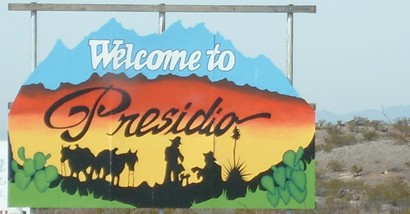
The welcome
sign is the jazziest thing in town. - Sarah
Reveley, January 2008
|
 |
 |
by Bob
Bowman
For longer than most of us can remember, Texans have been squabbling
over which community
is the state’s oldest.....
While it recently observed only its twentieth anniversary as a municipality,
Presidio claims it was first inhabited
about 1200 A.D., more than 500 years before the Declaration of Independence,
and was founded in 1683 when Jesuit priests from El
Paso established a number of missions in the area, an event commemorated
by Presidio’s Santa Teresa de Jesus Catholic Church each fall.
Archeologists claim hunter-gatherer tribes came to the valleys of
the Rio Grande and Rio Concho rivers about 1200 A.D.....
Even Presidio’s claim is a little weak. Archeologists say details
of the region’s archeology remains spotty. “We’ve worked on this thing
for years, and we’re still not able to work out who was where at what
time,” admitted Bob Mullouf, director of the Center for Big Bend Studies
at Sul Ross State University.
(See article
in full) |
Historical Marker:
US 67, 1/2 mile E of Marfa
(with Presidio County markers)
Presidio -
Oldest Town in America
At confluence of
Concho and Rio Grande Rivers. A settlement for over 10,000 years.
Site of first recorded wagon train crossing into Texas, December [year
illegible], headed by Antonio de Espejo. Marker placed jointly by
Texas Society, Children of the American Revolution, Texas Society,
Daughters of the American Colonists.
(1961) |
| Vintage
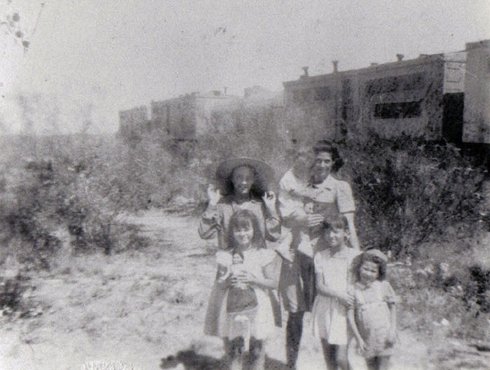
photos courtesy of Lola Hall Norton and Laura Jean Hall |
From Life
on a West Texas Paint Train in the 1940s
by the Hall Sisters:
Presidio in
the 1940s
A large school
with lots of children. I was thirteen, and my sister was 11-12 years
old. The town had a drugstore, with a pharmacist, a large café and
several businesses. We took picnics to the Rio Grande River on Saturdays
to swim, play and have good time.
A family named Fenny raised pigs. They kept them in adobe ruins, fed
and water them. For their living, the Fenny family would sell the
pigs fattened up after they fattened them up. One December day, snow
fell on Presidio, Texas. It was very unusual. Everyone came outside
to touch it. It seemed no one owned a coat and I thought it was strange.
But, when the snow melted quickly, I understood better. Who needs
a coat in the “Big Bend”?
Also, I remember the pharmacist who sent penicillin out to my mother
for a serious burn. It was new then. He said, “I hope this medicine
helps her.” It healed her and she went in person to thank him for
his help. Good folks lived in the Big
Bend area. |
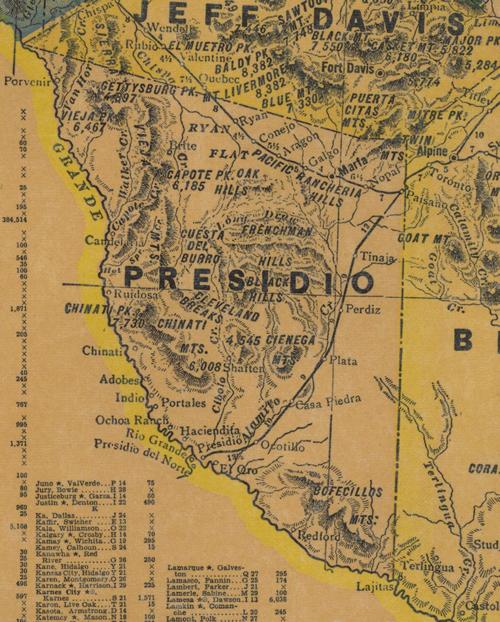 |
Presidio
County 1940s map showing Presidio by the
Rio Grande
Courtesy Texas General Land Office |
| Texas
Escapes, in its purpose to preserve historic, endangered and vanishing
Texas, asks that anyone wishing to share their local history, stories,
landmarks and recent or vintage photos, please contact
us. |
|
|
 HOME
HOME