|
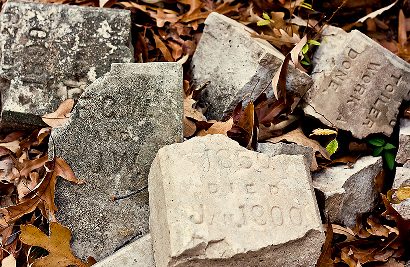
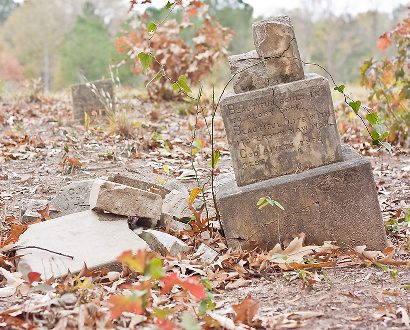
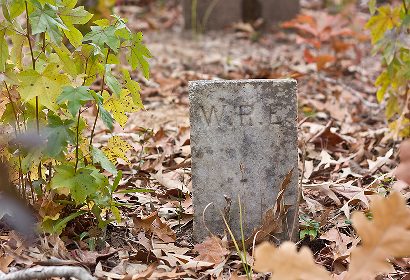
Camden Cemetery
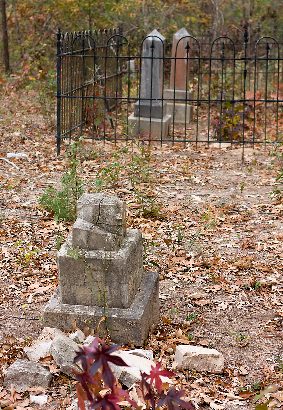
fallen tombstones
Photo courtesy Maryanne
Gobble, December 2010 |
History in
a Pecan Shell
One of the earliest
communities in Gregg
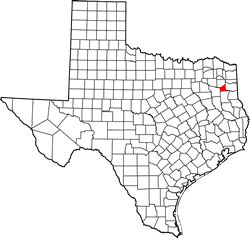
County, Camden grew around a crossing of the Sabine River (John
Walling’s Ferry). Mr. Walling arrived in Texas
in the early 1830s or before. Walling’s operation had been licensed
by the Mexican government and was doing business when Sam
Houston entered Texas in 1932. During
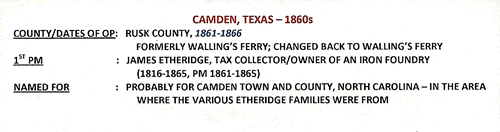
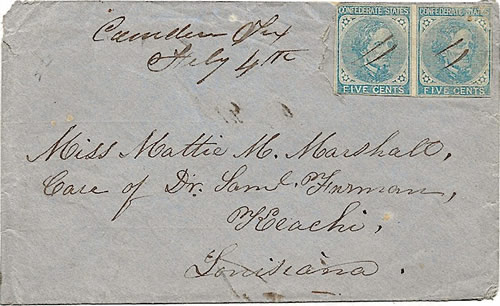
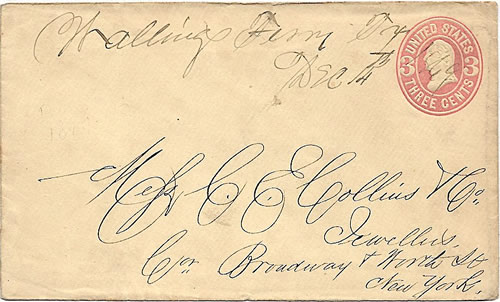
the early years, the names Camden and Walling’s Ferry
were used interchangeably.
In the mid 1840s, an entrepreneur named Enoch Hays saw the need for
a hotel and built an eight-room, two story tavern with sleeping rooms.
From the late 1840s through 1872, the community had a post office
– usually named Walling’s Ferry and sometimes called Camden. The postmaster
would accept either address.
Steamboats could navigate up the Sabine
River as far as Camden into the 1850s, but a decline set in even
before the end of the Civil War. The river bottom provided harborage
for mosquitoes and the populace was constantly under threat of malaria
and other water-borne diseases and parasites. Residents relocated
to higher ground but what finally erased Camden from maps was the
establishment of Iron
Bridge.
Camden’s population had fled by the late 1860s and by the 1870s it
was a full-fledged ghost town. It was dropped from maps, long before
the 20th Century although the Camden cemetery is said to remain in
use. |
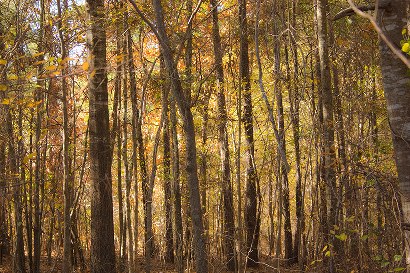 |
"We were
out there again today and walked through the woods a bit more."
- Maryanne
Gobble |
Photographer's
Notes:
Camden Cemetery
near Easton
"About 10
miles South of Longview,
take FM 2906 to Easton. Near Easton
lies what remains of Camden, formerly known as Walling's Ferry."
|
Direction to
the Cemetery
"The cemetery
is on an unmarked road directly west from Church St. in Easton.
It dead ends into a field with the cemetery to the right and a few
crumbled houses in the woods to the left. There is a small gated section
of the cemetery, then a few grave sites nearby that are falling apart.
As far as we could see there weren't any no tresspassing signs of
any sort." |
Camden Cemetery
fallen tombstones
Photo courtesy Maryanne
Gobble, December 2010 |
The Houses
in the Forest
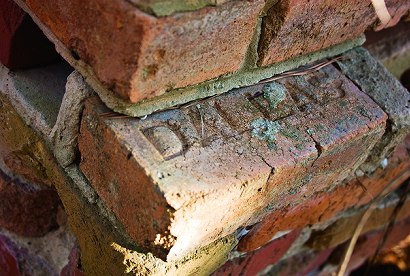
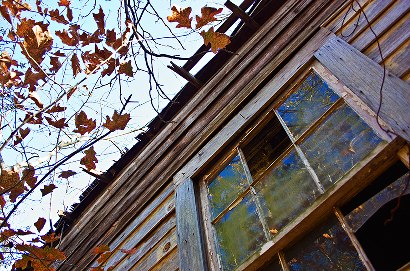
"They are
visible from the field if you look closely. One is flattened but has
glass bottles and bricks scattered about. There is a concrete well
and remains of the structure. Many bricks had "Dallas" printed on
them. The second house is about to cave in and should not be entered.
The brush is a little thick and has lots of sharp thorns. Long sleeves
and pants are necessary." |
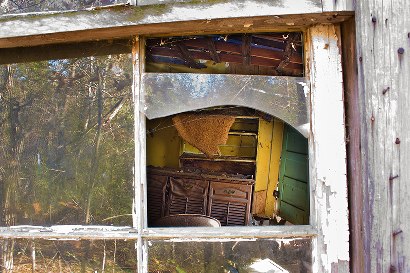
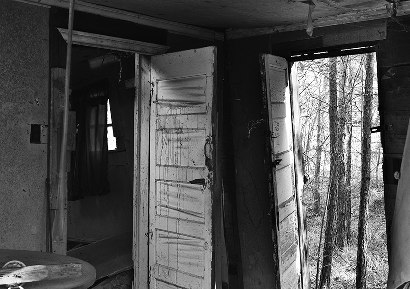
Looking
through the broken window
Photo courtesy Maryanne
Gobble, December 2010 |
Camden, Texas
Update
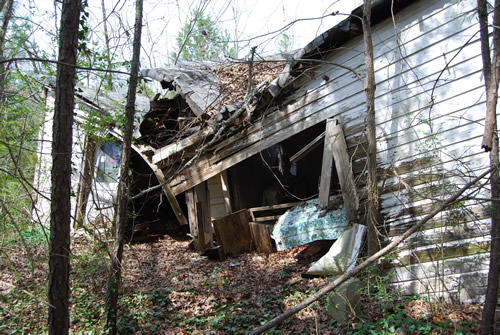
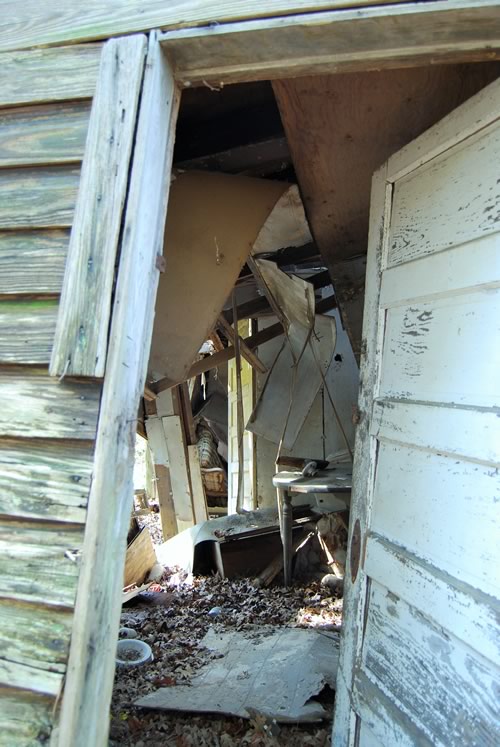
"I visited
yesterday to photograph the condition of the house and cemetery that
remains in Camden. The field that both things were near is actually
now a pad for a well head from recent drilling, and the house and
cemetery both are nearly consumed by nature." - Ashley Bowers,
Longview, TX, March 18, 2015 |
The abandoned
house in Camden
Photo courtesy Ashley Bowers, March 18, 2015 |
The abandoned
house in Camden
Photo courtesy Ashley Bowers, March 18, 2015 |
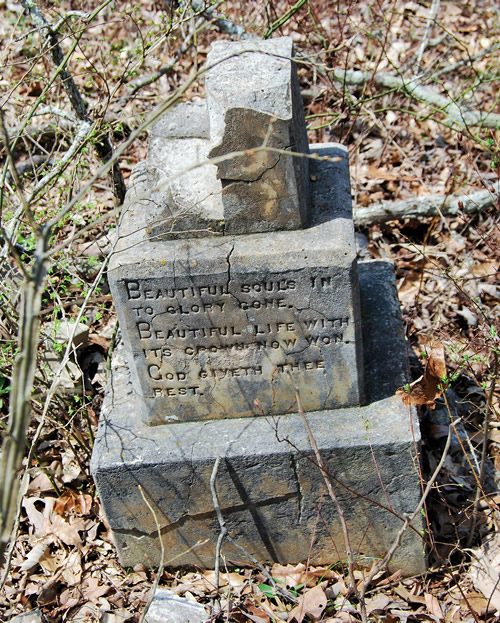
Camden Cemetery
broken tombstone
Photo courtesy Ashley Bowers, March 18, 2015 |
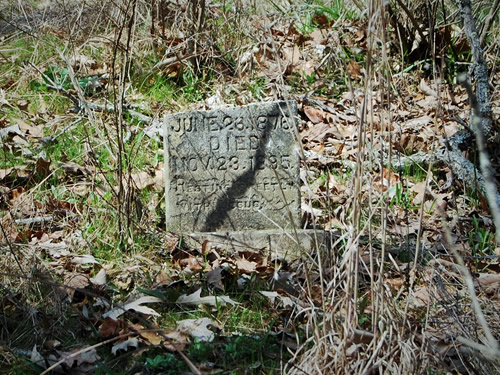
Camden Cemetery
broken 1895 tombstone
Photo courtesy Ashley Bowers, March 18, 2015 |
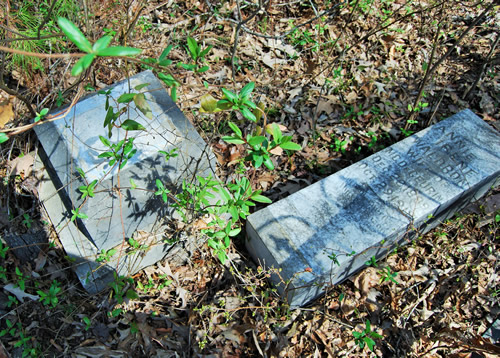
Camden Cemetery
fallen tombstone
Photo courtesy Ashley Bowers, March 18, 2015 |
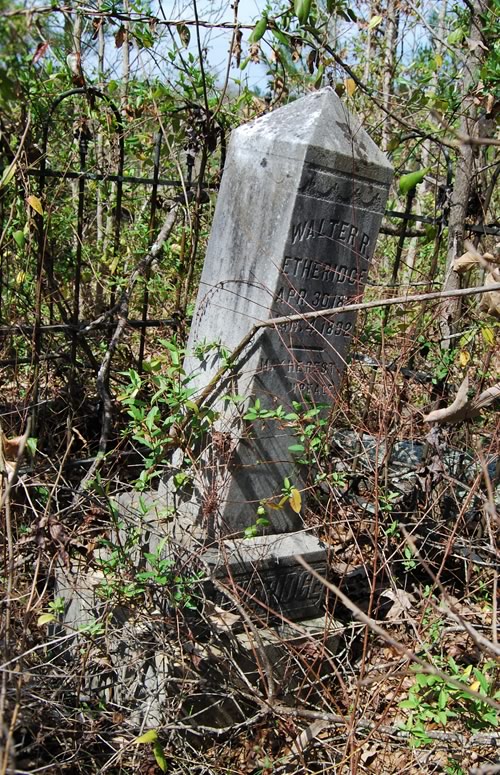
Camden Cemetery
Etheridge 1882 tombstone, still standing
Photo courtesy Ashley Bowers, March 18, 2015 |
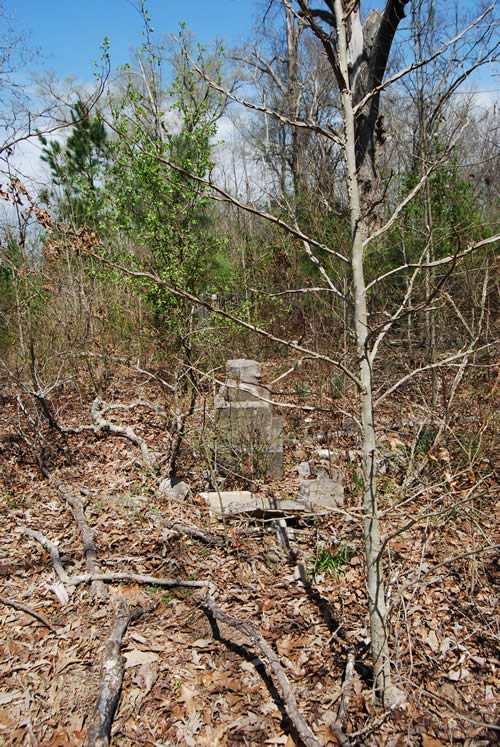
Camden Cemetery
Photo courtesy Ashley Bowers, March 18, 2015 |
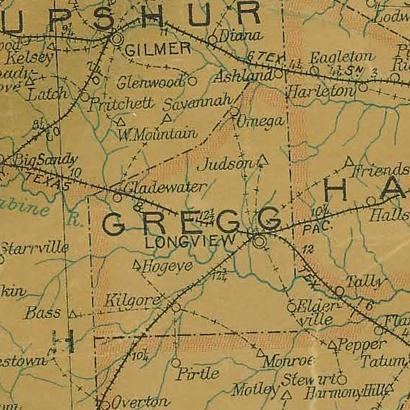
Gregg
County 1907 postal map showing Longview
and Sabine River
From Texas state map #2090
Courtesy
Texas General Land Office |
| Texas
Escapes, in its purpose to preserve historic, endangered and vanishing
Texas, asks that anyone wishing to share their local history, stories,
landmarks and recent or vintage photos, please contact
us. |
|
|
 HOME
HOME