|
Seguin, Texas
Landmarks / Attractions
|
Seguin
has an outstanding assortment of 19th century and early 20th century
buildings. It also has a devoted group of preservationists, local
historians, an active garden club and librarians who take care of
business. It's also a Main Street City and is home to a couple of
writers, one of whom happens to be a town barber.
We have to wonder if Janice Woods-Windle (author of True Women) co-authored
a book with Charley
Eckhardt (Tales
of Badmen, Bad Women and Bad Places) that their book would be
called Truly Bad Women. |
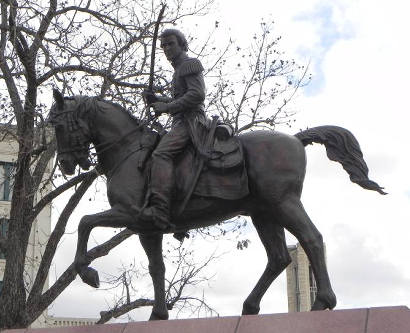
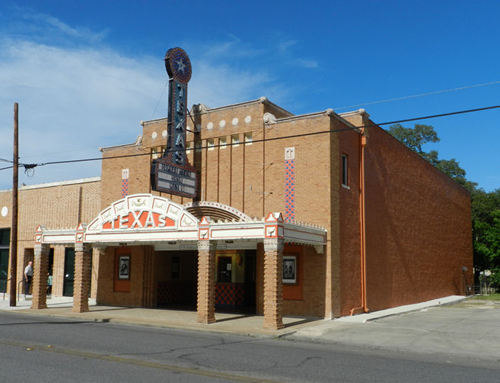
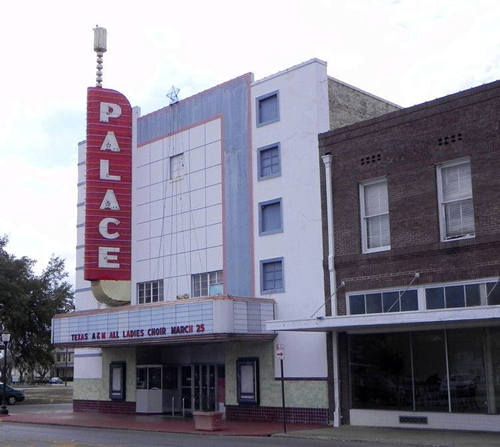
| November
2013 photo by Billy Hathorn, Wikimedia Commons |
|
|
The
1898 Nolte Bank Building designed by J. Riely Gordon
TE Photo October 2000 |
|
|
Plaza
Hotel and
the hanging tree
c1935
Old postcard TE Archives |
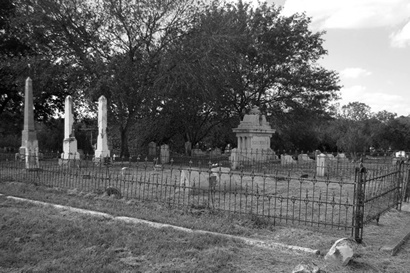
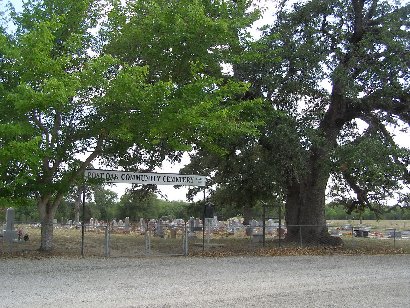
Riverside Cemetery
Photo courtesy Ken
Rudine, October 2009 |
| Tidbits from
Seguin's Interesting History |
|
|
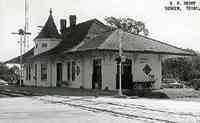
The
Southern Pacific Railroad Depot
Razed in 1987
TE Postcard
archives
More Texas
Depots |
The Southern
Pacific Railroad Depot c. 1910
Razed in 1987
The beautiful Seguin Railroad Station was demolished in the late
1980s when the railroad determined that vacant stations along their
line were liabilities. No consideration was given to relocation,
although the city would've gladly cooperated.
|
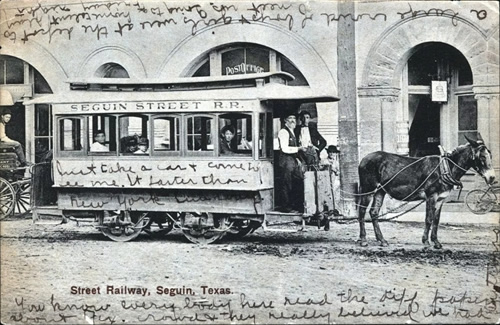
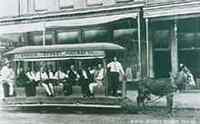
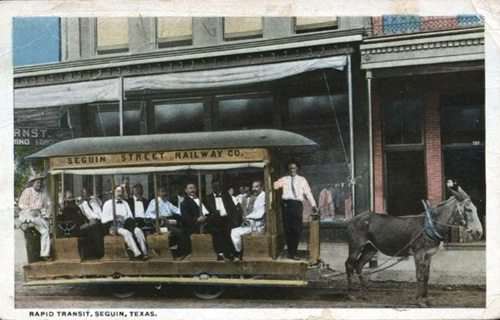
Seguin's
mule-driven line
When the railroad was the primary economic force in Seguin, a rail
line one mile long was extended to downtown to convey people and
parcels downtown. This mule-driven line was Seguin's only public
transportation system. In addition, the hotels that were in operation
at that time had their private hacks which were forerunners to our
so-called "courtesy cars" of today.
|
 |
Texas Beef:
It's what was for dinner in California
In 1854, a Seguinite named Michael Erskine made trail driving history
when he drove 1000 head of cattle from Guadalupe
County to California. That's right, California. No explanation
was given for this destination, but we're sure the cattle were put
to good use. A few years later, one Andrew Erskine was killed at
Antietam, but we don't know if it was a son or brother of Michael.
Death in
the Garden - Manhunt to the Red River
The Seguin Garden Club is one of the few in the State of
Texas to have a Texas Brands Inspector buried on their grounds.
By brands, of course we mean cattle brands. There was a bit of brand
changing going on in the area in 1877. The Inspector - a man named
Henry Holmes Batey made a request to inspect a rancher's cattle
as they were about to be driven across the Guadalupe River. The
man refused and while Henry later napped with his eyes shaded by
his hat, he was shot in the head.
His brother trailed the cowardly assassin all the way to the Red
River. After he returned he would only say that he saw the man ride
into the river heading toward Indian Territory. He was silent when
asked if the man made it to the other side.
Book Hotels › Seguin
Hotels
|
Seguin Stories
Two
Pilots, Three Air Forces, One Hometown
Lt. Col. Alvin Mueller & Lieutenant Dick Campbell
"Sam
Houston slept here" by Mike Cox
The
Aumont Hotel
The
Plaza Hotel
Hotel
Wars in Seguin
Two hotels in one town, the rivalry of building them and the little
girl who loved them both. No, it's not a Shirley Temple movie script.
"Eloise"
in Texas
When you outgrow one lobby, move to another hotel
Little
Mysteries by Mike Cox
Guadalupe County farmer Bernard Pankau found a small mystery on
his farm near Seguin in 1938.
Charley
Eckhardt's Badmen, Bad Women and Bad Places - A book review
Guadalupe
City
Skat
by Michael Barr
Skat was once a popular card game in the German Hill Country, but
good luck if you are looking for someone who knows how to play it...
The game of skat (pronounced 'scot') originated in Altenberg, Germany
in the early 19th century when members of the local card players'
club combined elements of a popular Italian game called Tarock with
another game called Schafkopf (sheep's head)... There are still
skat tournaments in Seguin and New Braunfels, but not so much in
Fredericksburg anymore.... more
|
Historic
sites and homes - The Seguin Chamber of Commerce has a map of
historic sites and homes and another on sites featured in
the book True Women. Contact the chamber (1-830-379-6382) for a
complete list of the nearby attractions to Seguin.
The Seguin
Driving Tour as well as the
True Women
Tour were put together by Wilton Woods, brother of the author
of True Women. Mr. Woods has done extensive research on Seguin's
architecture and visits his hometown several times a year from his
home in New York.
Seguin Tourist and Local Information
Seguin Chamber of Commerce: 427 N. Austin Street
1-830-379-6382 Website: http://seguintx.org.
Book Hotel Here › Seguin
Hotels
|
Seguin,
Texas Forum
Subject:
Woman
Hollering Creek
At one time, back in the early '80s, the Highway Department sign
at Woman Hollering Creek actually did read Woman Hollow Creek. It
stayed that for about a year until somebody got through to the folks
who put up the signs & told them what the name of the creek actually
was. This was when there was an effort to identify the names of
all the rivers, creeks, & draws in the state & put road signs with
the names on them. There are a lot of 'Five Mile Creek,' 'Fifteen
Mile Creek,' & similar signs, because some of the creeks didn't
have actual names. They were called "that creek you cross five miles
out of town on the County Seat road."
Along State 16 below San Antonio there's Macho Creek. This has nothing
to do with the modern usage of the word 'macho.' 'Macho' is the
Spanish word for a gelded mule.
There's a creek in Seguin, tributary to the Guadalupe, that apparently
has never had a name. At any rate, when the state tried to find
out the name of the creek so a sign could be put up, no one--not
even the oldest folks in town--could remember the creek ever having
a name. - C. F. Eckhardt, September 06, 2006
Texas
Escapes November 2000 Feature Town
|
| Texas
Escapes, in its purpose to preserve historic, endangered and vanishing
Texas, asks that anyone wishing to share their local history, stories,
landmarks and recent or vintage photos, please contact
us. |
|
|
 HOME
HOME