|
|
CROCKETT, TEXAS
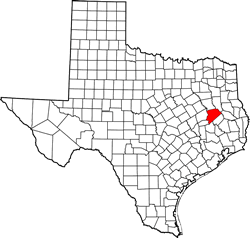
Houston
County Seat, East Texas
31°19'1"N 95°27'30"W (31.317010, -95.458397)
Highways 287, 7, 19, and 21
54 miles SW of Nacogdoches
35 miles S of Palestine
35 miles E of Centerville
48 miles N of Huntsville
43 miles W of Lufkin
Population: 6,544 Est. (2016)
6,950
(2010) 7,141(2000) 7,024 (1990)
|
 |
History
in a Pecan Shell
The town was named after Davy Crockett who reportedly had camped nearby
on his way to the Alamo.
The site was very near the Old
San Antonio Road. A family of Tennesseans donated the land for
the town and named it after Crockett, who they had known back in Tennessee.
The town was incorporated in 1837, and a post office was granted the
following year. Crockett was connected to Nacogdoches
by stage service.
In 1839 raids by the Alabama-Coushatta and Cherokee Indians forced
the town's residents to take shelter in the fortified log courthouse.
Crockett was a training center for Confederate conscripts during the
Civil War.
The railroad came through in 1872 enabling Crockett to exploit the
county's timber resources.
By 1885 the town was thriving with a population of 1,200 and the following
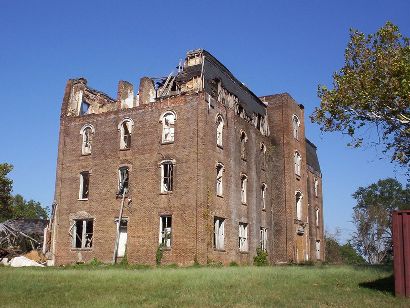
year a school was opened for black girls. It evolved into Mary
Allen Junior College, which operated into the 1970s.
In 1904 lignite mining started and it peaked about 1910. The stands
of timber were seriously depleted by the 1920s.
The population was over 3,000 in the mid 20's and by 1936 it was nearly
4,500.
Crockett population increased while most of East
Texas declined after WWII.
It reached 5,000 by the 1960 census. |
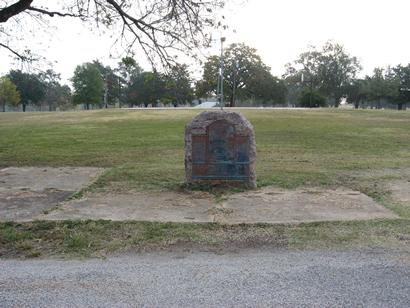
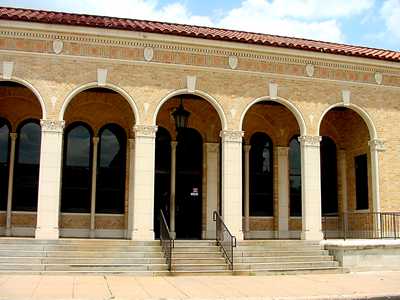
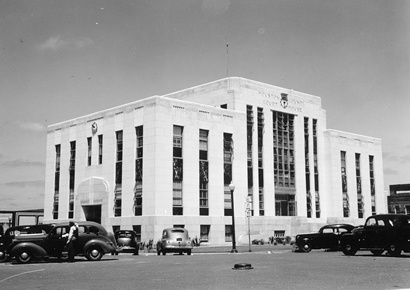
Crockett Landmarks
/ Chronicles
|
| Photo
courtesy Clayton Starr, 2008 |
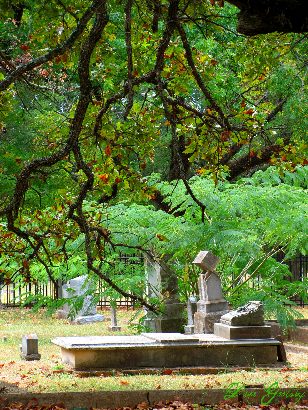
Glenwood
Cemetery
Houston County's oldest cemetery
Photo by Dana
Goolsby, October 2010 |
|
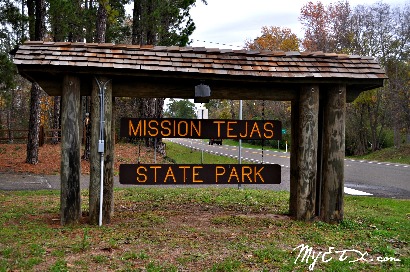
Mission
Tejas State Park by Dana Goolsby
21 miles NE of Crockett
Mission Tejas State Park fully encompasses both the rich history
of East Texas and the natural wonder and beauty of the Pineywoods.
|
|
|
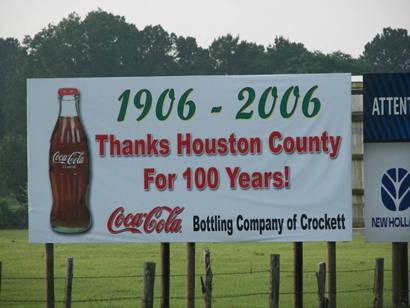
Coca
Cola Billboard in Crockett
Photo courtesy Barclay
Gibson, April 2006 |
| |
| Texas
Escapes, in its purpose to preserve historic, endangered and vanishing
Texas, asks that anyone wishing to share their local history
and vintage/historic photos, please contact
us. |
|
|
 HOME
HOME

 Texas
Gulf Coast
Texas
Gulf Coast East
Texas
East
Texas Central
Texas North
Central
Texas North Central
Texas South
Central
Texas South Texas
Panhandle
Texas
Panhandle South
Texas
South
Texas Texas
Hill Country
Texas
Hill Country West
Texas
West
Texas Texas
Ghost Towns
Texas
Ghost Towns Texas
Counties
Texas
Counties