|
 |
History in
a Pecan Shell
In 1852, the town
was named after Oscar Brackett who was a sutler to Fort
Clark. The town started around his store around 1852 and was first
called Brackett (as it is today by residents).
In 1875 when the town was granted a post office - the postal authorities
assigned the ville to avoid confusion with another Brackett, Texas.
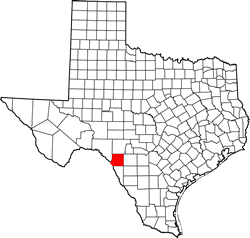
When Kinney County
came into being in 1876, Brackettville became the county seat. The
Galveston, Harrisburg and San Antonio Railway was heading toward
Del Rio and
bypassed Brackettville. This would've killed any other town, but Brackettville
had Fort Clark for
economic security. Spofford
was the town who benefited from the railroad.
As Fort Clark's population increased, so did the standard of living
in Brackettville.
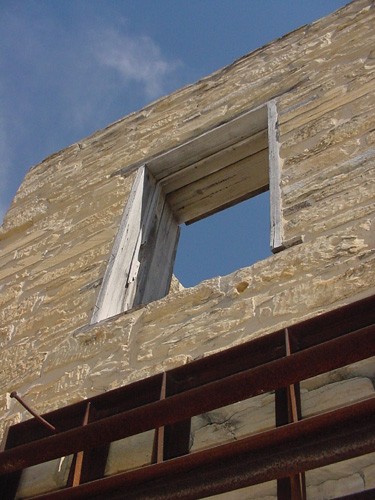
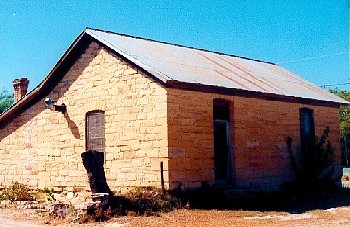
A local quarry supplied limestone blocks for the building of permanent
structures.
The years of 1878-1882 were particularly prosperous, although there
was a flood in 1880 (and other in 1899). Although the railroad bypassed
Brackettville, there was daily stagecoach service to Spofford
- 10 miles South.
In 1896 the town had a population of 1,000 which doubled by 1926.
A good part of the Brackettville population has historically been
made up of the Seminole
Indian Scouts. This is a group descended from an original 150
Black and Seminole Indians who were employed by the U.S. Army to scout
around the border.
The town of Brackettville has a surprising amount of shade - especially
along Hackberry Creek.
See Brackettville Chronicles
› |
Brackettville
Landmarks/Attractions
|
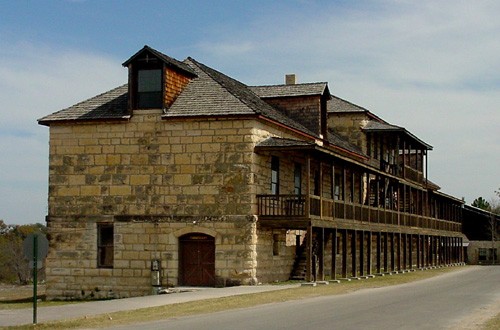
A
former Cavalry Post. Established in 1852, deactivated in 1947. Today
"Fort Clark Springs", a private resort. The spacious spring-fed pool
(Las Moras Springs) a majpr attraction. The museum and many well preserved
buildings make it easy to imagine life here in the 1860s. The Post
Theater remains as it was in 1946, the year the Post was decommissioned.
[See Fort Clark]
[See Swimming
to Mexico, Part IV - Ft. Clark Springs]
Fort Clark Guardhouse Museum:
Displays includes artifacts from the Black Seminal Indain Scout and
Buffalo soldier units. www.fortclark.com |
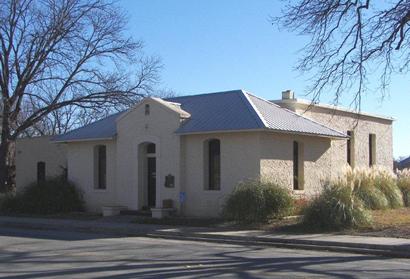
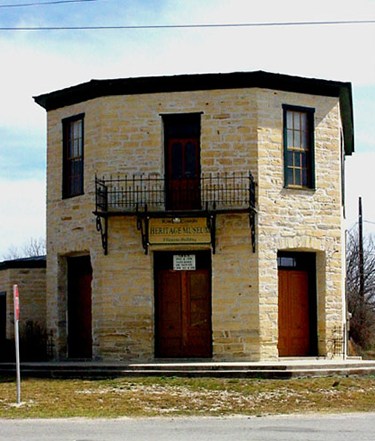
The Kinney County
Museum
TE photo, March 2002 |
The Seminole
Indian Scout Cemetery:
Just west of town on FM 693 and then South. Follow the signs.
Scenic Drives:
FM 674 North to Rocksprings
- Winding road along steep cliffs and hills with views of West Nueces
River.
FM 334 NE to Texas 55 intersection.
Kickapoo
Cavern State Park ›
Approximately 22 miles north of Brackettville
|
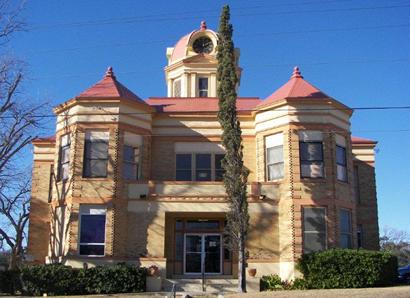
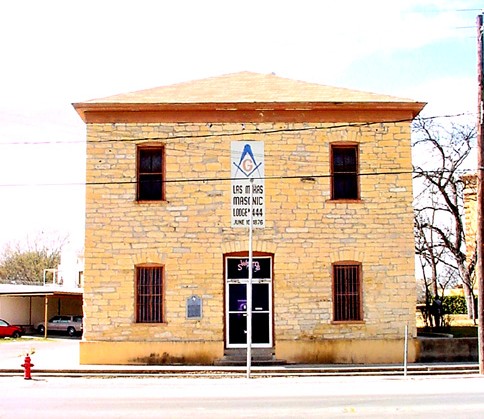
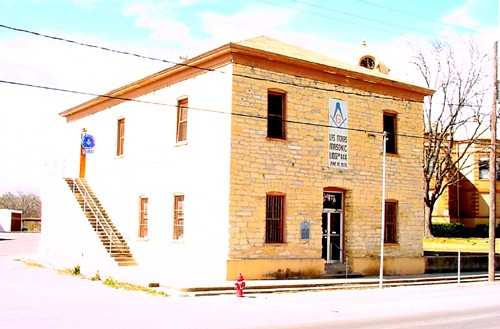
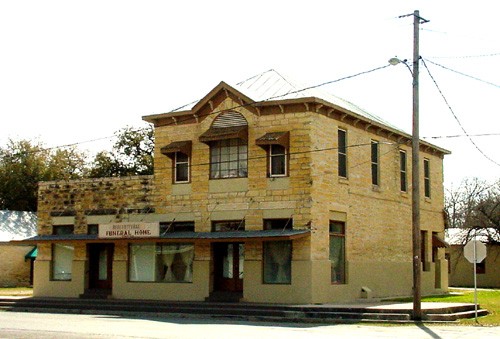
| "This building
on the courthouse square was built in 1878-79 and served as the first
county-owned courthouse. When the current
courthouse was completed in 1911, this building served as the
headquarters of the Las Moras Masonic Lodge. The first floor was used
as a post office from 1918 to 1983." - Terry
Jeanson |
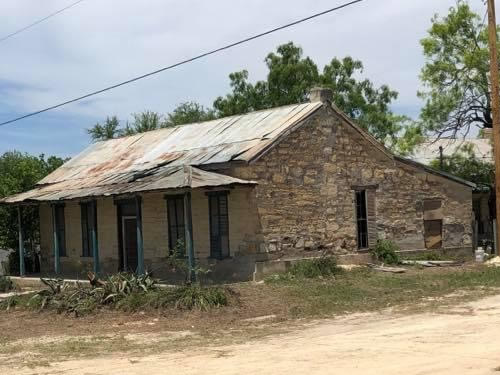
The Stagecoach
Stop and Sargent Hotel (ca. 1852)
218 E ElPaso St. Brackettville, Texas 78832
"Being recovered now open to public 2021"
- Susan Hughes
Photo
courtesy Susan Hughes, October 2020
More Rooms
with a Past |
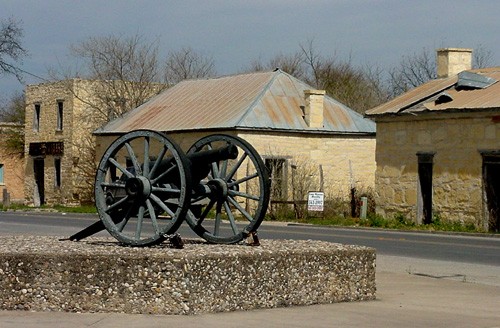
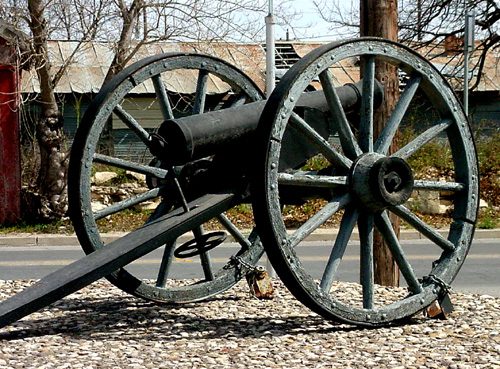
Cannon in the
square
TE photo, March 2002 |
More Bracketteville
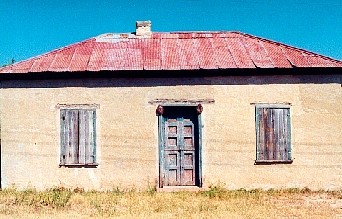
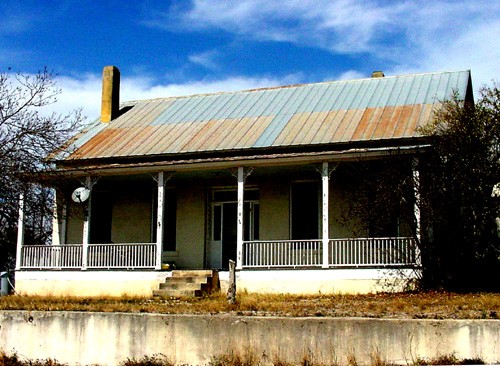
Limestone Architecture
|
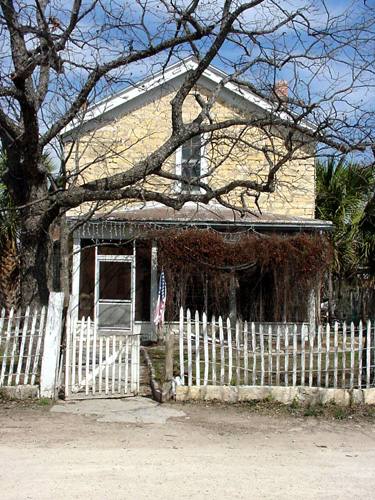
Brackettville
limestone house
TE photo,
1999 |
|
|
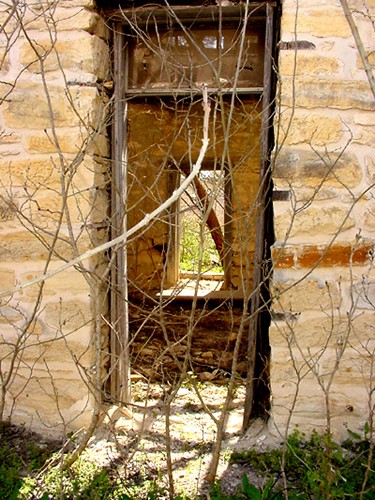
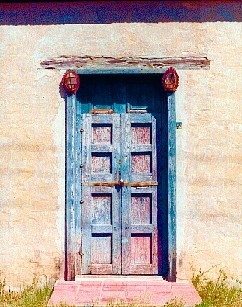
A
doorway in Brackettville
TE photo |
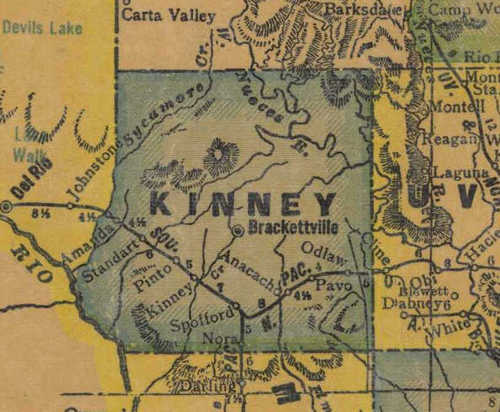
Kinney
County 1940s map showing Brackettville
From Texas state map #4335
Courtesy
Texas General Land Office |
| Texas
Escapes, in its purpose to preserve historic, endangered and vanishing
Texas, asks that anyone wishing to share their local history, stories,
landmarks and recent or vintage photos, please contact
us. |
|
|
 HOME
HOME