|
Texas
People
George Washington
Littlefield
Pioneer Plainsman,
Farmer, Soldier,
Cattle Baron, Banker, Philanthropist
By Luke Warm |
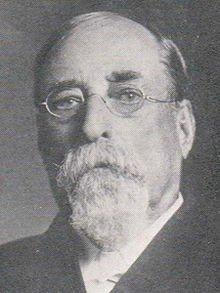
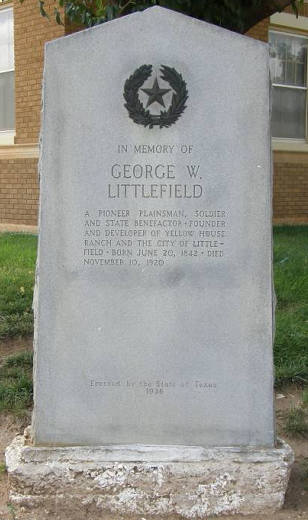
George Washington
Littlefield
Photo Wikipedia Commons |
A Mississippian
by birth, George Washington Littlefield entered Texas
in 1850 at the age of eight. The family settled near the present-day
ghost town of Belmont
(Gonzales County).
George attended one year of college at Baylor (then in Independence,
Texas) but his father’s death pulled him out to manage the family
plantation, which was near the junction of the San Marcos and Guadalupe
Rivers.
At the outbreak of the Civil War, Littlefield enlisted in Terry’s
Texas Rangers. He served as an acting commander in the battle
of Shiloh and was elected commanding officer of Company I in May of
1862. |
|
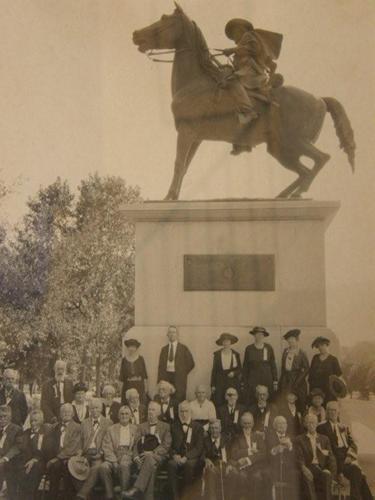
Surviving Members
of Terry's
Texas Rangers Gather at the Northside of their Monument on the
Capitol Grounds in Austin
(No date available)
Is George Littlefield Present?
Courtesy United Daughters of the Confederacy, Shropshire-Upton Chapter,
Columbus, Texas
|
He commanded
the company through the battles of Perryville and Chickamauga. He
married in January of 1863 during a trip back to Texas
to recruit replacements.
Severe wounds received at Mossy Creek (Tennessee) in December of that
year nearly cost him his life. He was kept alive by his boyhood servant
and just barely pulled through. His wounds made him a full major but
ended his military service. He was discharged and returned to Gonzales
County to begin a long recuperation.
Two consecutive floods (1869 and 1870) washed out the plantation’s
bottomlands and Littlefield teetered on the edge of bankruptcy. The
only thing in abundance in Texas at that
time was longhorn
cattle. Littlefield decided to leave farming and drove his first
herd to Kansas – resulting in a profit within 90 days.
He shrewdly anticipated that the growth of railroads
would eclipse the need for cattle drives and he began establishing
ranches in Texas
and New Mexico – one of which was the Yellow House Ranch – the site
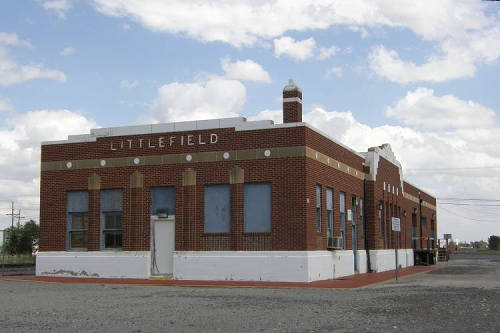
of what would become Littlefield,
Texas.
Littlefield moved to Austin
in the early 1880s. Having two children die at birth, the Littlefields
had no heirs. George engaged his twelve nephews and seventeen nieces
in his various businesses – insuring loyalty and tight management.
|
 |
He organized the
American National Bank - first located in the Driskill Hotel. In 1910,
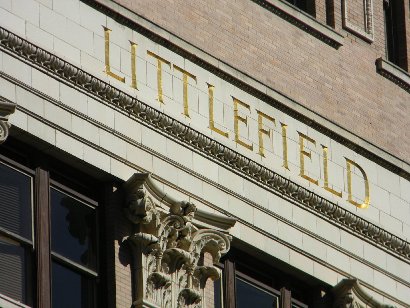
he laid the cornerstone for the beautiful eight-story Littlefield
Building.
Littlefield was made a regent of the University of Texas in 1911.
He was the largest benefactor to that institution in its first 50
years, giving $3 million toward its improvements and maintenance in
the last nine years of his life. |
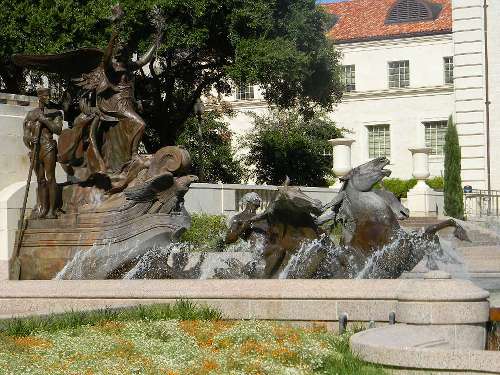
Littlefield
Fountain
Littlefield
also financed Pompeo
Coppini’s grand opus - the Littlefield Fountain on the campus
of UT - designed to be a WWI
memorial for UT alumni killed in the "War to end all wars." |
|
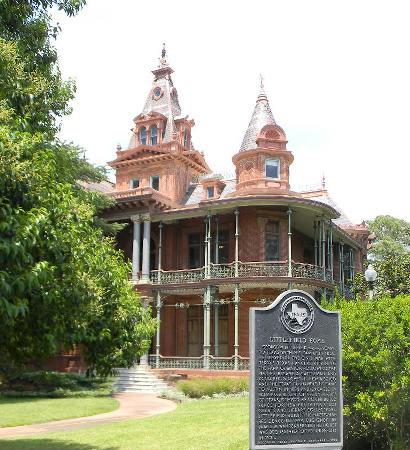
Perhap’s
Littlefield’s most striking gift to the university was his
residence. Littlefield died at this house November of 1920. He
was interred in Austin’s
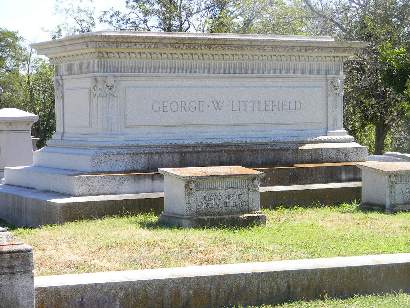
Oakwood cemetery, joined fifteen years later by Alice. Close at hand
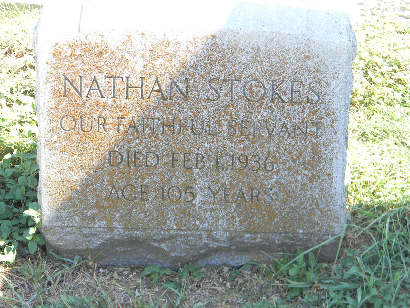
is the grave of Nathan Stokes, Littlefield’s lifelong servant who
had saved his life during the war. |
The
Littlefield Sarcophagus dominates the family plot
- which includes family servants
TE Photo, August 2010 |
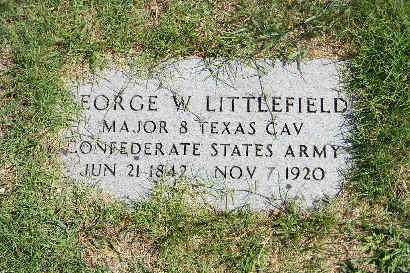
The
Military Tombstone
TE
Photo, August 2010
|
Nathan
Stokes Tombstone
Stokes
served George from the time he was a boy - first as a slave and
then as an employee, surviving GWL by 16 years and dying at 105
years of age.
TE
Photo, August 2010
|
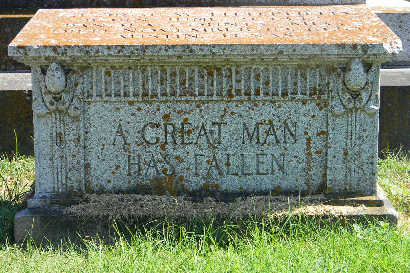
“A
Great Man Has Fallen”
TE Photo, August 2010 |
|
|
 HOME
HOME