|
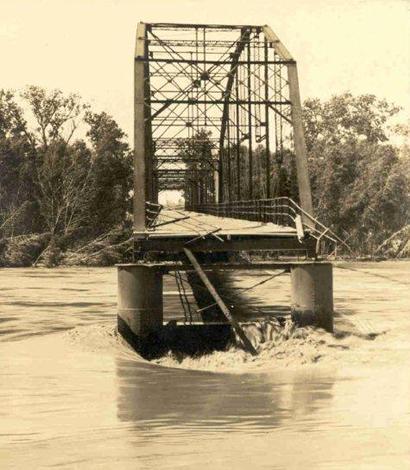
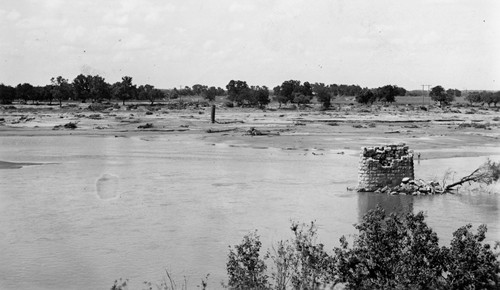
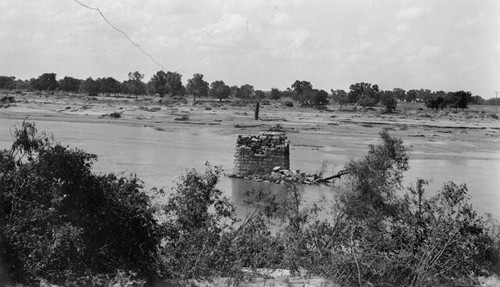
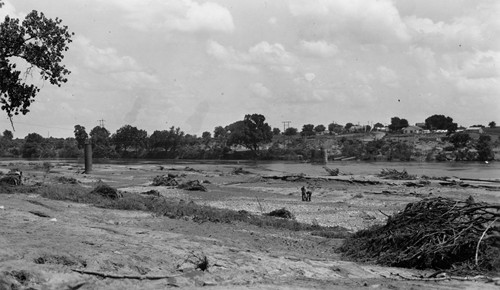
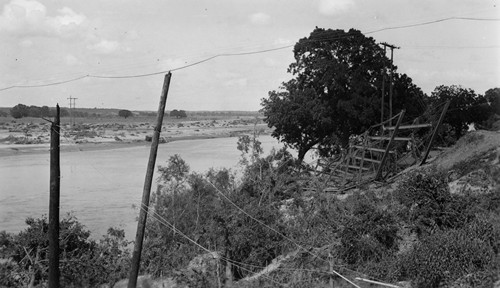
1935 Flood -
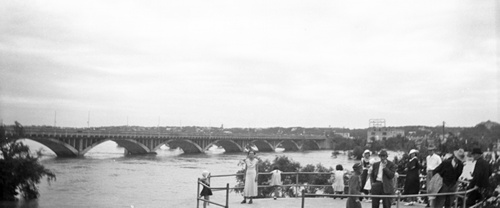
Colorado River Bridge in Columbus,
Texas
Photo courtesy Nesbitt Memorial Library 00160 |
The
April showers of 1935 may or may not have brought May flowers.
If they had, they would almost certainly have been swept away into
the Gulf of Mexico. Central and South Central Texas experienced heavy
rains that Spring which greatly affected Austin,
San Antonio and lesser
cities like Junction,
Uvalde
and D'Hanis.
Although Texas was hit with record-breaking
rainfall in 2007, vastly improved infrastructure prevented the devastation
which Central
Texas and the Hill
Country suffered in the 30s. (See Rob Hafernik's Dam
Fun: A July 4th Trip Up the Chain of Highland Lakes.)
The 2007 flooding around Burnet,
Marble Falls
and Cedar Park brought nearly 20 inches of rain in a 24-hour period
which is far more than the 9.21 inches of rain Austin
received for the month of May 1935 or the 9.71 inches that
June. But when one factors in ground saturation and no run-off
channels, the resulting damage of the 1935 rains was far worse. |
 |
1935 Flood -
Austin, Texas
Photographer: H.M. Stene, a cartographer for TXDoT |
1935 Flood -
Austin, Texas
Courtesy of Austin History Center, PICA 008484-A |
| In
1935, while Austin was receiving
its deluge, San Antonio
was hit even harder with 14.07 inches in May with 8.41 inches the
next month. The stores around Alamo Plaza were flooded in late May
and tiny D'Hanis,
Texas reported a hard-to-believe 20-24 inches of rain in just
2 Hours and 45 Minutes. |
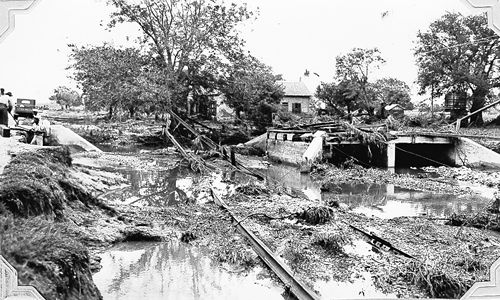
View of Cibolo
Creek Bridge on Highway 66 North of San
Antonio
River near flood stage. |
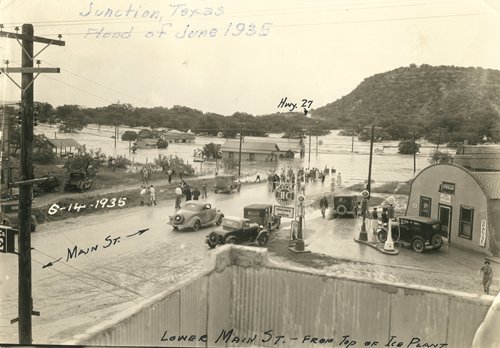
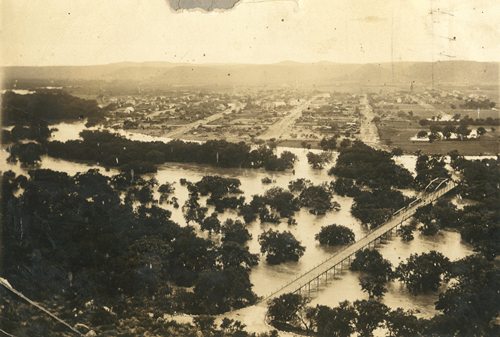
| Early
to mid-June rains approached 20 inches in many other smaller communities
from Uvalde
to Austin. The Llano,
Colorado and Pedernales
Rivers all reached flood stage, affecting the cities of Junction,
Llano,
and Fredericksburg.
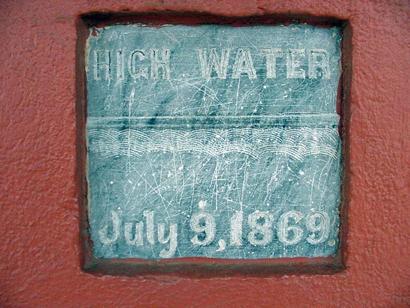
On June 14 and 15 the Colorado River was just 1 foot below the record
reached in July of 1869. |
The 1935 flood
of the Colorado River in Travis
County
Photo
courtesy TXDoT |
The 1935 flood
of the Colorado River in Travis
County
Photo
courtesy TXDoT |
The 1935 flood
of the Colorado River in Travis
County
Photo
courtesy TXDoT |
The 1935 flood
of the Colorado River in Travis
County
Photo
courtesy TXDoT |
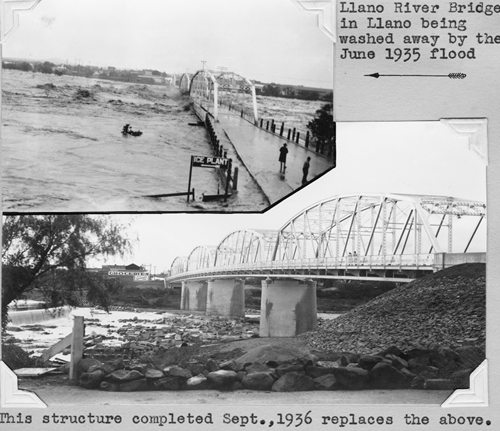
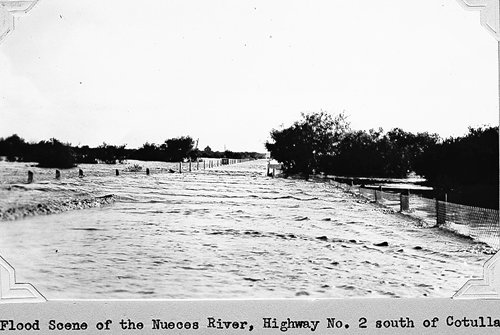
| The
Llano River crested at its record level ever (at that time). June
also brought flooding on the Nueces River and West Nueces River. Flooding
extended from north of Brackettville
to the Rio Grande (just downstream from Del
Rio). Uvalde
reported 12.5 inches within a 12 hour period and the total for that
day was 17.6 inches. |
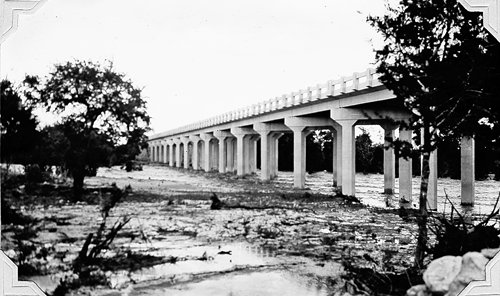
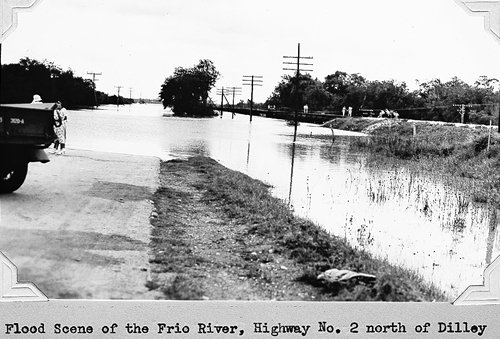
| Flood scene of
the Nueces River, Highway No. 2 south of Cotulla |
Photos and Story
by Rob Hafernik
DAMS:
Tom Miller Dam, Mansfield Dam, Max Starke Dam, Wirtz Dam, Inks Dam
& Buchanan Dam
LAKES:
Lake Austin, Lake Travis, Lake Marble Falls, Lake LBJ, Inks lake &
Lake Buchanan |
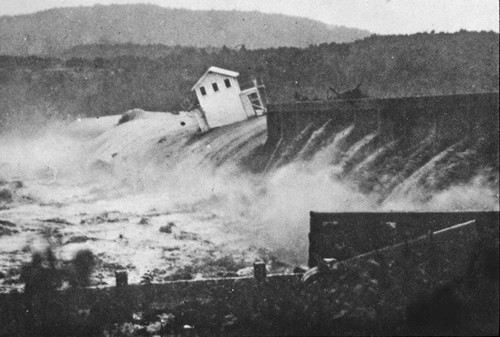
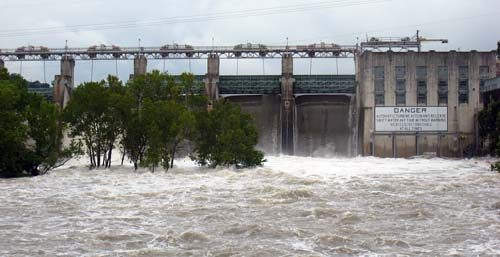
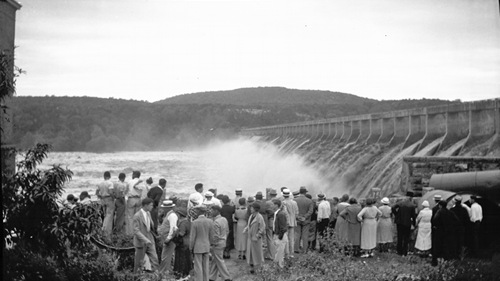
Tom Miller Dam
- with three and half floodgates open
See Dam Fun |
The Great Flood
of 1935
A Narrow Escape
Excerpted from
the diary of Maryleene Bolen Christensen
Shared by her daughter, Carolyn Oldfather
A recent letter from Carolyn Oldfather included an
excerpt from her mother’s diary. It’s a first-hand account of a narrow
escape from almost certain destruction from the roiling waters of
the (usually placid) Llano River. Ms. Oldfather and her sister are
preserving her mother’s work as a family project and we thank her
for allowing us to share this account with our readers. What follows
is an entry from the Spring of 1935, when the author, Maryleene Bolen
Christensen was approaching her 13th birthday: - Editor
“When
we got to Llano
we stayed with Uncle Walt and Mildred... for a little while. I guess
Mama and Daddy rented a little cabin by the river. As I remember the
place, it must have had one room and a little lean-to where we kids
slept.
Marguriete [Maryleene’s sister] and I had so much fun while we lived
in Llano
– we would play on the spillway below the dam. The spillway was just
behind Uncle Walt’s and Mildred’s house.I think Mildred and Uncle
Walt were renting [that] great big old house.
While we stayed with them, we could hear the water splashing over
the dam and down the spillway at night and we loved the sound. The
bridge across the Llano River was one mile across and Marguriete and
I had lots of fun running across it.
One day Mama decided to go back home – maybe because it had started
to rain – or was it because she was just tired of living that way.
Anyway, we went back to San
Angelo, and it was a good thing – because the day after we left,
the river flooded and washed that big bridge away, and the cabin we’d
lived in and all the lovely old trees that had been growing along
the river banks for many years. I’m sure many of them were big pecan
trees. It was total devastation!” |
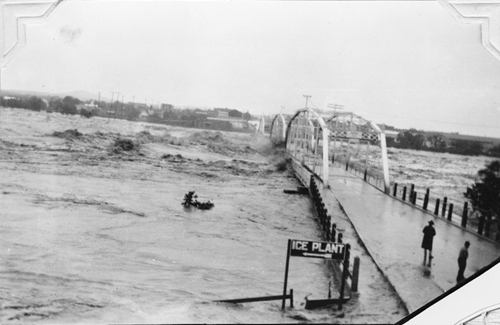
The 1892 Llano
River Bridge in Llano
being washed away by the 1935 flood |
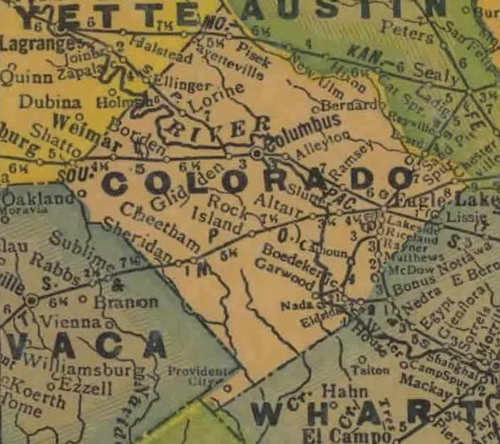
1940sl map showing
Colorado River coursing through Fayette,
Colorado and Wharton
Counties
Courtesy Texas General Land Office |
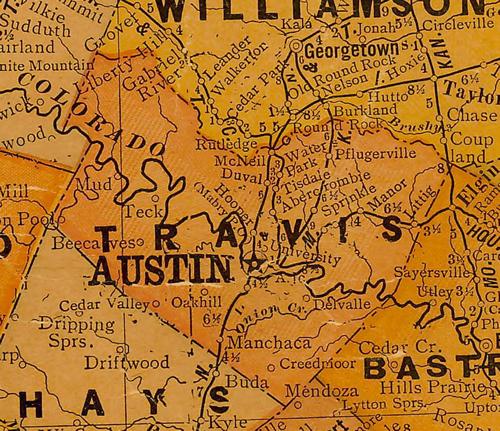
1920s
map showing Colorado River coursing through Travis
County
Courtesy Texas General Land Office |
1920s
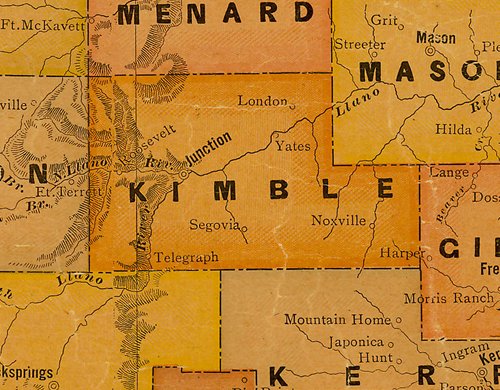
map showing Llano River coursing through Kimble
County
Courtesy
Texas General Land Office |
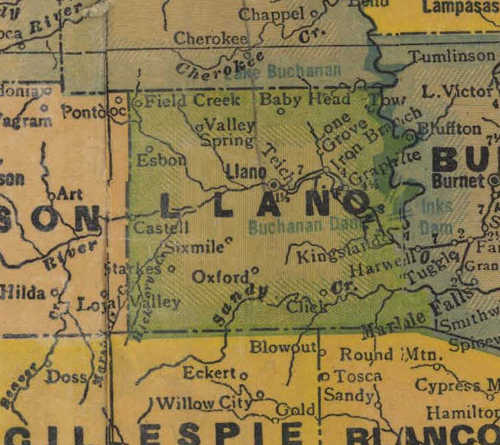
1940s map showing
Llano River coursing through Llano
County
From Texas state map #4335
Courtesy Texas General Land Office |
|
|
 HOME
HOME