|
| A chronological
look at the people and events that make up the unique history of Texas,
beginning with the wanderings of early Spanish explorer Cabeza de
Vaca, on through the Texas Revolution, Texas Independence, and statehood,
and eventually continuing through the American Civil War, the era
of the cattle drives, and Reconstruction. |
| 'A
Glimpse of Texas Past' Columns: |
|
|
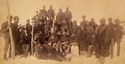
Buffalo Soldiers 12-2-14
In nearly thirty years of dedicated and arduous service, Buffalo
Soldiers won the grudging respect of even the most prejudiced of
their white officers. The black cavalrymen and infantrymen were
awarded nine Medals of Honor for meritorious valor in combat and
countless other awards and commendations for distinguished service.
More importantly, Buffalo Soldiers were a credit to the African-American
race.
|
|
|
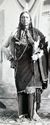
Quanah
Parker 4-1-14
Quanah Parker was a major player in both the Comanche war of resistance
against white encroachment of the Comancheria and in the tribe’s
eventual acclimation to reservation life. Nomadic warrior of the
plains, war chief of the Quahadi band, cattle rancher, man of business,
and friend to American Presidents; it could truly be said that Quanah
was a man of two worlds.
|
|
|
Leander
H. McNelly and the Special Force 3-1-14
In 1875, Governor Richard Coke commissioned Captain Leader McNelly
to organize a Special Force of Rangers to deal with the bloodshed
and crime that was ongoing throughout the Nueces Strip, the narrow
strip of land that ran between the Nueces River and the Rio Grande.
Captain McNelly’s accomplishments would add much to the lore and
legend of the Texas Rangers.
|
|
|
The
Texas Frontier Battalion 2-1-14
In 1874, Governor Richard Coke and the Texas Legislature decided
to deal with the growing threats of the Indians and the outlaws
along the western frontier by organizing a battalion of Texas Rangers.
The Frontier Battalion was the first permanent force of Texas Rangers
and would serve the state for the next twenty-five years.
|
|
|
The
Era of the Texas Cattle Drives 1-2-14
Though the era of the great cattle drives spanned only twenty years,
from the end of the Civil War until the coming of the railroads
to Texas eliminated the need to trail cattle, the era left an indelible
impression on the American psyche that has continued over the generations.
|
|
|
Reconstruction
in Civil War Texas 12-1-13
The aftermath of the Civil War left much uncertainty in the minds
of Texans. Their economy was in ruins, their money was worthless,
and they were faced with drastic changes to their basic way of life.
Reconstruction was a long and burdensome process that affected the
social, political, and economic lives of all Texans.
|
|
|
The
Struggle for Annexation 11-1-13
In light of all that the two countries shared, Texans were convinced
the United States would be eager to annex the Republic of Texas
as a new state. They were shocked and disappointed when President
Andrew Jackson not only failed to seek annexation of the Republic
but also refused to extend recognition to the new government.
|
|
|
Land
Policy and Foreign Settlement in the Republic of Texas 10-1-13
The Republic of Texas emerged from the Revolution buried in debt
and with practically no assets except for its vigorous population
and vast, unsettled public lands, but with an end to Mexican immigration
barriers, a rising tide of new settlers would soon pour into the
Lone Star Republic to assist in the task of building a new nation.
|
|
|
The
Battle of the Neches 9-1-13
In the brief but glorious history of the Republic of Texas, the
Battle of the Neches has been described as second in importance
only to the Battle of San Jacinto as the most decisive conflict
ever fought on Texas soil.
|
|
|
The
Capitals of Texas 8-1-13
During the unrest and confusion of pre-Revolution Texas and the
establishment of a new and independent republic, the capital of
the Republic of Texas shifted locations several times, from San
Felipe de Austin, the capital of Stephen F. Austin's original colony
to the present-day capital city of Austin, a town created for the
sole purpose of serving as the Republic's seat of government.
|
|
|
The
Birth of a Republic 7-1-13
The military phase of the Texas Revolution began on October 2, 1835,
with the Battle of Gonzales, but a meeting of Texas delegates known
as the Consultation was the true beginning of the political struggle.
|
|
|
Cavalry
of the West 6-1-13
Late in the fall of 1863, Union forces under the control of General
Nathaniel Banks occupied the lower Rio Grande valley and sealed
off the border between Texas and the French-dominated Empire of
Mexico to disrupt the flow of Southern cotton to Europe. It would
be left to John “Rip” Ford and his Calvary of the West to drive
the Union out and restore the flow of the Confederate’s lifeblood.
|
|
|
Dissention
and the Draft in Civil War Texas 5-1-13
Not all Texans were in agreement about secession and the Civil War
and many more were opposed to the Confederate Conscription Act.
Historians estimate that nearly 30 percent of the Texas population
had Unionist sentiments, though the great majority, like Sam Houston
and James Throckmorton, remained loyal to Texas. However, as events
would bear out, many dissenters paid a heavy price for expressing
their doubt of the Southern cause and their opposition to the draft.
|
|
|
War
on the Texas Gulf Coast 4-2-13
In light of the North's vast naval superiority, one of the most
remarkable feats of the American Civil War was the Texans tenacious
defense of their Gulf Coast ports. From Sabine Pass in the north
to Brownsville in the south, the Texans bent now and then but they
refused to break.
|
|
|
Civil
War in the Southwest 3-3-13
Civil War battles fought in the American Southwest cannot be measured
against the savage struggles that raged in the east where tens of
thousands of Union and Confederate soldiers clashed and died. However,
large or small, the size of the battles meant little to the men
on both sides who were wounded, killed or captured fighting for
their beliefs.
|
|
|
Secession:
Texas leaves the Union 2-1-13
After the election of Abraham Lincoln in November 1860, events moved
swiftly toward secession. South Carolina was the first state to
secede from the Union and other states in the old south quickly
followed suit, but in Texas newly elected Governor Sam Houston stubbornly
refused to call a convention to even discuss the issue.
|
|
|
Trouble
along the Rio Grande: The First Cortina War 1-5-13
With the signing of the Treaty of Guadalupe-Hidalgo on February
2, 1848, and the ending of the Mexican-American War, the official
boundary between Texas and Mexico was established at the Rio Grande,
leaving a large portion of the Cortina family land grant on the
United States side of the border. The stage was now set for conflict.
|
|
|
The
Yucatan Adventure 12-2-12
In the spring of 1840, the Navy of the Republic of Texas was immersed
in a political battle between President Mirabeau Lamar and arch-enemy,
former president Sam Houston, currently serving as a member of the
Texas Congress. Into the midst of this acrimonious struggle, stepped
a 28-year-old naval first lieutenant, Edwin Ward Moore.
|
|
|
Battle
of Antelope Hills 11-4-12
During the years 1856 to 1858, Comanche raids on the Texas frontier
began to escalate as settlers encroached further into the Comancheria.
Ironically, matters finally came to a boil when four white outlaws
disguised as Comanches massacred James B. Cambren and his two sons,
who were plowing a new field on their homestead bordering the Brazos
River in the far northwest corner of Young County.
|
|
|
The
Meusebach-Comanche Treaty 8-1-12
In early spring of 1847, a remarkable treaty between German settlers
and Native Americans was negotiated on the banks of the San Saba
River in the hill country north of Fredericksburg, Texas.
|
|
|
Sam
Walker Texas Ranger and the "Walker" Colt 7-1-12
Thirty-two years is not a long life as measured against most men,
but Texas Ranger Sam Walker's brief years were an epic adventure
filled with Indian battles, wars, public renown, and honor.
|
|
|
Paint
Rock: The Last Comanche Fight of Jack Hays 6-1-12
Some historians have questioned the Rangers' victory at Paint Rock
as pure fiction or an attempt to revise history, however, Jack Hays
and the Texas Rangers need no help from me or any other historian
to bring glory and honor to their name.
|
|
|
The
Battle of San Jacinto 4-1-12
In eighteen glorious minutes, Sam Houston and his fellow Texans
won a remarkable victory, establishing Texas as an independent republic
and opening the door for United States expansion southwest to the
Rio Grande and all the way west to the Pacific Ocean.
|
|
|
Massacre
at Goliad: A Texas Tragedy 3-1-12
The massacre at Goliad branded Santa Anna as an inhuman despot and
the Mexican people, whether deserved or not, with a reputation for
cruelty. As a result of the needless slaughter, a burning desire
for revenge arose among the people of Texas, and Americans became
firmly united behind the Texas cause of independence.
|
|
|
The
Battle of the Alamo 1-27-12
After the defeat of General Cos at the siege of San Antonio, Texans
thought their independence was won. They failed to understand that
General Santa Anna was enraged over the disturbances at Anahuac
and Cos's surrender. The dictator would never rest until his soldiers
either killed every Anglo-American and Tejano rebel who openly defied
his rule or drove them across the Sabine River and out of Texas
for good.
|
|
|
The
Siege of San Antonio de Bexar 12-30-11
On October 2, 1835, the Texas "shot heard round the world" was fired
in a brief skirmish between Mexican troops and Texas settlers known
as the Battle of Gonzales. After the battle, volunteers from all
over Texas continued to gather in Gonzales, and on the morning of
October 13, newly elected commander, Stephen F. Austin, marched
the "Army of the People" toward San Antonio.
|
|
|
The
Rising Tide of Revolution 11-1-11
Mexico's independence from Spain and the Mexican Constitution of
1824 brought a new wave of American immigration to Texas. Not only
did the settlers have to cope with the usual hardships of beginning
life in a new land, but they also had to adjust to living in a country
with a set of customs and laws that were alien to their own.
|
|
|
Texas
Empresarios 10-1-11
Thanks to Stephen F. Austin, "the Father of Texas," and many other
dedicated Empresarios, the population of Texas stood at nearly 20,000
citizens by 1830, most of them from the United States.
|
|
|
Texas
Filibusters 9-1-11
Although the Filibusters were unsuccessful in gaining independence
for Texas, reports of their activities in newspapers and periodicals
all across the country brought the vast land of Texas to the forefront
of American thought and encouraged countless settlers to pull up
stakes and journey to the new land of promise, paving the way for
the era of the Texas Empresarios.
|
|
|
La
Salle and French Exploration in Early Texas 7-1-11
"Although La Salle's expedition was unsuccessful, the French presence
in Texas finally stirred the Spanish to action. Fearing they would
lose the race to claim the Americas, the Spaniards renewed their
exploration of the Gulf Coast and began working diligently to settle
East Texas."
|
|
|
Coronado’s Search for Cibola 6-1-11
Coronado’s expedition, including 250 cavalry, 80 infantry, 1000
Indians, several priests, and thousands of horses, cattle, and sheep,
departed from Culiacan in the spring of 1540.
|
|
|
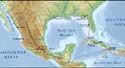
The Journey of Cabeza de Vaca 5-1-11
Spanish conquistador Alvar Nunez Cabeza de Vaca was the first European
to explore the interior of Texas, and the narrative he wrote of
his experiences in the New World remains the most valuable source
of information we possess today on the Native American tribes, landforms,
plants, and animals of early Texas.
|
|
|
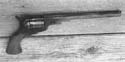
The
Battle of Walker's Creek and the Colt Paterson Revolver 4-1-11
The Battle of Walker's Creek was more of a minor skirmish than a
battle, but thanks to Samuel Colt and the introduction of his Colt
Paterson revolver, the outcome of the fight had pivotal consequences
in the long-running struggle between the Comanches and the Texas
Rangers. No longer would the Rangers be at a distinct disadvantage
when engaging the Comanches on horseback. Armed with the five-shot
Paterson, they were more than a match for the "Lords of the Plains"
and their deadly short bows.
|
|
|
A
March into Hell: The Mier Expedition 3-11-11
In the aftermath of President Mirabeau Lamar's ill-fated expedition
to Santa Fe, his successor, Sam Houston, did his best to maintain
an uneasy peace between Mexico and the Republic of Texas. However,
after Santa Anna twice ordered Mexican troops to occupy San Antonio,
political pressure for action eventually forced Houston to dispatch
General Alexander Somervell and 750 volunteers to the Rio Grande.
What began as a demonstration in force soon ended in "A March into
Hell: The Mier Expedition."
|
|
|
The
Battle of the Salado 2-21-11
In March of 1842, Mexican President Santa Anna retaliated for Texas
President Mirabeau Lamar’s ill-fated "Wild Goose" expedition to
Santa Fe by sending General Raphael Vasquez and a substantial force
of soldiers across the Rio Grande with orders to occupy San Antonio...
|
|
|
Lamar’s
"Wild Goose Campaign to Santa Fe" 2-9-11
In 1841, President Lamar proposed to send the expedition on his
own initiative; ostensibly to establish a trade route across northern
Texas to Santa Fe, and to offer the citizens of New Mexico an opportunity
to voluntarily join the Republic...
|
|
|
The
Expedition of Colonel John Moore 1-26-11
In the aftermath of the Great Comanche Raid of 1840 and the Battle
of Plum Creek, Mirabeau Lamar, the President of the Republic of
Texas, charged Texas Ranger Colonel John Moore with the responsibility
of organizing an expedition for the purpose of attacking and destroying
a Comanche winter village..
|
|
|
The
Great Comanche Raid and the Battle of Plum Creek 1-9-11
One of the most storied events in the historic past of Lockhart,
Texas occurred two miles south of town along the wooded banks of
Plum Creek, when a small group of volunteers defeated more than
600 Comanche and Kiowa warriors who had participated in the Great
Comanche Raid of 1840...
|
|
|
The
San Antonio Council House Fight 12-13-10
In March of 1840, a meeting took place in old San Antonio between
representatives of the government of the Republic of Texas and the
Penateka Comanches to discuss terms of a peace treaty. The disastrous
results of this meeting would soon lead to the Great Comanche Raid
of 1840 and the Battle of Plum Creek.
|
| More
Features by Jeffery Robenalt: |
Author's Biography
Jeffery Robenalt was born and raised in Tiffin,
Ohio. He served in Vietnam as a Sergeant in the United States Marine
Corps and later served as a Platoon Leader and Executive Officer with
the 101st Airborne Division. He has a BS in Sociology from Troy University,
a BA in History from New York University, and a Doctor of Jurisprudence
from Texas Tech University. After earning his law degree, Mr. Robenalt
was an Attorney for the State of Texas for ten years.
"Saga of a Texas Ranger" is the first novel in Mr. Robenalt's "Saga"
Series. Volume 2, "Star Over Texas" and Volume 3, "The Bloody Frontier"
are also available. Volume 4 will be out in the fall of 2013.
Mr. Robenalt currently resides with his wife Lizabeth and daughter
Emily in Lockhart, Texas where he teaches Texas history at Lockhart
Junior High School.
January 2013
His website: www.sagaofatexasranger.com
|
|
|
 HOME
HOME